
Quick Answer
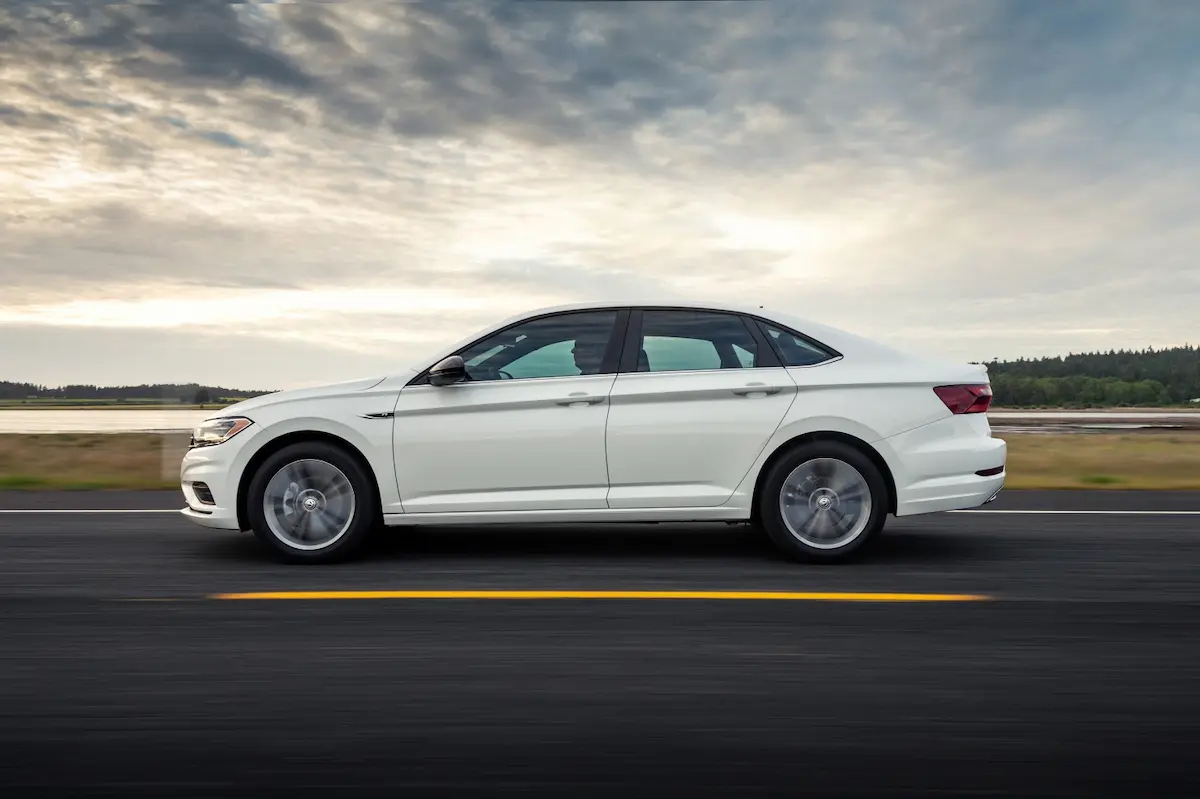
The 2019 Volkswagen Jetta has real problems — oil consumption is the most serious, with widespread owner complaints and a class action investigation opened against VW. I owned one from 24,000 to roughly 75,000 miles and sold it because of the oil issue. The dealer dismissed me twice without a formal test. It’s a comfortable, fuel-efficient car that becomes a maintenance headache as it ages. If you’re buying used, get a pre-purchase inspection and check the maintenance records closely.
I bought a 2019 Volkswagen Jetta in March 2020. Base model, 1.4L turbocharged engine, 8-speed automatic, platinum grey metallic — picked up from a dealer in Jacksonville who sourced it from an Enterprise rental fleet. It had about 24,000 miles on it and the CarHeros buying experience was genuinely the smoothest car purchase I’d ever had.
I sold it to Carvana in April 2021 at roughly 75,000 miles.
In between those two dates, I put about 50,000 miles on that car — including ten round trips from St. Augustine, Florida to Linden, New Jersey. That’s roughly 950 miles each way, 99% of it on I-95. The car was comfortable, dead quiet on the highway, and returned over 40 mpg consistently.
It also consumed oil at a rate VW calls “normal” but that I call completely unacceptable for a car under 80,000 miles. The dealer sent me home twice without running a single formal test. And I eventually reached the point where I was carrying a bottle of oil in the trunk just in case.
That’s the honest version. Here’s the full breakdown. And if you’re weighing this against other used car options, my buying advice section covers how to approach used car decisions without getting burned.
My Ownership — The Numbers
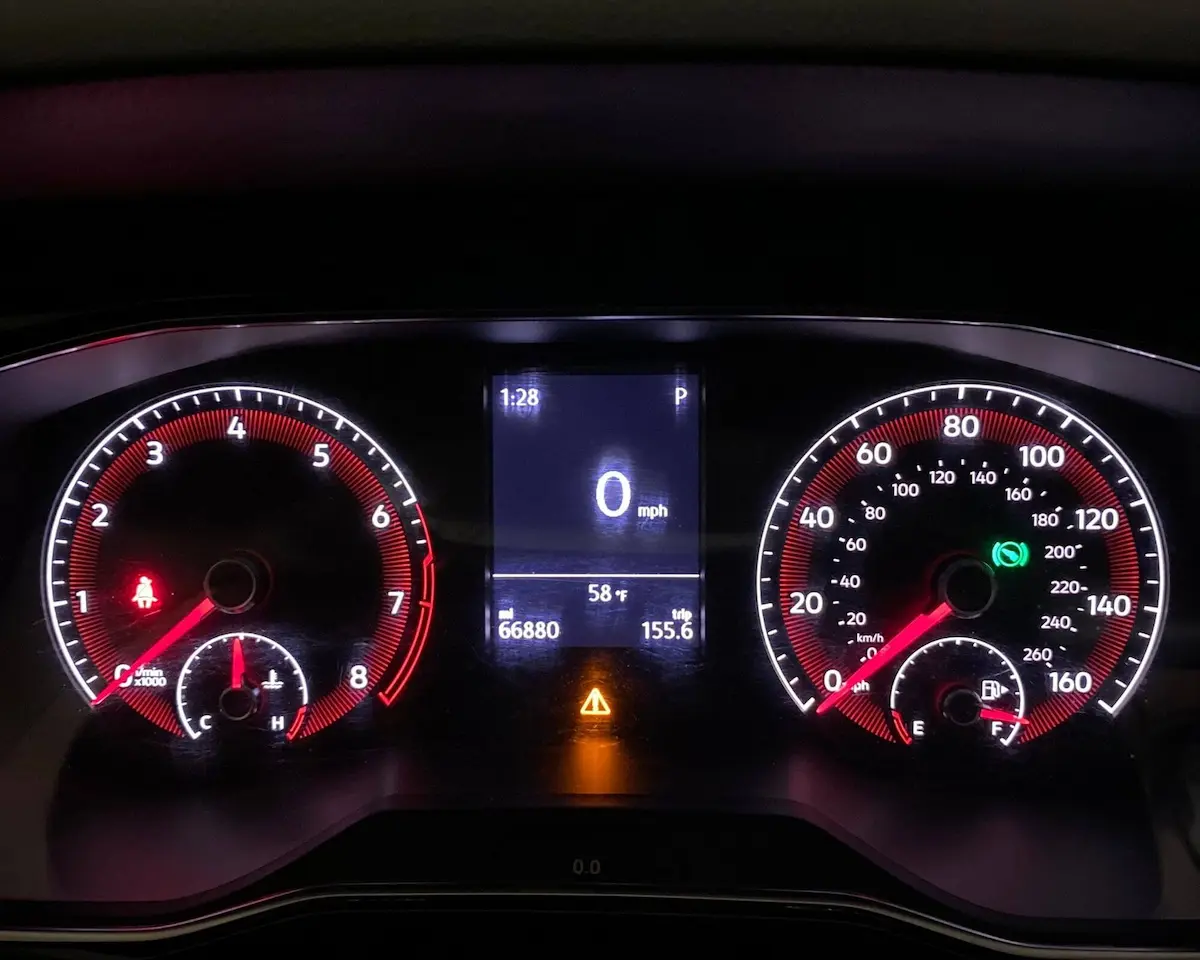
Here’s the ownership snapshot so you have context for everything that follows:
| Detail | My 2019 Jetta |
|---|---|
| Trim | Base S, 1.4L turbo, 8-speed automatic |
| Purchase mileage | ~24,000 miles (ex-Enterprise fleet) |
| Sale mileage | ~75,000–78,000 miles |
| Miles I put on it | ~50,000 miles |
| Ownership period | March 2020 – April 2021 |
| Long-distance trips | 10x St. Augustine FL → Linden NJ (~950 mi each way, 99% I-95) |
| Real-world fuel economy | 40+ mpg highway consistently |
| Main problem | Excessive oil consumption starting around 40,000–50,000 miles |
| How I solved it | Sold it to Carvana, bought a 2020 Honda Insight |
Common 2019 Volkswagen Jetta Problems
Based on my ownership and verified owner complaints from CarComplaints.com, NHTSA, and Consumer Reports, here are the most common issues with the 2019 Jetta:
| Problem | Severity | When It Shows Up |
|---|---|---|
| Excessive oil consumption | High | 40,000–60,000 miles |
| Transmission noise / grinding | High | Under load, 20,000–40,000 miles |
| Engine stalling | High | Various, linked to recalls |
| AC compressor failure | Medium | Any mileage |
| Infotainment screen freezing | Medium | Any mileage |
| Instrument cluster errors | Medium | Any mileage |
| Door lock actuator failure | Low | Higher mileage |
Oil Consumption — The Big One
This is the problem that ended my ownership and it’s the most documented complaint on the 2019 Jetta.
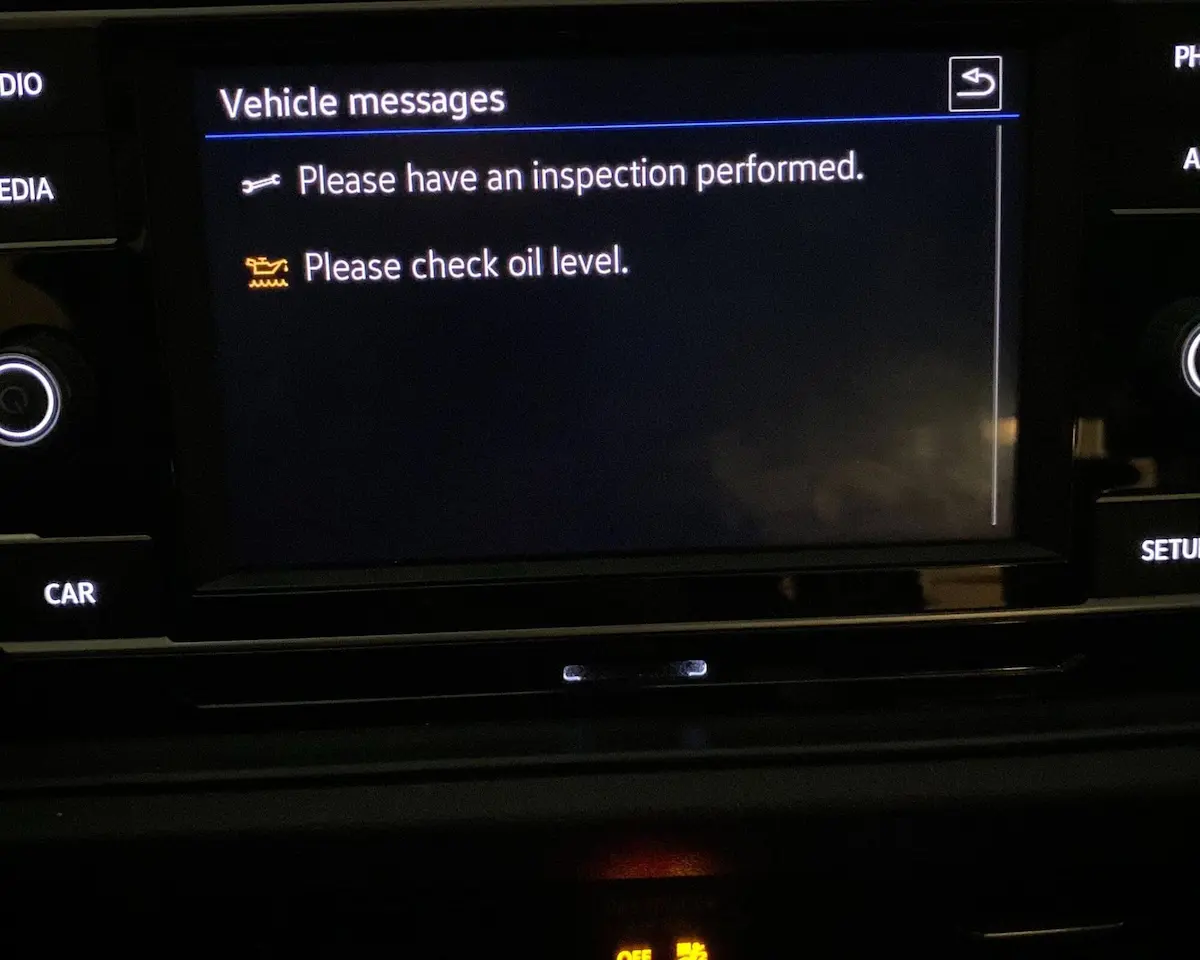
Around 40,000 to 50,000 miles, my oil light started coming on well before the 10,000-mile change interval. I took it to the VW dealer in St. Augustine. Their response: nothing’s wrong, come back when it’s time for your oil change.
It happened again. Same dealer, same answer. No formal oil consumption test was ever performed — they just sent me home.
If you’re in the same situation, the one tool worth having is a basic OBD2 scanner. Not to replace a mechanic, but so you know exactly what codes are stored before you walk in. The ANCEL AD310 runs about $25 on Amazon — over 30,000 reviews, plug it in and you have the code in 15 seconds. I wish I’d had one during those dealer visits.
What VW’s Own Manual Says
The 2019 Jetta owner’s manual states that consuming up to one quart of oil per 1,200 miles is considered “normal.” That’s potentially over eight quarts burned in a single 10,000-mile oil change interval. As documented on BobIsTheOilGuy forums, VW has included this language for years. Most owners don’t read the manual. They just get an oil warning light on a car under 50,000 miles and assume something is wrong — because in any normal universe, it is.
This isn’t an isolated complaint. CarComplaints.com documents seven separate excessive oil consumption complaints for the 2019 Jetta, with an average failure mileage of 18,500 miles — meaning some owners hit this problem very early.
It got serious enough that a law firm opened a class action investigation against Volkswagen specifically for the 2019 Jetta’s oil consumption issue. Burning excessive oil can lead to engine damage and stalling if the level drops too low and the driver doesn’t catch it in time.
By the time I sold the car, I was keeping a bottle of oil in the trunk. That’s not something you should have to do with a car under 80,000 miles.
Transmission and Drivetrain Noise
At lower speeds — roughly 25 to 35 mph — my Jetta made a grinding or whooshing noise that only appeared under load while moving.
You couldn’t reproduce it in the driveway. The car had to be in gear and driving for the noise to occur.
Whether it was the transmission, the torque converter, or something else in the drivetrain is hard to say. Everything is packed tightly in the engine bay and you need a lift and a trained ear to pinpoint it.
I took it to the dealer. They were aware of the issue, acknowledged it was a known complaint on 2019 Jettas, and declined to address it under warranty.
This Is a Documented Pattern
Forum reports and owner complaints across multiple platforms describe the same grinding or whooshing noise at 24–30 mph on the 2019 Jetta. CARHP notes DSG transmission problems including abnormal knocking, gear slipping, and in some cases complete transmission failure at low mileage. Reddit threads from 2022 reference a class action settlement specifically related to the 2019 Jetta transmission. If a used example you’re considering has this noise, walk away.
Electrical, Infotainment, and AC Problems
The 2019 Jetta’s infotainment system freezing is well-documented. Owners report screens that lock up, navigation errors, and instrument cluster glitches — the kind of thing that’s annoying but usually not dangerous.
AC is more serious. Consumer Reports lists the climate system as one of the main trouble spots for the 2019 Jetta based on owner surveys.
AC compressor failures and refrigerant leaks are the most common complaints. In Florida heat, a failed AC is not a minor inconvenience — it’s a car you can’t drive comfortably.
Personally I didn’t have AC or electrical problems during my ownership. But if you’re buying used and the previous owner was in a hot climate, it’s worth having the AC system inspected before you commit.
11 NHTSA Recalls on the 2019 Jetta
The 2019 Volkswagen Jetta has been recalled 11 times by the National Highway Traffic Safety Administration. That’s a high number for any vehicle.
The most significant ones include:
Key 2019 Jetta Recalls
Engine stalling risk — A transmission ground wire issue can cause the engine to stall while driving. VW recalled approximately 47,000 2019–2020 Jettas for this.
Fuel leak / fire risk — Fuel can leak into the evaporative emissions system, creating a fire hazard.
Ignition switch failure — The ignition switch can fail while the vehicle is in motion.
Improperly machined wheel bearings — Affecting GLI models specifically.
Tire pressure warning malfunction — System may fail to alert the driver to low tire pressure.
Before buying any used 2019 Jetta, run the VIN through NHTSA’s recall database and confirm all 11 recalls have been completed.

Is the 2019 Volkswagen Jetta a Reliable Car?
The honest answer: below average, and the data backs that up.
Consumer Reports rates the 2019 Jetta below average for reliability, with trouble spots in the engine, climate system, in-car electronics, and fuel system.
U.S. News gives it a predicted reliability rating of 3 out of 5 — average at best.
What those ratings don’t capture is the pattern. The 2019 Jetta was a complete redesign — new platform, new engine tune, new transmission calibration. First-year redesigns almost always surface problems that get quietly fixed in subsequent model years. The 2019 Jetta is the canary in that coal mine.
The good news: many owners report zero problems. Some have driven their 2019 Jettas past 100,000 and 150,000 miles without major issues. The oil consumption problem isn’t universal — but it’s common enough that you need to know about it before you hand anyone money.
What the Jetta Gets Right
I want to be fair here. The 2019 Jetta is genuinely comfortable on long highway runs, returns excellent fuel economy, has a smooth-shifting 8-speed automatic, and punches above its price in terms of interior tech and LED lighting. The seats are surprisingly comfortable even after a 14-hour drive. The driving experience itself is refined and quiet. If VW had sorted the oil consumption issue, this would be a much easier recommendation.
What Year Jetta Should You Avoid?
The 2019 is the riskiest year in the current generation specifically because it was the first year of the redesign. If you’re shopping used Jettas, the 2021 and newer models moved to a 1.5L engine and addressed several of the issues that plagued the 2019.
Within the current generation (2019–present), the hierarchy looks like this:
| Model Year | Risk Level | Notes |
|---|---|---|
| 2019 | Highest risk | First year of redesign — most documented problems, 11 recalls |
| 2020 | Moderate risk | Similar issues carry over, still on 1.4L engine |
| 2021+ | Lower risk | Moved to 1.5L engine, some issues resolved |
If you’re set on a 2019 specifically — maybe the price is right or the miles are low — get a pre-purchase inspection from a VW-specialist mechanic, not a general shop. Have them check oil consumption history, listen for drivetrain noise under load, and verify all 11 recalls are completed.
Who Should Buy a Used 2019 Jetta — And Who Should Run
I don’t think the 2019 Jetta is a car to avoid entirely. But I do think it requires more due diligence than most used sedans at this price point.
Consider it if…
- You find one with documented oil change history and no warning lights
- A VW specialist pre-purchase inspection comes back clean
- All 11 recalls are confirmed completed via the VIN
- The price reflects the risk — well under $15,000
- You’re using it primarily for highway commuting and fuel economy matters
- You’re comfortable checking the oil level regularly and carrying a quart just in case
Walk away if…
- The seller can’t produce oil change records
- You hear any grinding or whooshing noise under load at 25–35 mph
- The oil level is low when you check it at inspection
- Any recalls show as uncompleted in the NHTSA database
- You’re buying it as a low-maintenance daily driver with no plan to monitor it closely
- The price is anywhere close to what a 2021 Jetta costs — just buy the newer one
I put 50,000 miles on mine, drove it from Florida to New Jersey and back ten times, and it never left me stranded. The problems were real but manageable — until they weren’t, and I decided my time was worth more than the headache. Your situation may be different.
If you want to see what I replaced it with — and why that car has been a completely different ownership experience — my 2020 Honda Insight long-term review covers 156,000 miles of real ownership data. Original brake pads. Zero mechanical failures. It’s a different world.
Frequently Asked Questions
What are the common problems with the 2019 VW Jetta?
The most serious and widespread issue is excessive oil consumption, which tends to appear between 40,000 and 60,000 miles. Other documented problems include transmission noise and grinding under load at low speeds, engine stalling linked to a recall, AC compressor failure, and infotainment screen freezing. The 2019 Jetta also has 11 NHTSA recalls — more than most vehicles in its class.
Is the 2019 Volkswagen Jetta a good reliable car?
Consumer Reports rates the 2019 Jetta below average for reliability, with trouble spots in the engine, climate system, and electronics. U.S. News gives it a predicted reliability rating of 3 out of 5. Many owners have no problems at all, but the oil consumption issue is documented and widespread enough that it should factor into any used purchase decision.
What year Jetta should you avoid?
The 2019 is the riskiest year in the current Jetta generation because it was the first year of a complete redesign. First-year redesigns tend to surface the most problems. The 2021 and newer Jettas moved to a 1.5L engine and addressed several known issues. If you’re shopping used, a 2021 or later is the safer buy. If you’re considering a 2019, price and condition matter enormously — and a pre-purchase inspection is non-negotiable.
How many miles will a 2019 VW Jetta last?
With proper maintenance and no oil consumption issues, a 2019 Jetta can reach 150,000–200,000 miles. Some owners have documented this on forums. However, the oil consumption problem — if left unaddressed — can cause catastrophic engine damage at much lower mileage. The key is monitoring oil levels regularly and not relying solely on the oil change interval light to tell you when something is wrong.
Did VW fix the 2019 Jetta oil consumption problem?
Volkswagen has not issued an official recall for the oil consumption issue on the 2019 Jetta. Their position is that consuming up to one quart per 1,200 miles is within normal parameters — a stance that many owners, including myself, find unacceptable. A class action investigation was opened against VW specifically for this issue. The 2021 model year’s switch to a 1.5L engine may have addressed the root cause, but no formal fix was issued for 2019 vehicles.
Is the 2019 Jetta worth buying used in 2026?
At the right price with a clean inspection, yes — with caveats. U.S. News lists average used prices around $13,000–$15,000 for the 2019 Jetta. At that price, the oil consumption risk is more manageable because you’re not paying 2022 prices for a car with known issues. The non-negotiables: full maintenance records, all 11 recalls completed, a VW-specialist pre-purchase inspection, and a test drive that includes the 25–35 mph noise check.
What should I check before buying a used 2019 Jetta?
Check the oil level cold before you test drive it — if it’s low, that tells you everything. Run the VIN through NHTSA’s recall database and confirm all 11 recalls are completed. During the test drive, listen specifically for grinding or whooshing noise at 25–35 mph under gentle acceleration. Ask for oil change records — a seller who can’t produce them is a red flag on this specific model year. And have a VW-specialist mechanic perform a pre-purchase inspection before you hand over any money.

