Quick Answer
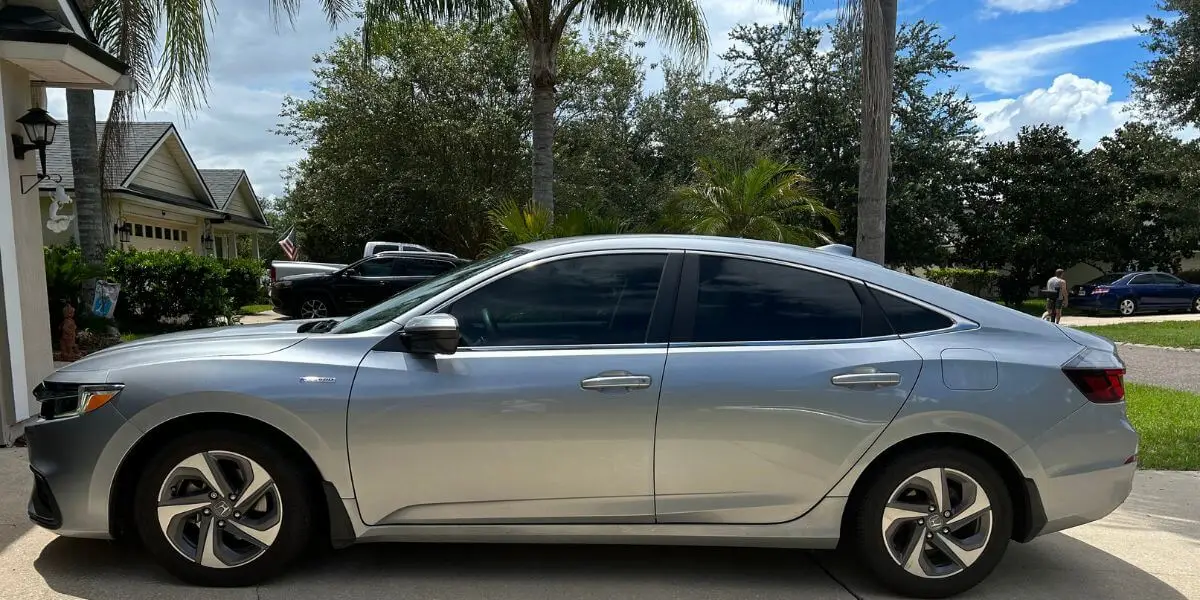
This is a long-term owner review of the 2020 Honda Insight EX — five years of daily driving, 156,000 real miles as of March 2026, zero mechanical failures, and original brake pads still installed. No week-long press loan. Just one car, one owner, a lot of miles, and the honest answer to whether you should buy one used in 2026. Short answer: yes. Real-world MPG runs 50+ on the highway and 60+ in city driving. If you want reliable and fuel-efficient, this is your car. If you want exciting, keep looking.
I bought my 2020 Honda Insight EX new in 2021 — right in the middle of the COVID car market circus where people were paying $5,000 over sticker for anything that moved.
I somehow paid at or below sticker. Partly because I picked the right moment, partly because I sold my 2019 Volkswagen Jetta to Carvana right before the deal and walked away with more than I expected.
I want to be upfront about who’s writing this. I have over 25 years of hands-on automotive experience and I’m a car guy — I like things with power and feel and a little bit of drama.
And I bought a Honda Insight EX on purpose, with full knowledge of what it was. Different cars have different jobs — this car has one job: move people efficiently, reliably, and affordably over a very long time.
At 156,000 miles as of March 2026, it has done that job without a single complaint.
Most 2020 Insight reviews online were filed when the car was new — a week-long drive and done. This is five years of daily ownership, 156,000 real-world miles, and a very specific answer to whether you should buy one today.
Who Is the 2020 Honda Insight Actually For?
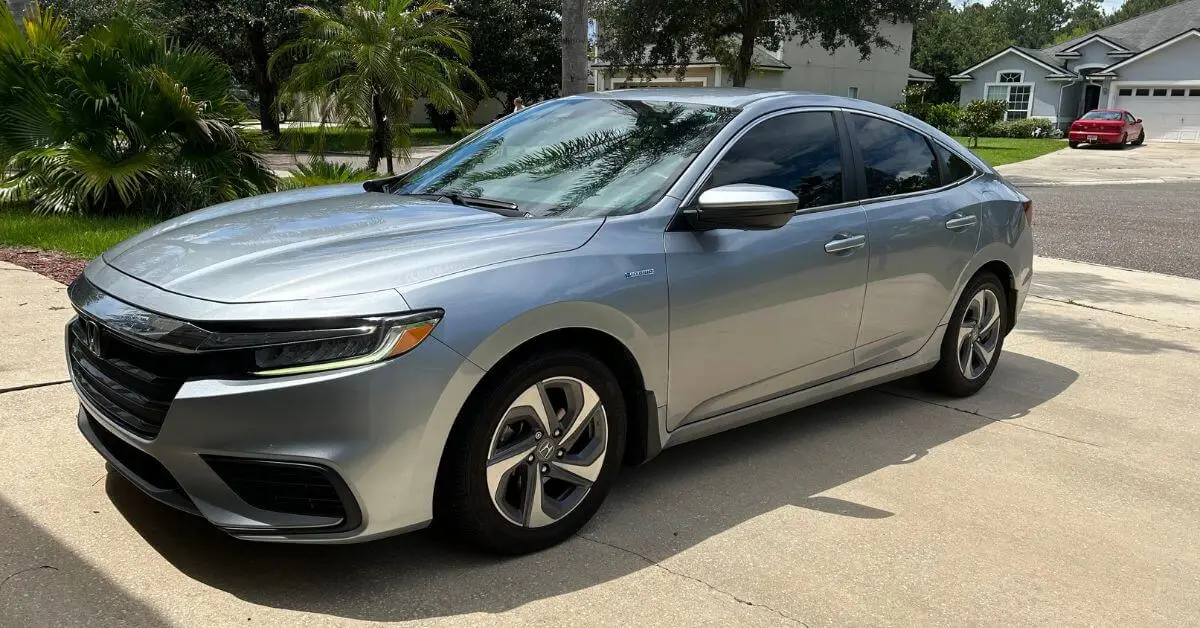
Before anything else, let’s be honest about what this car is. The Insight is a 5-seat compact sedan built around Honda’s two-motor hybrid system — designed to get you somewhere on as little gas as possible, with no pretense of being sporty.
Honda discontinued the Insight after the 2022 model year, replacing it with a new Honda Civic Hybrid. The Insight and the incoming Civic Hybrid were too similar on paper — so Honda kept the more recognizable Civic name and let the Insight go.
The result for buyers in 2026: a flood of used Insights on the market at prices that make a lot of sense for the right person.
That person looks like this: you drive daily, you’re tired of paying serious money at the pump, and you want something that starts every morning and doesn’t need your attention.
You’re not ready for a full EV — or maybe you are but the charging situation isn’t right yet. If you’re on that fence between hybrid and full electric, I cover it in detail in my honest guide to buying an electric car.
The Insight is a genuine bridge car. It drives like a normal sedan, fuels like a normal sedan, and quietly saves you money every single day.
Why Parts Availability Is Not a Problem
The 2020 Honda Insight shares its platform with the 10th-gen Honda Civic and its drivetrain with the Accord Hybrid. Civic parts are everywhere — buying a discontinued model doesn’t mean buying an orphan.
Real-World MPG: What I Actually Get
The EPA rates the 2020 Honda Insight EX at 55 city / 49 highway / 52 mpg combined. Those are excellent numbers on paper — but real-world data tells a more interesting story.
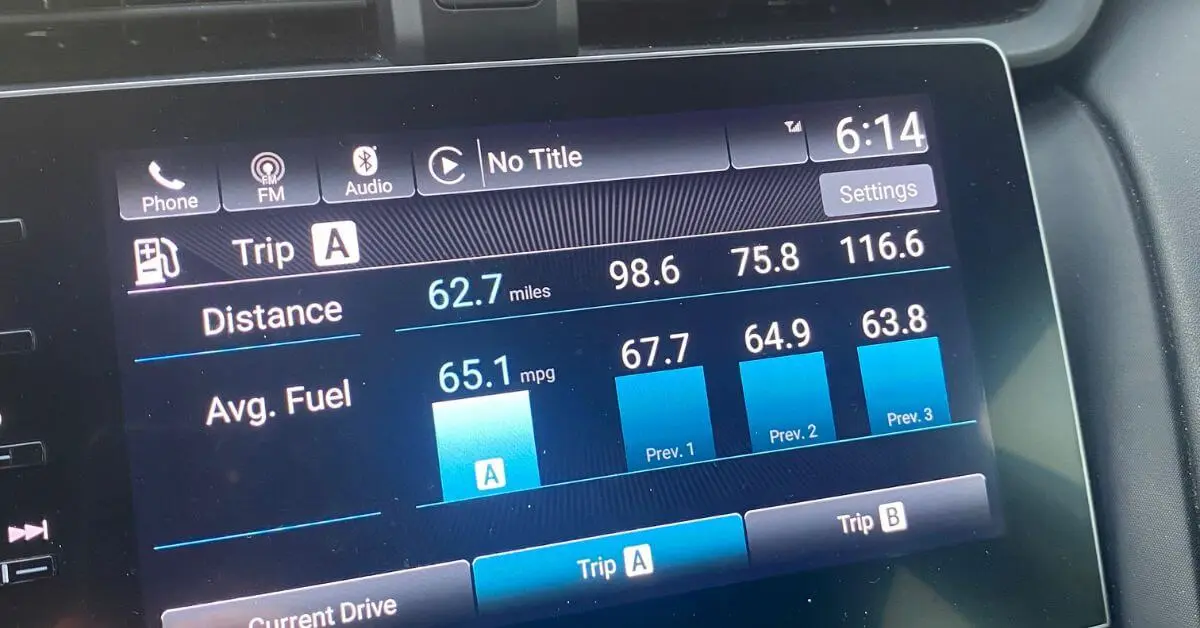
Fuelly’s database of 64 tracked 2020 Insight owners — over 2 million miles of real driving — puts the real-world average at 46.65 mpg combined. My car does better: I consistently see 50+ mpg on the highway and 60+ mpg in city driving.
If you’ve never owned a hybrid, that sounds backwards. Highway is supposed to be the good number — not here.
City driving is where a hybrid earns its keep. Every time you slow down for a stoplight, the electric motor runs in reverse, converts that kinetic energy into electricity, and feeds it back into the battery.
The highway — where you cruise at a steady 70 mph without touching the brakes — gives the regen system almost nothing to work with. The gas engine carries more of the load, but you still get excellent fuel economy.
In Saint Augustine, the flat terrain and regular stop-and-go let this car thrive. I’ve seen 60+ mpg on short city loops while driving completely normally.
The tires you run have a measurable effect on efficiency. If you want to get the most out of a hybrid, low-rolling-resistance tires are worth your attention — I cover what to look for in my guide to the best tires for comfort and noise.
(EX trim)
(real world)
(real world)
(64 cars tracked)
Why City Beats Highway in a Hybrid
At city speeds, the Insight runs primarily on electric power and constantly recharges through regenerative braking. If your commute is mostly urban, expect to beat the window sticker regularly.
What Is It Like to Drive Every Day?
Comfortable, competent, and quiet. Not exciting.
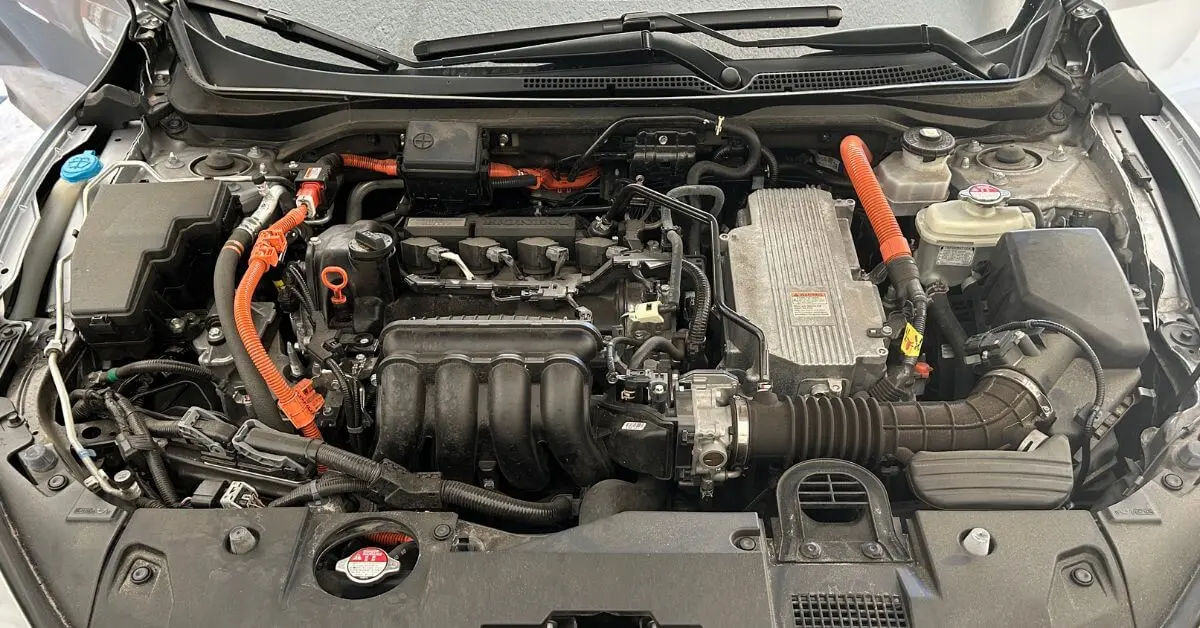
The powertrain — a 1.5-liter Atkinson-cycle four-cylinder that primarily acts as a generator, paired to an electric drive motor for 151 hp combined — never feels strained in real-world conditions. Gets up to highway speed without drama, holds 70–75 mph without breaking a sweat.
Around town it runs on electric power alone most of the time. When the gas engine shows up, the transition is so smooth you’ll miss it unless you’re watching the instrument cluster.
The CVT gets a bad reputation from people who drove underpowered econoboxes a decade ago. The Insight’s CVT matched to a hybrid system is completely different — smooth, predictable, and I have never once thought about it in five years of daily driving.
Engine drone is the criticism in every professional review — it doesn’t bother me.
When you’re accelerating hard from a stop or climbing a sustained grade, there’s more engine noise than you’d hear from a well-insulated conventional sedan. After 156,000 miles it has never once made me want to drown it out.
The interior is well-made and bigger inside than the exterior suggests. The EX trim’s 8-inch touchscreen with Apple CarPlay and Android Auto works cleanly and responds quickly — physical volume knob, logical controls, nothing flashy.
Edmunds called it “typical Honda cabin construction, which is no bad thing” — that’s accurate. Honda builds interiors that age well and don’t rattle, and the Insight is no exception five years in.
Cargo space is 15.1 cubic feet — as good as some midsize sedans, per KBB’s specs. The EX trim’s 60/40 folding rear seat adds flexibility the base LX doesn’t have.
156,000 Miles — Here’s What Actually Broke
Mechanical failures: zero. Not one thing has gone wrong with the drivetrain, hybrid system, transmission, or engine — the high-voltage battery pack performs exactly as it did in 2021.
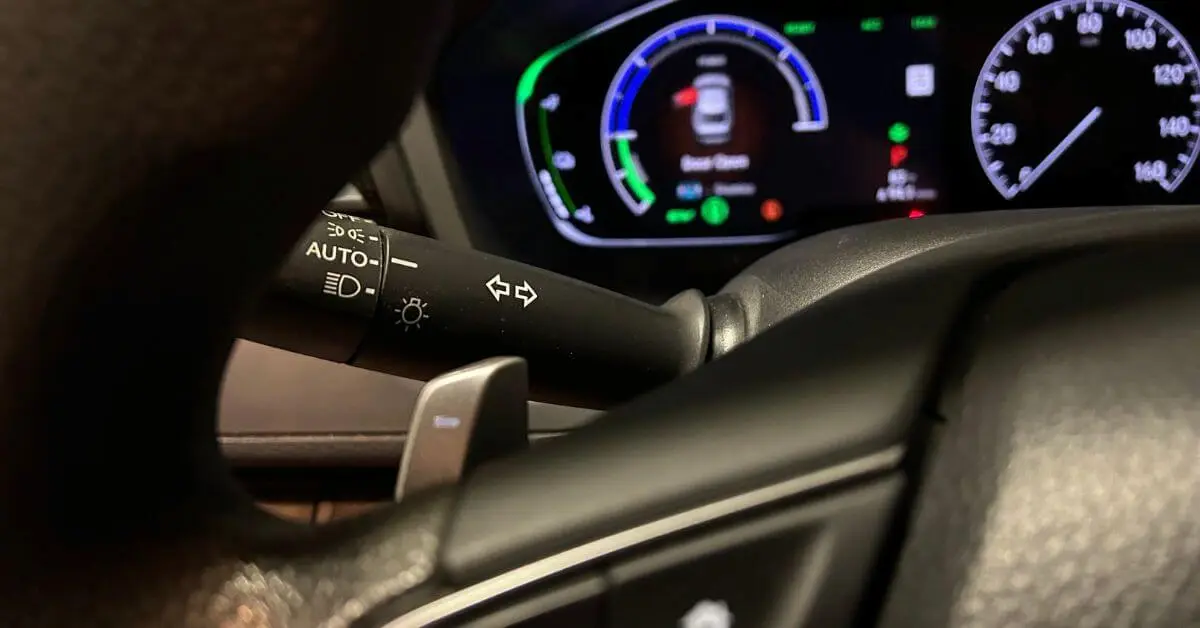
Brake pads and rotors: original, at 156,000 miles. On a conventional car you’d expect to replace pads at least once in that mileage — on a hybrid using regenerative braking, the electric motor decelerates the car before friction brakes ever engage.
I drive normally. The car just doesn’t use friction brakes in everyday driving, and 156,000 miles of original pads proves it.
The one recall: steering gearbox. Honda recalled nearly 1.7 million Honda and Acura vehicles for a steering gearbox defect — the 2020 Insight was among the affected vehicles.
Mine was taken care of by the dealer free of charge around 20,000–30,000 miles. No symptoms I could detect, no out-of-pocket cost — just a fixed car.
If you’re buying a used Insight, check the VIN at NHTSA.gov/recalls to confirm all recalls are closed. Cars.com also maintains a full Honda Insight recall list.
Original Brake Pads at 156,000 Miles
Every time you decelerate, the electric motor slows the car while converting kinetic energy back into electricity — disc brakes only engage for aggressive stops. On a conventional car expect a brake job every 50,000–70,000 miles; on this Insight, zero brake work in 156,000 miles.
How Many Miles Will a Honda Insight Last?
My 2020 Insight EX hit 156,000 miles as of March 2026 with zero drivetrain failures, zero hybrid system issues, and original brake pads. The high-voltage battery performs identically to when I bought the car new in 2021.
The gen3insight.com owner forum has documented members pushing well past 200,000 miles on third-generation Insights without major mechanical issues. The key advantage: the Insight shares its hybrid drivetrain architecture with the Honda Accord Hybrid — a platform Honda has refined over many years.
The component most owners watch is the 12-volt auxiliary battery, not the high-voltage hybrid pack. That smaller battery can fail without warning around 80,000–100,000 miles — budget for one replacement, it’s a $100–200 part.
The hybrid battery itself, covered by Honda’s 8-year / 100,000-mile warranty, has proven durable well beyond that threshold in long-term ownership data. A well-maintained 2020 Insight should reach 200,000+ miles without major issues.
Watch the 12V Auxiliary Battery
The 12-volt auxiliary battery — not the hybrid pack — is what trips up high-mileage Insight owners. Budget for a replacement proactively around 80,000–100,000 miles — cheap insurance compared to a tow bill.
The One Honest Complaint
It is not a driver’s car. Full stop.
The steering is accurate but numb, with body roll in corners. If you care about how a car communicates through the wheel, the Insight will leave you cold.
I am a car guy and I’ve driven this Insight every day for five years without once feeling the urge to push it harder. It handles safely, predictably, and competently — it just doesn’t care about any of it.
But that complaint only matters if you’re shopping for the wrong car. The people buying Insights are looking for a car that starts every morning, costs very little to fuel, and asks nothing of them for 150,000+ miles.
On every one of those criteria, the Insight delivers completely. I knew what it was when I bought it — no regrets.
Should You Buy a Used 2020 Honda Insight in 2026?
Yes — if the use case fits and the price is right.
The Insight was discontinued after 2022, which means used is your only option. The 2019, 2020, 2021, and 2022 cars are all mechanically equivalent — same platform, same drivetrain, no significant updates between model years.
According to Kelley Blue Book, used 2020 Insight dealer prices currently range from around $15,600 for an LX to $17,750 for a Touring, depending on condition and mileage.
For that money you get Honda reliability, IIHS Top Safety Pick+ status with Good ratings in all six crash test categories, and a 5-star NHTSA overall rating. That’s a strong value proposition.
Buy the EX, not the LX or Touring. The LX skips the 8-inch touchscreen, Apple CarPlay, Android Auto, and the folding rear seats — all meaningful omissions.
The Touring trades fuel economy for leather and a moonroof — unless you specifically want those, the efficiency loss isn’t worth it.
Before buying any used Insight: Check recalls at NHTSA.gov/recalls using the VIN. Get a dealer scan of the hybrid battery health — it should show full capacity or very close.
The Honda hybrid battery is covered for 8 years / 100,000 miles from the original in-service date. Check how much warranty is left before you sign anything.
✓ What Works
- 50+ mpg highway, 60+ city in real-world driving
- 156,000 miles, zero mechanical failures
- Original brake pads at 156k — regen handles deceleration
- Civic platform — parts everywhere, mechanics know it
- IIHS Top Safety Pick+, 5-star NHTSA overall
- Excellent used value now that production has ended
- CVT is smooth and perfectly matched to hybrid system
- Genuinely quiet, well-built cabin for the price
✗ What Doesn’t
- Zero driving excitement — numb steering, body roll
- Engine drone under hard acceleration or grades
- Front-wheel drive only — no AWD option
- Rear headroom snug for taller adults
- Discontinued — used market only going forward
- Hybrid battery warranty may be expiring on older examples
Bottom Line
One of the Best Used Hybrid Values Right Now
I’ve put 156,000 miles on this car in five years — original brake pads, zero mechanical failures, real-world 50–60+ mpg, one recall handled free by Honda. If that’s the kind of car you need, the 2020 Honda Insight EX is a genuinely excellent choice at today’s used prices.
Get the EX trim, verify the recalls are closed, and check the hybrid battery. You’ll stop worrying about the engine drone — after 156,000 miles, I promise.
2020 Honda Insight EX — Full Specs
| Spec | 2020 Honda Insight EX |
|---|---|
| Engine | 1.5L Atkinson-cycle 4-cyl. + dual electric motors |
| Combined Output | 151 hp / 197 lb-ft torque |
| Transmission | Electronically controlled CVT |
| EPA Fuel Economy | 55 city / 49 highway / 52 combined mpg |
| Real-World MPG | 46.65 mpg avg (Fuelly, 64 vehicles) |
| 0–60 mph | ~8.1 seconds (Edmunds test track) |
| Drive | Front-wheel drive |
| Cargo Volume | 15.1 cubic feet |
| Seating | 5 passengers |
| IIHS Safety | Top Safety Pick+ — Good in all 6 crash categories |
| NHTSA Rating | 5 Stars Overall |
| Hybrid Battery Warranty | 8 years / 100,000 miles |
| EX Trim Infotainment | 8-inch touchscreen, Apple CarPlay, Android Auto |
| Safety Suite | Honda Sensing standard — adaptive cruise, lane-keep assist, auto emergency braking |
| Production Years (3rd gen) | 2019–2022 |
| Replaced By | Honda Civic Hybrid (2025+) |
Frequently Asked Questions
How many miles will a Honda Insight last?
A well-maintained Honda Insight should reach 200,000+ miles. My 2020 EX has 156,000 miles with zero drivetrain failures — that’s real data, not a projection.
The high-voltage hybrid battery has proven durable in long-term ownership reports well beyond Honda’s 8-year / 100,000-mile warranty.
Is the 2020 Honda Insight reliable?
Yes, extremely — my 2020 Insight EX has 156,000 miles with zero mechanical failures. Original brake pads still installed, nothing beyond scheduled maintenance in five years.
What is the real-world MPG for a 2020 Honda Insight?
Fuelly tracks 64 real 2020 Insights — over 2 million miles — at a combined average of 46.65 mpg. My EX regularly hits 50+ on the highway and 60+ in city driving.
Why was the Honda Insight discontinued?
Honda discontinued the Insight after 2022 because it and the new Civic Hybrid were mechanically near-identical. Honda kept the higher-volume Civic nameplate — lineup strategy, not product quality.
Is the 2020 Honda Insight worth buying used in 2025 or 2026?
For the right buyer, KBB shows dealer prices from $15,600 to $17,750 depending on trim. Get the EX trim and verify all recalls at NHTSA.gov/recalls before buying.
How long do brake pads last on a Honda Insight?
Much longer than a conventional car — my 2020 EX still has original brake pads at 156,000 miles. On a typical gas car expect pad replacement every 50,000–70,000 miles; on a hybrid like the Insight, that interval extends dramatically.
Which 2020 Honda Insight trim should I buy?
The EX — the LX skips the touchscreen, CarPlay, and folding rear seats. The Touring adds leather and a moonroof but trades fuel economy — 51/45/48 mpg versus the EX’s 55/49/52 mpg.
Unless you specifically want those Touring luxury features, the EX is the right call.
Does the Honda Insight have engine drone?
Under hard acceleration or grades, yes — the engine becomes more audible. I’ve owned this car five years and 156,000 miles and it has never once been worth mentioning in daily driving.