
Quick Answer
If you have home charging and mostly drive within 200 miles of home, the 2026 Kia EV9 makes a strong case — especially with its built-in NACS port and access to Tesla Superchargers. But the upfront-price advantage once created by the federal clean-vehicle credit is gone: the IRS says the New Clean Vehicle Credit is not available for vehicles acquired after September 30, 2025.
If you road trip frequently, can’t charge at home, or simply want the lower starting price and five-minute refueling, the 2027 Telluride is the simpler choice.
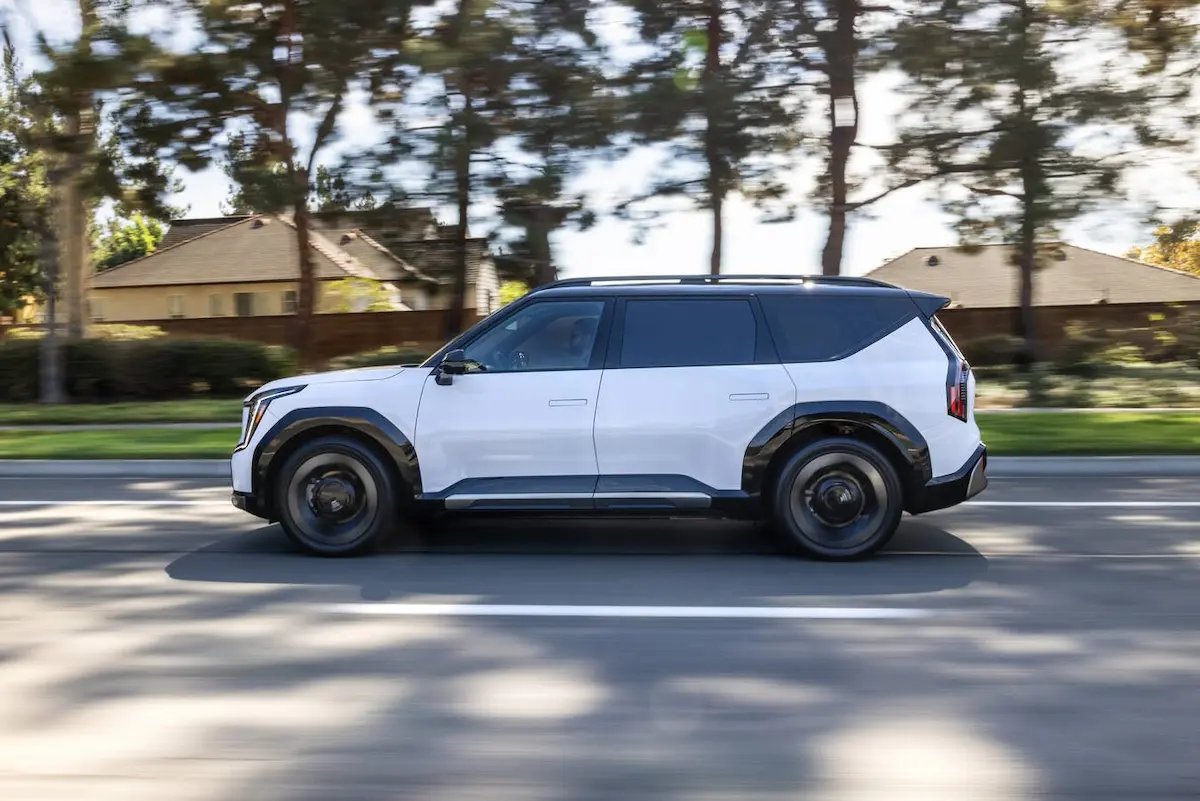
I’ve seen the Kia EV9 in person multiple times — it’s big, angular, and looks like something Kia sketched during a concept show and forgot to tone down before production.
Whether you love it or find it a little much depends entirely on your taste. But the question most families are actually asking isn’t “is the EV9 cool?” It’s “should I buy this instead of a Telluride?”
Those are completely different questions. I’m going to answer that honestly — as a car guy with 25 years of experience who daily-drives a hybrid and helps regular people make smarter car decisions, not chasing spec sheets.
Not sure if an EV is right for you yet? Read the honest guide to buying an electric car — it covers who should buy, who should wait, and what real ownership costs look like.
The full EV Guide is also there when you’re ready to go deeper.
Is There an Electric Kia Telluride?
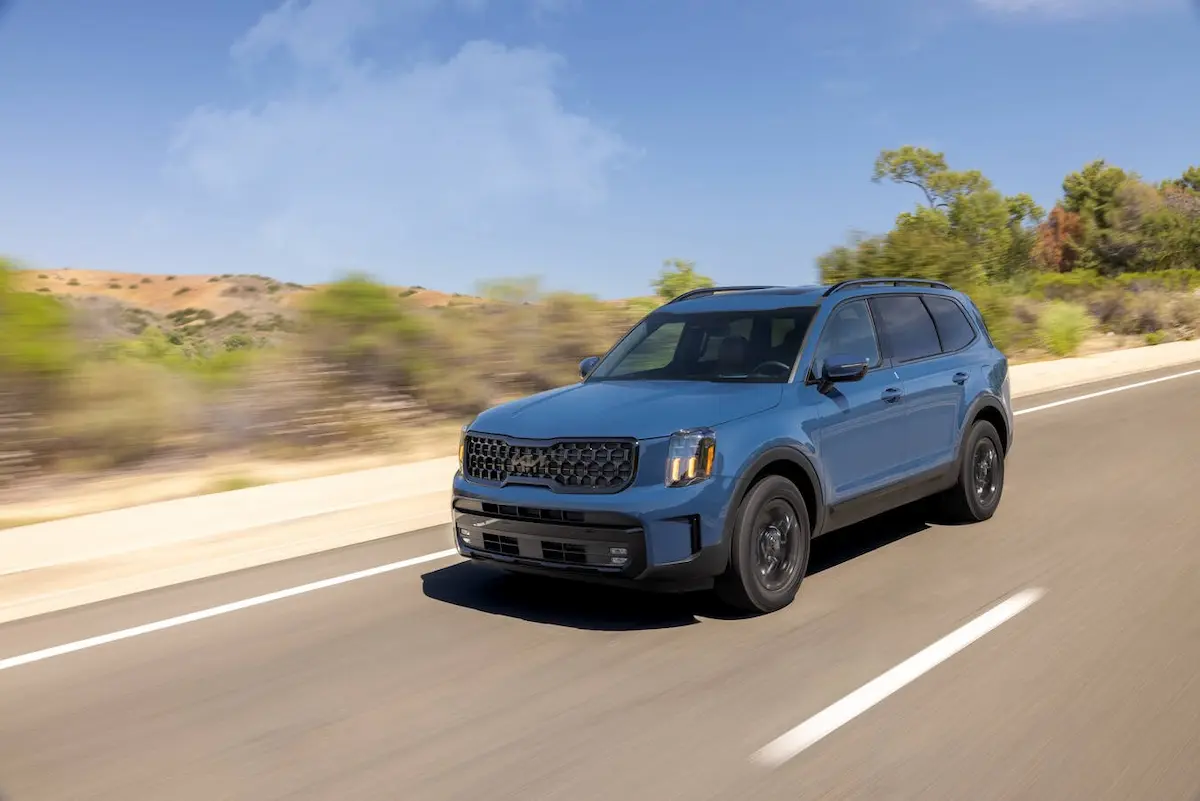
No — there is no all-electric Kia Telluride, and there never has been. Per Kia’s own lineup, the Telluride sells only with a turbocharged gas or hybrid engine.
The electric three-row Kia people are picturing is the EV9. It’s a separate model — not an electric version of the Telluride.
I understand the mixup. Kia built both on the same design language, in nearly the same footprint, and parks them side by side in the same showroom.
To a lot of shoppers they read as one model with two badges. They’re not — one burns gas, the other runs on a battery.
Out on the road the gap is obvious. I see Tellurides constantly and spot an EV9 maybe once a week, if that.
So if you landed here wondering whether the Telluride goes electric, the EV9 is what you actually want. The rest of this guide compares the two head to head.
Is the Kia EV9 Interior Actually Premium Quality?
Before we get into range and price, let’s deal with something that doesn’t get enough attention: Kia’s interior materials.
A friend of mine has a 2024 Kia Telluride with around 50,000 miles on it. The “leather” — actually SynTex synthetic material — is already cracking and peeling on a car that cost close to $50,000 new.
KBB notes that the EV9 uses the same SynTex faux leather across all trim levels, including premium ones. If you’re paying $56,000–$73,000, understand what you’re getting in terms of long-term durability.
The Telluride’s premium reputation is largely built on how good it looks when new. How it holds up over 60,000 miles of real family use is a different conversation.
What SynTex Actually Is
SynTex is Kia’s proprietary synthetic leather used across both the Telluride and EV9. It looks convincing when new.
The durability complaints show up after 40,000–60,000 miles, especially in hot climates where UV accelerates degradation. Condition the material regularly and inspect any high-mileage used example closely before buying.
What Does the Kia EV9 Actually Cost Now?
The 2026 EV9 starts at $54,900 MSRP for the Light RWD before destination, taxes, options, and dealer charges. The 2027 gas Telluride starts at $39,190 MSRP before the same extras — a base-MSRP gap of $15,710.
Do not subtract a $7,500 federal clean-vehicle credit from a 2026 EV9 purchase. The IRS says the New Clean Vehicle Credit is not available for vehicles acquired after September 30, 2025. A vehicle acquired on or before that deadline may still qualify under the IRS transition rules even if it was placed in service later, but that is not normal 2026 purchase math.
Federal EV Credit: Do Not Count It in a 2026 Purchase
For a vehicle acquired after September 30, 2025, the federal New Clean Vehicle Credit is unavailable. Compare the EV9 and Telluride using the actual selling price, current incentives, your charging cost, fuel cost, insurance, and expected ownership period.
The running cost gap is real too. Based on EPA data, the Telluride returns about 22 mpg combined — roughly $2,386 in fuel per year at 15,000 miles and $3.50/gallon.
The EV9 charged at home costs approximately $765 per year for the same mileage. That’s over $1,600 back in your pocket every year.
Add eliminated oil changes and reduced brake wear from regenerative braking, and the maintenance gap widens further over time.
for a 2026 acquisition
before destination/fees
EV9 vs Telluride
100,000 miles
How Does the EV9 Compare to the Telluride on Space and Seating?
The redesigned 2027 Telluride is now slightly longer overall: 199.2 inches versus 197.2 inches for the EV9.
The EV9 still has the longer wheelbase. Kia lists 122.0 inches for the EV9 versus 116.9 inches for the 2027 Telluride — a 5.1-inch difference that helps explain the EV9’s roomy passenger packaging and flat-floor layout.
Cargo still favors the Telluride, but the current numbers are higher than the old model’s. Kia lists 89.3 cubic feet behind the first row for the 2027 gas Telluride, versus 81.7 cubic feet for the 2026 EV9. Behind the third row, Kia lists 22.3 cubic feet for the gas Telluride and 20.2 for the EV9.
InsideEVs notes the EV9’s third row is narrower than the Telluride’s and seats two, not three. Three of the six EV9 trim levels are also six-seat configurations only.
If you need seven seats with a full bench middle row, verify the exact EV9 trim because seating varies by configuration. The 2027 gas Telluride offers either seven- or eight-passenger seating depending on trim; the Telluride Hybrid seats up to seven.
On cabin quietness the EV9 still has the basic EV advantage: there is no gasoline engine running under acceleration or cruise. The redesigned Telluride now uses a turbocharged four-cylinder rather than the old V6, so don’t use old-generation Telluride noise impressions as if they describe the 2027 model.
How Does EV Range Actually Feel vs a Full Gas Tank?
The 2027 gas Telluride has a 19.0-gallon tank. Kia lists 22 mpg combined for front-wheel-drive trims and 19–20 mpg combined for AWD trims. The 2026 EV9 ranges from 230 miles on the Light RWD to 305 EPA-estimated miles on the Light Long Range RWD, with Wind and Land AWD at 283 miles and GT-Line AWD at 280 miles.
That gap feels bigger than it is in daily use — and smaller than it sounds on road trips.
In daily life, most families drive under 50 miles a day. If you charge at home overnight, you start every morning with a full “tank” without ever stopping at a gas station.
People who live this consistently say they’d never go back. The EV lifestyle feels easier, not harder — once home charging is in place.
On road trips, the calculation changes. The Telluride refuels in five minutes anywhere in America — the EV9 needs charging stop planning, with a DC fast charge to 80% taking about 24 minutes at a 350 kW station.
The 2026 EV9 has a built-in NACS port. Kia currently says Kia EV owners can access more than 30,000 Tesla Superchargers through the North American Charging System, substantially improving charging access compared with earlier EV9 model years.
The 2026 NACS Port Changes the Equation
Every 2026 Kia EV9 comes with a built-in NACS charging port — the same standard Tesla uses. No adapter needed for direct Supercharger access.
For anyone nervous about EV road trips based on 2023 or 2024 charging experiences, the 2026 EV9 is a meaningfully better product than its predecessors in this area.
Is Home Charging a Problem With the Kia EV9?
Home charging is non-negotiable. If you live in an apartment without dedicated charging access or rely on street parking, the EV9 adds daily friction the Telluride never does.
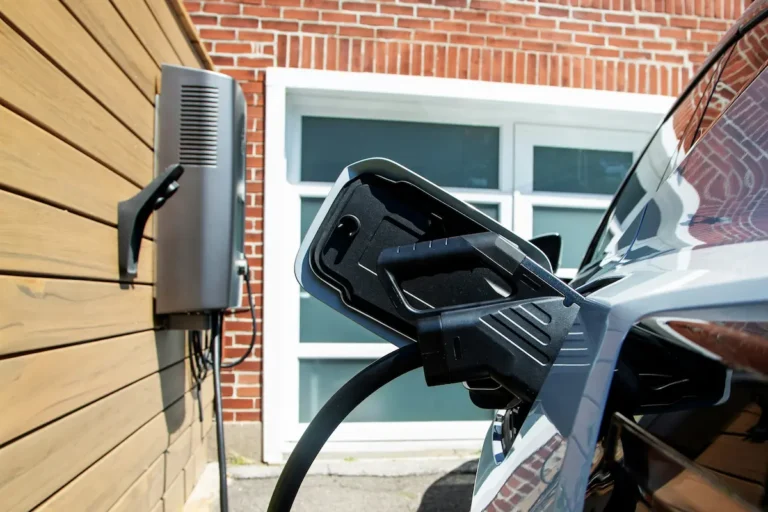
If you have a garage or dedicated spot and can install a Level 2 home charger — typically a $500–$1,500 install — the EV9 makes daily life easier, not harder.
Plug in at night, wake up to a full charge. People who live this consistently report they’d never go back to stopping at gas stations.
Public DC fast charging is improving but isn’t perfect yet. The 24-minute charge to 80% is fast in EV terms — but if you’re doing back-to-back long drives with tight timing, the Telluride’s five-minute fill wins.
No Home Charging = Wrong Car
This isn’t a knock on the EV9 — it’s just reality. Without home charging you’re stopping at public chargers for your daily commute, which adds unpredictability the Telluride never asks of you.
Until public charging reaches gas station density and speed, home charging is the foundation the EV ownership experience is built on.

How Does the EV9 Perform and Tow Compared to the Telluride?
The EV9 AWD makes 379 horsepower and reaches 60 mph in around 5 seconds — genuinely quick for a three-row family SUV. The electric torque is immediate and smooth, no gear changes, just clean acceleration that catches passengers off guard.
The redesigned 2027 gas Telluride no longer uses the old 3.8-liter V6. Kia lists a 2.5-liter turbocharged four-cylinder with 274 horsepower and 311 lb-ft of torque. The separate Telluride Hybrid uses a 2.5-liter turbo-hybrid powertrain rated at 329 horsepower.
New for 2026: The EV9 GT
The 2026 model year adds a new GT performance trim with 501 horsepower and a 0-60 time of 4.3 seconds. It also comes with upgraded brakes, electronically controlled suspension, and 21-inch wheels.
Kia introduced the GT as the high-performance EV9, with an estimated 501 horsepower and a targeted 4.3-second 0–60 mph time. It sits above the regular EV9 lineup on performance and price. The expired federal clean-vehicle credit should not be part of 2026 GT-versus-Telluride math.
Maximum tow ratings are now closer than the old comparison suggested. Properly equipped EV9 trims are rated up to 5,000 lbs, and the 2027 gas Telluride is also rated up to 5,000 lbs. The 2027 Telluride Hybrid is rated up to 4,500 lbs.
If you tow regularly, the Telluride can still be the easier long-distance tool because gasoline refueling is faster and Kia warns that towing can significantly reduce EV9 range. But the old 5,500-lb Telluride advantage no longer applies to the redesigned 2027 gas model.
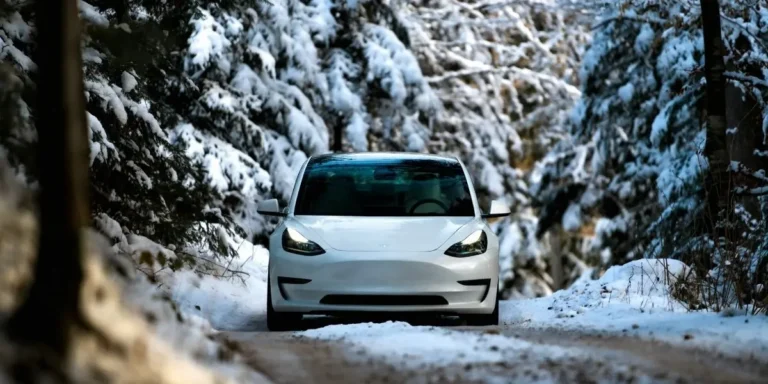
For snow and all-weather driving the EV9’s AWD dual-motor setup is excellent — electric motors respond faster than mechanical AWD. All 2026 AWD trims also include a new Terrain mode with Snow, Mud, and Sand settings.
What Are the Full Specs: Kia EV9 vs Kia Telluride?
| Spec | 2026 Kia EV9 | 2027 Kia Telluride (Gas) |
|---|---|---|
| Starting Price | $54,900 MSRP ($56,495 w/dest) | ~$39,190 |
| Federal Clean-Vehicle Credit | Not available for vehicles acquired after Sept. 30, 2025 | N/A |
| Powertrain | Electric (RWD or AWD) | 2.5L turbo 4-cylinder (FWD or AWD) |
| Max Horsepower | 501 hp est. (GT) / 379 hp (GT-Line AWD) | 274 hp |
| Peak Torque | Up to 516 lb-ft (GT-Line with available boost) | 311 lb-ft |
| Range / Tank | 230–305 miles (RWD); 280–283 miles (AWD) | 19.0-gal tank; 22 mpg combined FWD, 19–20 mpg AWD |
| Refuel / Recharge | 24 min (10–80%, DC fast) | ~5 min at any gas station |
| Max Towing | 5,000 lbs | 5,000 lbs |
| Max Seating | 7 passengers | Up to 8 passengers |
| Max Cargo | 81.7 cu ft | 89.3 cu ft |
| Cabin Noise | Significantly quieter | Turbo gas engine audible under load |
| Annual Fuel Cost | ~$765 (home charging) | ~$2,386 (at $3.50/gal) |
| Oil Changes | None | Required |
| Charging Network | Built-in NACS + 30,000+ Tesla Superchargers | N/A |
| Powertrain Warranty | 10 yr / 100,000 mi | 10 yr / 100,000 mi |
| IIHS Safety | Top Safety Pick+ | Top Safety Pick+ (vehicles built after June 2026) |
Table scrolls horizontally on mobile. Federal clean-vehicle credits are not available for vehicles acquired after September 30, 2025.
Telluride pricing reflects 2027 redesign. Verify current incentives before purchasing.
Should You Buy the EV9 or Stick With the Telluride?
This is the part that actually matters. Not specs — situations.
Buy the EV9 if…
- You have a garage or dedicated spot with home charging
- Most of your driving is within 150–200 miles of home
- You’re comfortable paying the EV9’s higher upfront price without a federal clean-vehicle purchase credit
- You’re done paying for gas and oil changes
- Cabin quietness matters to your family on long drives
- You want Tesla Supercharger access for road trips
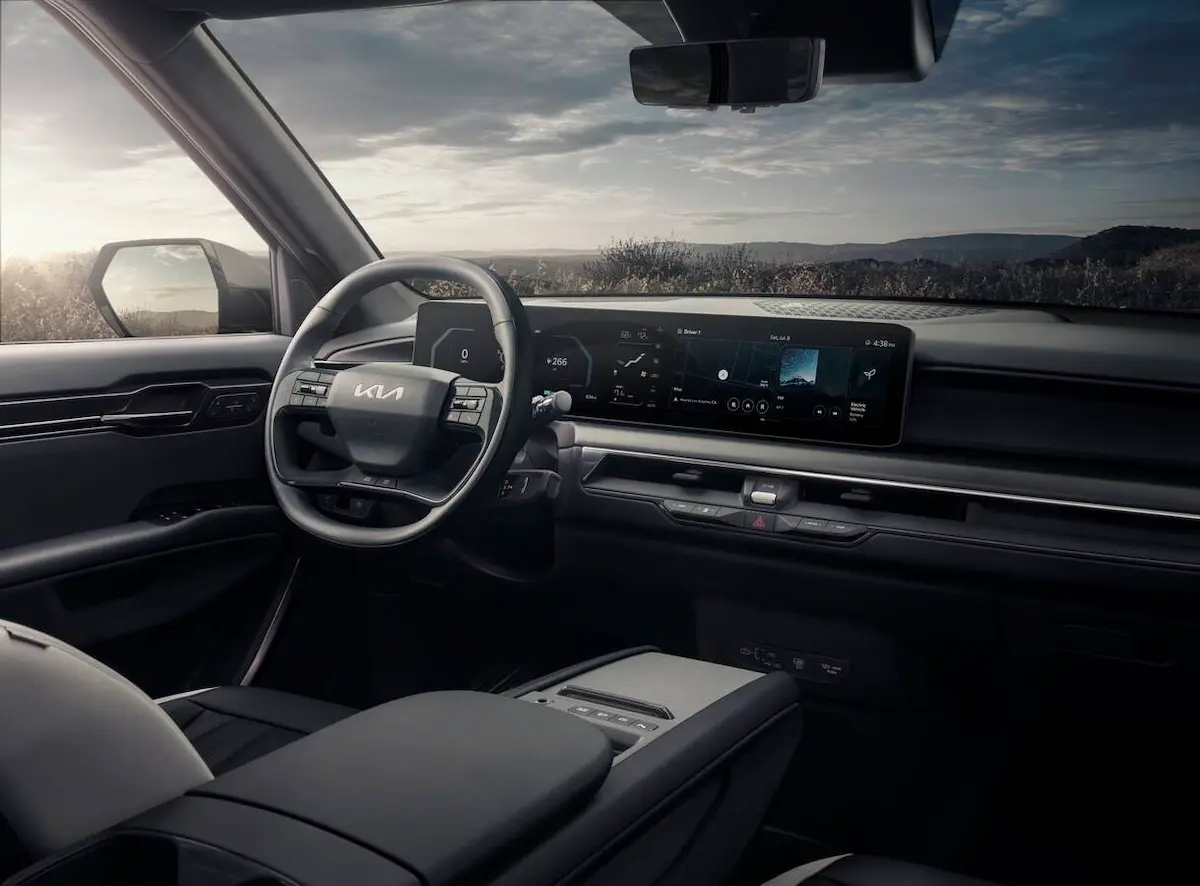
- You want the most modern interior tech available
- You’re keeping the car 5–8 years and want fuel savings to add up
Stick with the Telluride if…
- You can’t charge at home reliably
- You regularly road trip 300+ miles without built-in stops
- You tow frequently and value fast refueling and long-trip simplicity more than EV efficiency
- You need 8 seats consistently
- Budget is a real constraint — base MSRP is about $15,700 lower than the EV9 before destination and fees
- You live somewhere with sparse charging infrastructure
- You’re not ready to change how you fuel a vehicle
A Third Option Worth Knowing: The 2027 Telluride Hybrid
The 2027 Kia Telluride launched with a new turbocharged hybrid powertrain — and it changes this comparison. With an EPA-estimated 35 mpg combined, it dramatically cuts fuel costs without any charging infrastructure required.
If you want three rows, lower fuel costs, and zero charging anxiety, the 2027 Telluride Hybrid is now a legitimate option worth factoring in before you decide between the EV9 and the standard Telluride.
Also worth knowing: the Hyundai IONIQ 9 is a direct EV9 competitor — same platform, more interior space, and worth comparing before you decide on an electric three-row. It’s a different vehicle from a different brand despite the shared Hyundai Motor Group DNA.
If you’re on the fence and not ready to go all-electric, my guide to hybrid SUVs with a third row covers the best options at every price point.
And if cabin quietness is a priority regardless of what you buy, my guide to the quietest SUVs breaks down which three-row options deliver the most serene highway experience — with real dB data, not marketing claims.
What Do EV9 Buyers Ask Most?
Is the Kia EV9 bigger than the Telluride?
The redesigned 2027 Telluride is actually a little longer overall: 199.2 inches versus 197.2 inches for the EV9. The EV9 has the longer wheelbase at 122.0 inches versus 116.9, while the gas Telluride has more maximum cargo room at 89.3 cubic feet versus the EV9’s 81.7.
Do Kia EV9s hold their value?
KBB projects the EV9 will depreciate around $36,822 over five years — roughly 65% value retained, which isn’t bad for an EV. The Telluride historically holds value better, making it the safer bet if resale is your priority.
Is the Kia EV9 better than the Telluride for families?
It depends entirely on your charging situation. The EV9 is quieter, faster, and cheaper to fuel — the Telluride is cheaper to buy, has more cargo, seats eight, and refuels anywhere. With the 2027 Telluride Hybrid now available, there’s a strong middle-ground option worth considering too.
Does the 2026 Kia EV9 qualify for a federal clean-vehicle tax credit?
Not for a normal 2026 acquisition. The IRS says the New Clean Vehicle Credit is not available for vehicles acquired after September 30, 2025. A vehicle acquired on or before that deadline may still qualify under the IRS transition rules even if it was placed in service later.
For a 2026 purchase, do not subtract $7,500 from the EV9’s price unless your transaction actually falls under that pre-deadline acquisition rule.
What is the real-world range of the Kia EV9?
Kia estimates up to 305 miles for the Light Long Range RWD, with AWD models at 280–283 miles. Expect 10–15% less in hot or cold weather or at sustained highway speeds above 70 mph, and 30–40% less when towing.
For a deeper explanation of how rated range compares to real-world driving, this guide breaks down the full range math — highway speed impact, cold weather, and what the numbers actually mean day to day.
How long does it take to charge the Kia EV9?
On a 350 kW DC fast charger, the EV9 goes from 10% to 80% in approximately 24 minutes and can add 155 miles in about 15 minutes. On a Level 2 home charger, a full charge takes around 9 hours overnight — plug in before bed, full in the morning.
Is the Kia EV9 worth the extra cost over a Telluride?
The base-MSRP gap is currently about $15,710 before destination, options, taxes, and dealer charges, and there is no federal clean-vehicle credit for a normal 2026 acquisition. The EV9 can still save money on home-charging energy and routine engine-related maintenance, but there is no honest universal 6–8 year break-even without your actual transaction price, annual mileage, electricity rate, gasoline price, insurance, and ownership period. KBB named the EV9 its 3-Row EV Best Buy for 2026.
Which Kia EV9 trim is the best value?
That depends on whether you prioritize price, range, or AWD. Kia lists the Light Long Range RWD at $57,900 MSRP with up to 305 miles of EPA-estimated range, while the Wind AWD starts at $63,900 and adds dual-motor AWD with 379 horsepower. Do not use federal tax-credit eligibility as a trim-selection factor for a normal 2026 acquisition because that credit is no longer available.
Can the Kia EV9 tow as much as the Telluride?
Properly equipped EV9 trims are rated up to 5,000 lbs, which now matches the maximum rating of the redesigned 2027 gas Telluride. The Telluride Hybrid is rated up to 4,500 lbs. The gas Telluride can still be easier for frequent long-distance towing because refueling is faster and Kia warns that towing can significantly reduce EV9 range.