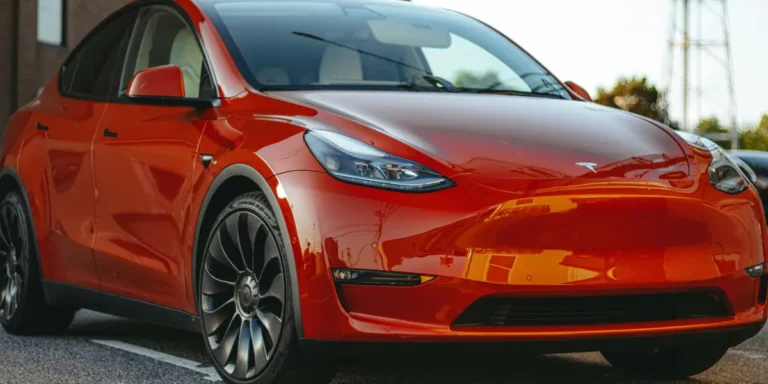

Regenerative braking turns your motor into a generator when you slow down. It converts that momentum into electricity instead of burning it off as heat through brake pads.
The payoff can be real: many EVs go well beyond typical gas-car brake intervals, with owners reporting 80,000–150,000+ miles on original pads. But rotor rust, cold-weather limits, and tire wear are trade-offs most articles never cover.
Every time you hit the brakes in a gas car, you throw energy away. The kinetic energy it took fuel to build turns into heat at the rotor and vanishes.
EVs and hybrids catch that energy and put it back in the battery. That’s regenerative braking — and it changes your whole maintenance picture.
What Is Regenerative Braking?
Regenerative braking captures your vehicle’s energy when you slow down and feeds it back into the battery. On a gas car, that energy is wasted as heat on every single stop.
EVs and hybrids use the electric motor to do the braking — and in doing so, that motor becomes a generator. The energy that would have vanished comes back as usable electricity instead.
How Does Regenerative Braking Work?
Your electric motor works in two directions. Forward, it draws power from the battery to turn the wheels. In reverse, the spinning wheels drive it — pushing electricity back into the battery pack.
Lift your foot off the accelerator and the car’s software switches the motor to generator mode in milliseconds. The electromagnetic resistance that creates is what slows you down.
- Motor switches modes: Software flips it to generator in milliseconds — no physical reversal needed
- Wheels drive the motor: Your forward momentum becomes the mechanical input
- Electricity flows back: Current routes through the inverter into the battery
- You feel: Smooth deceleration — no brake pedal required
- Hard stop needed: Friction brakes engage automatically alongside regen
The motor does not physically spin backward to do this. Complex electronic controls switch its role in less time than you can perceive.
The software handles everything — when to switch, how much electricity to route, and when to call in the friction brakes. You never manage any of this manually.
What Does Regenerative Braking Feel Like to Drive?
I drive a 2020 Honda Insight every day. I covered the full ownership experience in the Insight review.
The Insight uses Honda’s Deceleration Paddle Selector — three stages of regen controlled by paddles on the steering wheel. Pull the left (−) paddle to increase regen; pull the right (+) paddle to reduce it.
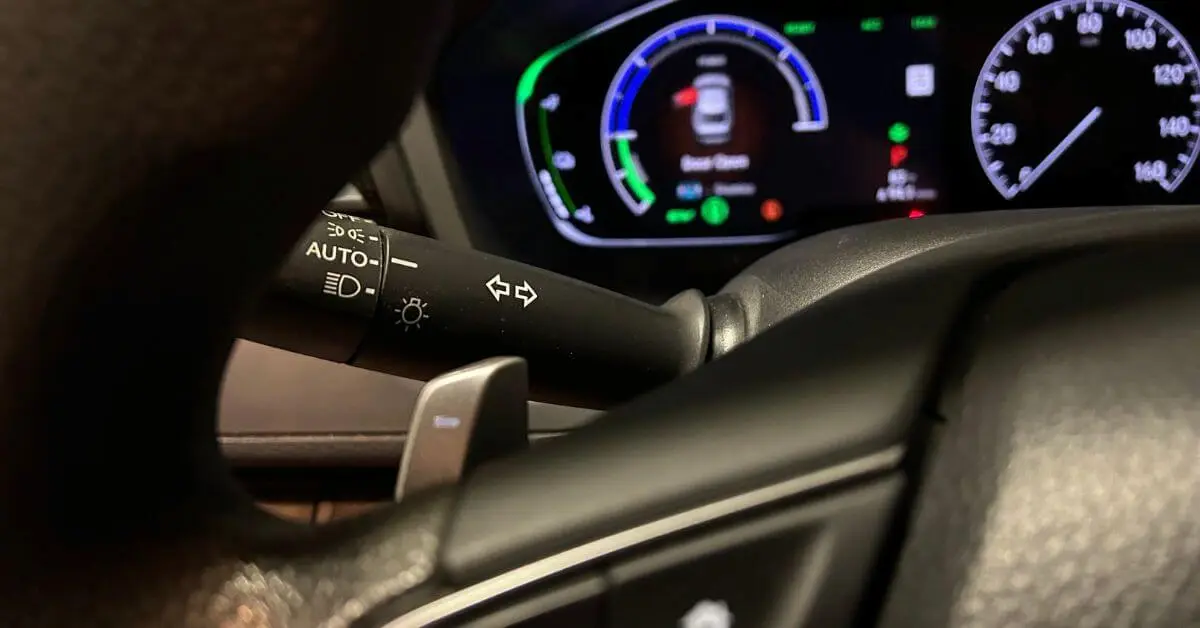
Even at stage 3, the Insight’s regen feels subtle compared to a full EV. That’s because the battery is small — it fills quickly and limits how hard the system can regen before it runs out of room.
A full EV in one-pedal mode is a different experience entirely. Lift your foot and the car slows noticeably — more than engine braking, more than most first-timers expect. If you’re still weighing whether an EV makes sense for your situation, the honest EV buying guide breaks it down without the cheerleading.
If you want to know what it actually feels like to use maximum regen in daily driving, see our full guide to what is one-pedal driving.
One safety point straight from the Insight manual: rapidly jumping through deceleration stages can cause the tires to skid, per Honda’s official documentation. Go easy on the paddles in slippery conditions.
One safety point that doesn’t appear in the manual: the Deceleration Paddle Selector does not activate the brake lights. I learned that the hard way — I got rear-ended because of it. Honda treats paddle use as deceleration control, not braking, so the driver behind you sees no signal you’re slowing down.
If you use the Deceleration Paddle Selector in traffic, tap the brake pedal lightly at the same time. That’s the only way to trigger the brake lights and warn the driver behind you. This isn’t in the Honda manual — but it’s the lesson I learned after getting rear-ended using the paddles to slow down.
How Does Regenerative Braking Stop the Car?
Regen alone cannot stop the car in every situation. Every EV and hybrid still has traditional hydraulic friction brakes — same pads, rotors, and calipers as any gas car.
The two systems blend in real time. Light deceleration is mostly regen; harder stops blend in friction brakes until you feel one seamless pedal the whole way.
When regen maxes out and friction brakes take over, some drivers notice a subtle change in pedal resistance at the transition point. It’s completely normal — most drivers stop noticing it within two to three weeks.
Regen fades out below about 5–7 mph. There’s not enough kinetic energy left to capture at very low speeds, so friction brakes finish every stop automatically.
The system also reduces regen on its own when the battery is full, cold, or when traction is low. In every case, friction brakes pick up the slack — no input needed from you.
How Much Energy Does Regenerative Braking Actually Recover?
According to Car and Driver, citing 2024 DOE data, full EVs return about 22% of available energy through regen. Hybrids recover around 9% — limited by their smaller battery and more complex drivetrain.
That 22% is a trip-level average across mixed driving. Across a full city drive, a 10–30% real-world range improvement is realistic.
Highway driving recovers almost nothing. Regen only works when you’re actively decelerating — steady cruising doesn’t give it anything to capture. For a realistic picture of what affects real-world range, the full EV range breakdown covers every variable.
Car and Driver notes coasting is more efficient than regen when you don’t need to slow down. Converting energy twice creates losses both ways. But when you do need to brake, regen beats friction braking every time.
EV vs. Hybrid Regen: What Is the Real Difference?
Full EVs have a direct motor-to-wheel connection — no traditional transmission to limit things. A Porsche Taycan recovers up to 400 kW through regen — more than its own 320 kW DC fast-charging peak.
Hybrids work differently. The motor sits inside a more complex drivetrain that slows regen engagement. The small battery also fills quickly — so the system backs off sooner than a full EV ever would.
| Vehicle Type | Trip Recovery | Where Regen Shines | Brake Pad Life |
|---|---|---|---|
| Full EV | ~22% (DOE 2024) | Best in heavy stop-and-go | 100,000–150,000 mi |
| Hybrid | ~9% | Small battery limits recovery | 60,000–100,000 mi |
| Gas car | 0% | 0% — all wasted as heat | 30,000–50,000 mi |
The EV Guide on this site breaks down real ownership costs across EV and hybrid models. The longer regen handles your daily braking, the further apart your brake visits get.

For the full maintenance savings comparison — including where regen fits into the actual numbers — the EV maintenance cost breakdown has it all.
What Are the Downsides of Regenerative Brakes?
Twenty-five years working on brake systems teaches you one thing: whenever you change how hardware gets used, new failure modes appear. Regen brakes are genuinely beneficial.
But these are the problems that show up in real-world shops — and that almost no article covers honestly.
- Rotor rust from underuse: Gas car brakes scrub the rotor clean every stop. EV rotors can sit for days without friction contact. Moisture and salt accumulate. Tesla’s official Model Y owner’s manual recommends frequently pressing the brake pedal to dry the brake pads and rotors — not to stop, just to clean.
- Caliper seizure: Calipers and slide pins that sit unused for months can corrode and seize. You can have near-new pads and a seized caliper dragging on the rotor at the same time. This is an EV-specific shop problem that catches owners off guard.
- Cold weather reduction: Cold batteries can’t safely accept rapid charging, so the car limits regen to protect the cells. Regen typically reduces in cold weather, often below about 60°F. The Insight manual explicitly states regen may become less effective when battery temperature is too cold. Friction brakes compensate; regen returns as the battery warms — the same temporary pattern covered in our guide to electric cars in cold weather.
- Slippery roads: Strong regen fires the moment you lift off the accelerator. On ice or snow, that sudden deceleration can break traction before stability control reacts — especially on single-motor EVs. The Insight manual includes a CAUTION warning about rapidly increasing deceleration stages on low-traction surfaces.
- Tire wear on heavy EVs: EVs wear tires faster than comparable gas cars — but weight and instant torque do most of the damage, not regen directly. Strong regen contributes by loading the driven wheels during deceleration instead of spreading force evenly across all four through traditional braking. Rotate on schedule — even when brake pads show no wear.
- Glazed brake pads: Pads that rarely get hot can glaze over time. Glazed pads don’t bite the way fresh pads do when you need a hard stop. A few firm brake applications from 40–50 mph keeps them conditioned.
Jalopnik’s research on Tesla brake data found owners in the salt belt needing new rotors at 65,000 miles despite near-new pad thickness. The pads lasted — the rotors didn’t.
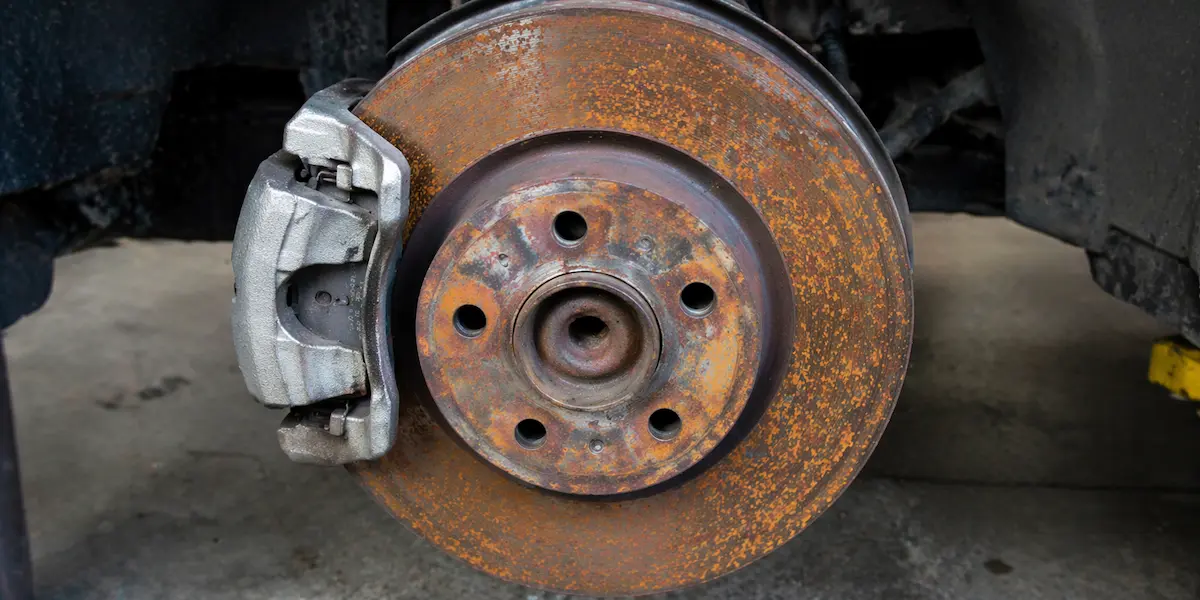
Wear and corrosion are two completely different failure modes — regen eliminates one while making the other more likely. About every two years is a smart inspection baseline, especially in humid or salty climates, and never skip brake fluid changes just because you barely use the friction system.
Should You Use Regenerative Braking All the Time?
In city driving: yes, without reservation. Every slowdown is energy recovery — every stop sign is battery charge, and every light you coast toward early is range you get back instead of heat you throw away.
On the highway: it barely matters. Regen only works when you’re actively decelerating, and steady cruising at speed gives it almost nothing to capture.
On slippery roads: reduce it. Strong regen fires the moment you lift off the accelerator — on ice or snow that sudden deceleration can break traction before ABS responds, so use your vehicle’s winter mode and let it soften regen automatically.
When descending steep grades: lean on it. Holding a strong regen stage on a long downhill maintains safe following distance without overheating friction brakes — it’s the modern version of downshifting on a mountain road, and it works better.
On flat terrain at speed: leave it alone. Regen is a city and mountain tool — forcing it on the highway adds unnecessary tire load for almost no range benefit.
Car and Driver is right that many automakers agree: aggressive one-pedal driving in American suburban conditions isn’t the most efficient approach. Smooth anticipation beats hard deceleration every time.
What Is the 30/30/30 Rule for Brakes — and Does It Apply to EVs?
The 30/30/30 rule is a traditional brake guideline: inspect pads at 30% thickness, check rotors at 30% of minimum thickness, do it every 30,000 miles. It’s a mechanic’s shorthand — not an official standard.
For EVs, the mileage part is nearly useless. Many EVs go well beyond typical gas-car brake intervals according to Recharged — so triggering an inspection at 30,000 miles doesn’t match how little the friction system actually gets used.
What the 30/30/30 rule gets right is the inspection discipline — checking regularly regardless of visible wear. On an EV, corrosion is the concern, not thickness, and corrosion is driven by time and climate, not mileage.
A three-year-old EV in a humid climate can have heavily rusted rotors, seized slide pins, and degraded brake fluid. All of that happens even with original-thickness pads still installed.
The right EV brake framework is time-based, not mileage-based — about every two years is a smart baseline, especially in humid or salty climates. A 30,000-mile EV that lived outside in a wet climate can have worse brake condition than a 70,000-mile car garaged in a dry one.
If you’re buying a used EV, brake inspection records matter more than mileage. The used EV buyer’s guide covers what to look for before you hand over a check.
How Much Will Regen Braking Save You on Brake Jobs?
See how much regen could save you over 150,000 miles. Adjust the numbers to your situation.
Brake Job Savings Calculator
Numbers based on averages from Recharged and Jalopnik’s real-world Tesla brake data. Your actual savings depend on driving style and climate.
EV owners who skip brake inspections in humid climates often spend more on corrosion repairs than they saved on pads. The two-year inspection rule matters regardless of mileage.
Have Questions About Regenerative Braking?
Does regenerative braking work the same in all EVs and hybrids?
No. Full EVs recover approximately 22% of available energy versus 9% in hybrids, per 2024 DOE data cited by Car and Driver. AWD EVs with motors on multiple axles generally recover more than single-motor setups, and the driver interface varies significantly by brand — Tesla puts most regen into the accelerator lift-off while Porsche blends it mostly into the brake pedal.
Will regenerative braking damage my battery over time?
No, under normal use. The battery management system controls how much current regen can push into the pack and automatically reduces regen when the battery is full, cold, or hot. Regen operates in short charge bursts — far gentler on the cells than sustained DC fast charging.
Do brake lights activate during regenerative braking?
It depends on the vehicle. On the 2020 Honda Insight, using the Deceleration Paddle Selector does not activate the brake lights — confirmed firsthand by this article’s author, who was rear-ended because of it. Honda treats paddle deceleration as a coasting event, not a braking event. Other EVs may activate brake lights during strong regen deceleration. Tap the brake pedal lightly while using paddles in traffic.
Why does my regenerative braking feel weaker on cold mornings?
Cold batteries cannot safely accept rapid charging, so the car automatically limits regen when temperature drops — typically below about 60°F. The Honda Insight owner’s manual explicitly states that regenerative braking may become less effective when the high-voltage battery temperature is too low. Regen returns to full strength as the battery warms from driving.
How often should I have my EV’s brakes inspected?
About every two years is a smart baseline, especially in humid or salty climates. Pad wear is rarely the concern on an EV — corrosion is. Rotors that don’t get regular friction contact accumulate surface rust, and calipers that go long periods without use can seize. Have brake fluid moisture content tested at the same interval, since fluid degrades over time even with light use.