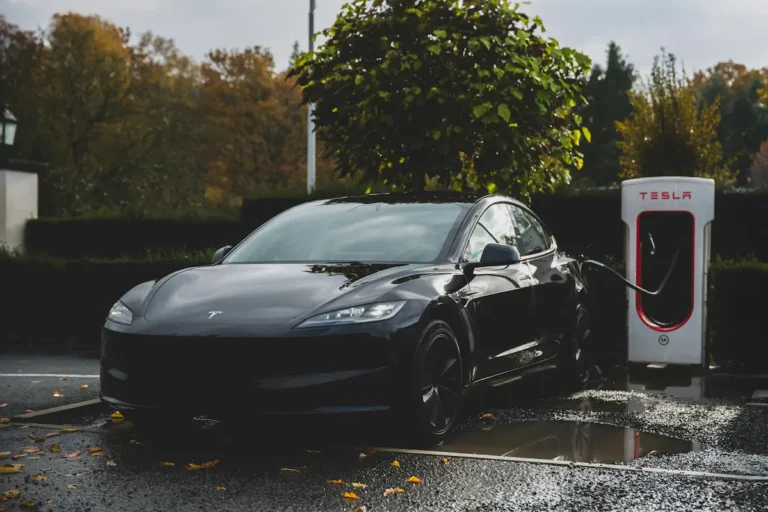

EV maintenance costs run $300–$600 per year for most mainstream electric cars — roughly 40–50% less than a comparable gas vehicle, based on Consumer Reports member data and U.S. Department of Energy figures.
The savings are real — but tires wear faster on EVs and will be the expense that genuinely surprises you. Here’s the full honest breakdown, including what happens after the 8-year warranty expires.
In This Guide
- What you stop paying for completely
- What you still pay for
- EV maintenance schedule by brand
- The tire problem nobody talks about
- Year-by-year cost breakdown
- Battery replacement — the real numbers
- What happens after the 8-year warranty expires
- EV vs gas: real 5-year comparison
- Calculate your savings
- Hidden costs that offset the savings
- FAQ
The headline is true: electric cars are cheaper to maintain than gas cars. What the headline leaves out is the full picture — which costs disappear, which costs stay, and what the bill looks like after the warranty runs out.
I’ve spent 25 years in automotive and I understand these drivetrains. Here’s the real cost breakdown — including the parts that catch people off guard years into ownership.
Sources: DOE FOTW #1190 · Consumer Reports 2020 · Recurrent 2025

What You Stop Paying For Completely
A gas engine has hundreds of moving parts that wear on a predictable schedule — an electric drivetrain has roughly 20, and that gap is the entire maintenance story.
Here’s what disappears from your bill permanently:
| Gas Car Expense | Typical Cost | In an EV |
|---|---|---|
| Oil changes | $100–$200/yr | Gone |
| Spark plugs | $100–$300 per service | Gone |
| Transmission fluid | $100–$250 per flush | Gone |
| Timing belt/chain | $500–$2,000 | Gone |
| Exhaust system repairs | $300–$1,500 | Gone |
| Engine air filter | $25–$75/yr | Gone |
| Serpentine belt | $100–$200 | Gone |
| Catalytic converter | $500–$3,000 | Gone |
The U.S. Department of Energy estimates scheduled maintenance at 6.1 cents per mile for a battery-electric vehicle versus 10.1 cents per mile for a gas car. No combustion means no combustion maintenance — that’s the whole equation.
What You Still Pay For
An EV isn’t zero maintenance. Physics doesn’t care what powers the car — tires still wear, fluids still age, and small batteries still die.
Here’s what stays on your bill with realistic 2025–2026 pricing:
Annual EV Maintenance — What You Actually Pay
Your EV has two batteries — the big one that drives the car, and a small 12V auxiliary that runs accessories. That battery costs $100–$250 and will fail without warning if ignored — replace it proactively at the 4-year mark.
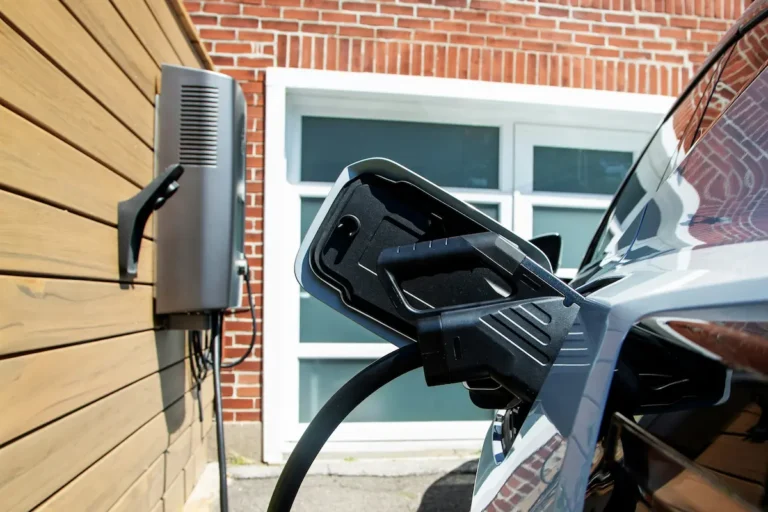
One cost new EV owners often forget to budget for upfront: home charging setup. Our guide breaks down what Level 2 charging is, what installation actually costs, and whether you even need it — including the federal tax credit that expires June 30, 2026.
EV Maintenance Schedule by Brand
Not all EVs follow the same service schedule — and this is one of the most practical things to know before buying.
Here’s how the major brands approach maintenance intervals:
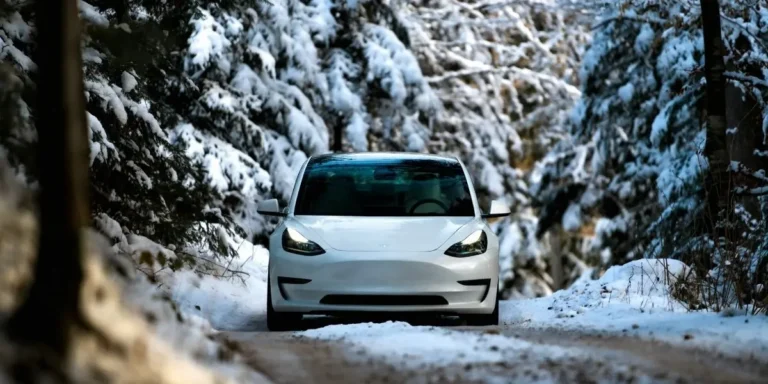
No fixed service intervals. The car monitors itself and alerts you via app when something needs attention. Recommended annual: tire rotation and brake fluid check. No scheduled tune-ups. For the full model-by-model cost breakdown, see our Tesla maintenance cost guide.
Annual EV inspection recommended (~$150). Covers brake fluid, cabin filter, coolant check, and battery system. 10-year/100,000-mile battery warranty — best in class after Rivian.
Mileage-based schedule. Tire rotation every 7,500 miles, brake fluid check every 2 years, cabin filter every 22,500 miles. Note: GM’s battery capacity guarantee is 60% — lower than competitors’ 70%.
Annual or 12,000-mile service intervals. Older Leaf models (pre-2018) used air-cooled batteries — faster degradation in hot climates. 2018+ models use liquid cooling.
Annual inspection recommended. Mach-E and F-150 Lightning both use 8-year/100,000-mile battery warranty with 70% capacity guarantee. Larger service dealer network than most EV-only brands.
Annual service recommended. Offers the best battery warranty in the industry: 8 years or 175,000 miles with 70% capacity guarantee — 75,000 more miles than most competitors.
Most new EV owners coming from gas cars expect a service reminder at every oil change interval — Tesla doesn’t work that way — you only go to the service center when the car tells you something needs attention. For many owners, that’s once or twice in the first three years.
The Tire Problem Nobody Talks About
Tires are your biggest annual EV expense — and EVs are harder on tires than gas cars.
Two reasons: EVs are significantly heavier due to battery pack weight, and instant torque from an electric motor stresses rubber at every acceleration. AAA found EV tires wear approximately 20% faster than conventional tires, with some sets lasting only 10,000–20,000 miles under aggressive driving conditions.
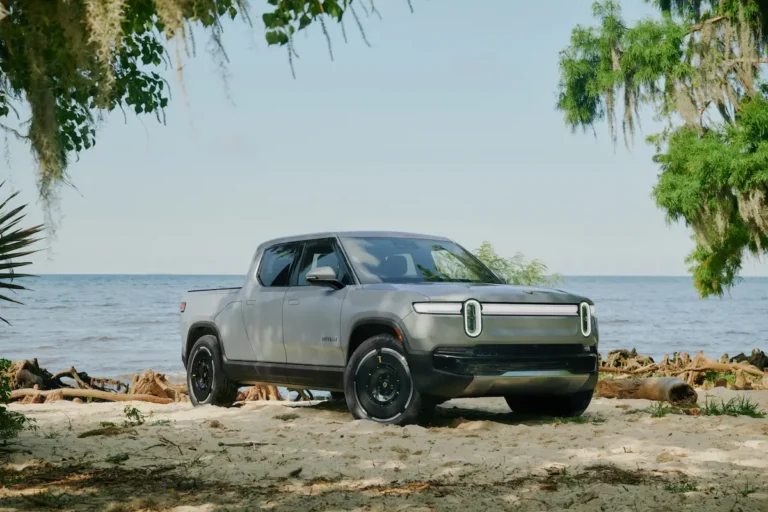
A full set of tires for a mainstream EV runs $600–$1,000 every 30,000–40,000 miles under normal conditions — performance EVs and heavy SUVs cost more. Rotate every 7,500 miles, keep alignment correct, and avoid aggressive launches to add thousands of miles to a set. Every Tire Rack order includes free two-year road hazard protection and roadside assistance — something most local shops don’t offer. For Rivian owners specifically, that number jumps to $1,200–$2,000+ installed — our full Rivian maintenance cost breakdown covers the year-by-year numbers and what real owners actually pay.
For a deeper look at which tires hold up best on heavier EVs, our guide to the best quiet tires covers the specific models worth buying for an EV. Tire Rack ships directly to recommended installers near you — order online, they handle the mounting.

Year-by-Year EV Maintenance Cost Breakdown
Here’s what realistic maintenance looks like over five years on a mainstream EV driven 12,000–15,000 miles per year. These are example estimates built from DOE per-mile data and current service pricing — your actual numbers vary by model, region, and driving habits.
| Year | Main Items | Est. EV Cost* | Est. Gas Cost* |
|---|---|---|---|
| Year 1 | Tire rotations, cabin filter, inspection | ~$150–$250 | ~$600–$900 |
| Year 2 | Rotations, cabin filter, brake fluid check | ~$200–$350 | ~$700–$1,100 |
| Year 3 | Rotations + new tire set, alignment | ~$800–$1,200 | ~$1,000–$1,500 |
| Year 4 | Rotations, cabin filter, brake fluid change | ~$250–$400 | ~$800–$1,200 |
| Year 5 | Rotations, 12V battery, coolant flush | ~$400–$650 | ~$1,100–$1,600 |
| 5-Year Total | ~$1,800–$2,850 | ~$4,200–$6,300 |
*Example estimates only. Mainstream compact/midsize EV at 12,000–15,000 mi/yr. High-performance or heavy EVs will be higher. Individual results vary. Sources: DOE · Recharged 2026
The savings are real — roughly $2,000–$3,500 over five years on maintenance alone. Year 3 is when the tire bill hits and narrows the gap, so budget for it now.
Battery Replacement — The Real Numbers
This is the one that scares people — and the one most commonly overstated. Most EV owners never pay for a battery replacement.
Here’s the complete warranty picture across major brands, including the 70% capacity guarantee that most articles skip:
| Brand / Model | Battery Warranty | Capacity Guarantee | Transfers to 2nd Owner? |
|---|---|---|---|
| Rivian R1T / R1S | 8yr / 175,000 mi | 70% | Yes |
| Hyundai / Kia EVs | 10yr / 100,000 mi | 70% | Yes |
| Tesla Model S / X | 8yr / 150,000 mi | 70% | Yes |
| Tesla Model 3 / Y | 8yr / 100–120k mi | 70% | Yes |
| Ford Mach-E / Lightning | 8yr / 100,000 mi | 70% | Yes |
| Nissan Leaf | 8yr / 100,000 mi | 70% | Check terms |
| Chevy Equinox EV / Bolt | 8yr / 100,000 mi | 60% ⚠️ | Yes |
| California (all brands) | State minimum: 10yr / 150,000 mi | 70% | — |
Every major EV brand guarantees at least 70% battery capacity during the warranty period — except GM, whose threshold is 60%, meaning your Equinox EV battery could lose 40% of its range before triggering replacement. That’s a meaningful difference worth knowing before you sign.
If your EV started with 300 miles of EPA range and the warranty covers 70% capacity, replacement is triggered if range drops below 210 miles while still under warranty. For a 2022 Hyundai Ioniq 5 with 266 miles EPA range, that’s replacement coverage down to 186 miles — still more than most people’s daily driving needs.
What Happens After the 8-Year Warranty Expires?
This is the question nobody answers properly — and it’s on the Google SERP for “ev maintenance costs” as a direct related question. Here’s the honest answer.
Recurrent tracked battery replacements across all years and models — the overall replacement rate is under 4%, and for modern EVs from 2022 onwards it’s just 0.3%. The scary headlines are not the typical experience.
Average EV battery degradation runs roughly 2–3% per year under normal use — meaning a 300-mile battery at year 8 likely still delivers 240–260 miles. The battery doesn’t die, it just slowly loses some range.
Want to see exactly what that degradation curve looks like for your specific car? The EV battery after 10 years breakdown runs the real numbers — including a calculator to project your range at 5, 10, and 15 years based on your charging habits.
Here’s what to plan for after the warranty expires:
Post-Warranty Cost Planning (Year 8+)
At year 7, get a battery health diagnostic before the factory warranty expires and decide whether an extended service contract makes sense. For most owners with 85%+ capacity remaining, it’s optional — for older Leaf models or any EV showing significant degradation, it’s worth serious consideration.
If you’re buying a used EV that’s approaching or past the 8-year mark, our used EV buying guide covers exactly how to evaluate battery health before you commit to anything.

EV vs Gas: Real 5-Year Numbers
Consumer Reports found EV owners spend approximately half as much on maintenance and repair over the life of the vehicle — $4,600 lifetime for a BEV versus $9,200 for a gas car, based on real member survey data across thousands of vehicles.
The U.S. Department of Energy estimates scheduled maintenance at 6.1 cents per mile for battery-electric vehicles versus 10.1 cents per mile for gas cars — roughly $960 per year in savings at 12,000 miles driven.
| Cost Category | EV Annual Est. | Gas Car Annual Est. | Winner |
|---|---|---|---|
| Routine maintenance | $150–$400 | $900–$1,800 | EV wins |
| Tires (annualized) | $150–$300 | $120–$250 | Gas wins |
| Brakes | Minimal — regen extends life | $300–$600 | EV wins |
| Insurance | Often $200–$500/yr higher | — | Gas wins |
| Lifetime total (200k mi) | ~$4,600 (CR data) | ~$9,200 (CR data) | EV wins by $4,600 |
Sources: Consumer Reports · DOE FOTW #1190. Estimates — individual results vary by vehicle, region, and driving habits.
Brakes are where regen really earns its keep — but there’s a corrosion problem most EV owners don’t see coming until it’s a shop bill. For the full mechanic’s take on how regen affects brake lifespan, read how regenerative braking actually works.
If you’re weighing an EV against a hybrid on total ownership cost, our hybrid vs electric car breakdown runs the full 5-year numbers side by side.
⚡ EV Maintenance Savings Calculator
Enter your driving habits to see your estimated 5-year maintenance savings.
Rough estimates only. Based on DOE and Consumer Reports data. Does not include fuel savings, insurance, or battery replacement costs.
Hidden Costs That Offset the Savings
To be completely straight with you — here are the costs that work against the maintenance savings.
EV insurance premiums tend to run higher than comparable gas cars due to higher repair costs for specialized components. Get a specific quote on the EV you’re considering before finalizing your ownership math — two similar-looking EVs can have very different insurance costs.
High-voltage EV systems require certified technicians — for anything beyond tires and cabin filters, you’re limited to dealers or EV-certified independents that charge accordingly.
Many states charge EVs additional annual registration fees to offset the gas taxes EV owners don’t pay — these vary by state, so check your DMV before finalizing the total ownership math.
One cost most buyers underestimate is depreciation — here’s the honest breakdown of EV resale value by model and what it means for your total cost of ownership.
For the full ownership picture — not just maintenance — our honest guide to buying an electric car covers charging costs, insurance, and how to run the full 5-year comparison for your specific situation.

Frequently Asked Questions
How much does it cost to maintain an EV per year?
For most mainstream EVs, around $300–$600 per year is a realistic estimate including tires — compact EVs like the Chevy Bolt sit lower, larger SUV EVs toward the higher end. Gas cars run $900–$1,800 for comparable vehicles. These are estimates; actual costs vary significantly by model, mileage, and region.
What happens to an EV after 8 years?
Most EVs are fine at 8 years. Recurrent’s real-world tracking found battery replacement rates under 4% across all EV years and models — and just 0.3% for 2022 and newer vehicles. Average degradation runs 2–3% per year, so a 300-mile EV at year 8 likely still delivers 240+ miles. The battery doesn’t die — it slowly loses some range over years of normal use.
What is the 30-60-90 rule for cars?
The 30-60-90 rule refers to gas car major service milestones — significant tune-ups at 30,000, 60,000, and 90,000 miles covering spark plugs, timing belts, transmission fluid, and other engine wear items. EVs don’t follow this schedule because there are no spark plugs, no timing belts, and no multi-speed transmission fluid to change. The EV equivalent is: tire rotation every 7,500 miles, cabin filter every 12–24 months, brake fluid check every 2 years, and battery coolant flush every 4–5 years — far simpler and far cheaper.
Are EVs actually cheaper to maintain?
Yes — Consumer Reports found EV owners spend approximately half as much on maintenance and repair over the life of the vehicle, with lifetime maintenance costs around $4,600 for a BEV versus $9,200 for a gas car. The savings are real — just don’t ignore the tire bill, which is genuinely higher on an EV.
Do EV tires really wear out faster?
AAA found EV tires wear approximately 20% faster than conventional tires, with some sets lasting as few as 10,000–20,000 miles under aggressive driving. Rotate every 7,500 miles, keep alignment correct, and avoid aggressive launches to maximize tire life.
Which EV brand has the best battery warranty?
Rivian offers the best mileage coverage at 8 years or 175,000 miles. Hyundai and Kia offer the best time coverage at 10 years or 100,000 miles. Both guarantee 70% battery capacity. Notable exception: GM brands (Chevy, Cadillac) only guarantee 60% capacity — lower than every other major EV brand.
How often do EV brakes need replacing?
Much less often than a gas car — pads and rotors can last 70,000+ miles on many EVs because regenerative braking handles most deceleration. Brakes can develop corrosion from sitting unused in wet climates, so inspection still matters even when replacement doesn’t.
Is EV maintenance cheaper for used EVs?
Routine maintenance costs are similar whether new or used — what changes is warranty coverage and battery health. A used EV with remaining factory warranty and a battery health report showing 85%+ capacity is the sweet spot: lower purchase price without the battery replacement risk. Our used EV buying guide covers exactly what to verify before signing.
EV maintenance savings are real — Consumer Reports found $4,600 less in lifetime costs versus a gas car. Budget for tires around year three, know your battery warranty’s capacity threshold, and plan for post-warranty years — everything else on the list is genuinely cheaper and simpler than what you’re used to.
For the full EV ownership picture — charging, range, real costs — our EV Guide covers every angle. And if you’re still deciding between an EV and a hybrid, the honest guide to buying an electric car gives you the framework to make the right call. For a real look at what owning a specific EV costs, our Kia EV9 guide covers real ownership costs on one of the most popular family EVs.

Similar Posts
Electric Cars in Cold Weather: A Mechanic’s Honest Guide
Electric cars in cold weather — they just lose range and charge slower until they warm back up. A realistic winter hit is roughly 20% to 40%, depending on temperature, speed, and how hard you run the heater. Recurrent’s 30,000-car…
How Does an Electric Car Work? A Mechanic Explains It Simply
Quick Answer A battery stores electricity, an inverter converts it, and an electric motor turns the wheels. No pistons, no combustion, no multi-speed gearbox. EVs convert 87–91% of stored energy into motion — a gas engine converts about 30%, with…
Hybrid vs Electric Car: Pros, Cons, and Who Should Actually Buy Which
Quick Answer A hybrid costs less upfront and works anywhere — no charger needed, no range planning, no lifestyle changes. An EV costs more to buy but saves more over time if you can charge at home and drive 12,000+…
Rivian R1T Maintenance Cost: What Owners Actually Pay
⚡ Quick Answer: Rivian R1T Maintenance Cost For the 2025 Rivian R1T, Edmunds estimates $3,051 in maintenance over five years for the Dual Standard trim, while some R1T trims show more depending on configuration. Edmunds also estimates $1,955 in repairs…
How Long Does It Take to Charge an Electric Car? The Honest Answer
Quick Answer How long does it take to charge an electric car? Level 1 (120V outlet): 3–5 miles of range per hour. A full charge from empty takes 40–50+ hours. Fine for PHEVs, rough for full EVs. Level 2 (240V…
What Is DC Fast Charging? A Mechanic Explains
Quick Answer: DC fast charging pushes high-voltage direct current straight into your EV’s battery — bypassing the onboard charger that limits Level 1 and Level 2 speed. Most stations add 100–200 miles of range in 20–40 minutes, and the real…