Quick Answer
After 10 years, most modern EV batteries retain around 77–85% of their original capacity — meaning a 300-mile car might show roughly 235–255 miles at a full charge. Geotab’s 2026 study of 22,700 vehicles puts average degradation at about 2.3% per year. The battery won’t die. It just gets a little smaller.
I get this question constantly — from people who already own EVs, from people thinking about buying one. And from people who watched a YouTube video about a 2012 Nissan Leaf that lost half its range in Phoenix.
The fear is real. The battery is the most expensive component in the car, it’s impossible to inspect at a glance. The horror stories travel faster than the good news.
Here’s the good news: the horror stories are mostly about old technology. Modern EV batteries are a fundamentally different animal, and the data proves it.
I’ve driven multiple EVs. I’ve got 25+ years of hands-on automotive experience and a four-year automotive program behind me. So when I tell you the numbers are better than you think, it’s not cheerleading — it’s mechanics.
What Actually Happens to an EV Battery After 10 Years?
An EV battery doesn’t fail the way a combustion engine can blow a head gasket. It degrades slowly — you lose a little capacity over time, which means slightly less range at a full charge.
Think of it like your phone battery after a few years — except dramatically, dramatically slower.
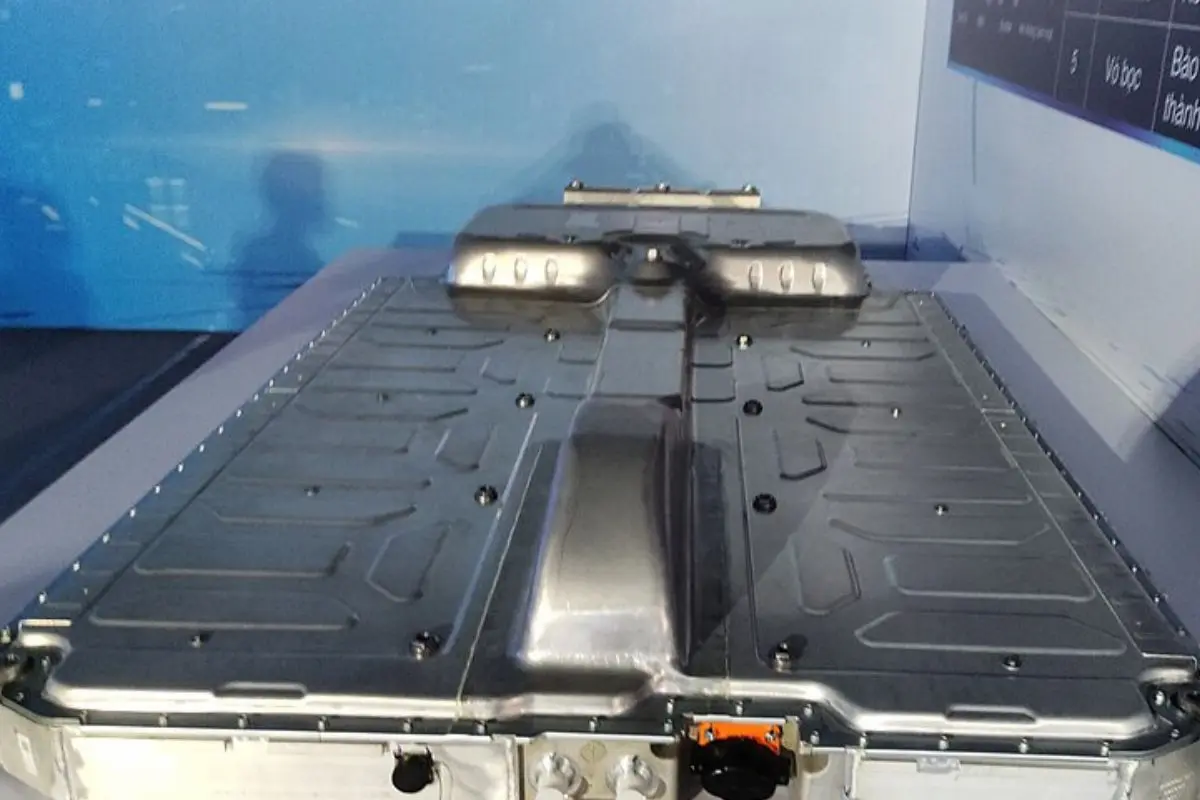
Geotab analyzed 22,700 EVs across 21 models and found average capacity loss of about 2.3% per year. At that rate, a 10-year-old EV battery still has roughly 77–80% of its original capacity.
Most people never notice the difference in daily driving. Commutes stay exactly the same — only long trips start requiring slightly more planning.
The stat that should end the battery anxiety conversation
For EVs built in 2022 and later, Recurrent’s study of 30,000+ EVs found a battery replacement rate of just 0.3%. Not 30%. Not 3%. Zero-point-three percent. That’s the real number.
The batteries that fail outright are almost always manufacturing defects — caught under warranty, replaced free of charge. Capacity loss from normal miles and years almost never forces a swap.
How Much Range Will You Actually Lose?
Let’s put real numbers to this instead of percentages floating in the air.
Take a 300-mile EV — say a Tesla Model Y Long Range, an Ioniq 6, anything in that class. Here’s what 10 years looks like at the Geotab average degradation rate of 2.3% per year:
- Year 1: ~293 miles
- Year 3: ~280 miles
- Year 5: ~267 miles
- Year 7: ~254 miles
- Year 10: ~238 miles
Still more range than most Americans drive in an entire week. The Generational Battery Performance Index — covering 8,000 EVs across 36 manufacturers — puts median state of health at 85% at the 10-year mark.
The Geotab data also shows something important: degradation isn’t linear. Early in the battery’s life it drops slightly faster, then tends to stabilize. Established models in the Geotab dataset often settled closer to 1–1.5% per year long-term, though this varies by vehicle and climate.
That’s good news. The curve works in your favor the longer you keep the car.
What Makes Some EV Batteries Age Faster Than Others?
Three things drive battery degradation faster than anything else: heat, DC fast charging, and keeping the battery pegged at 100% all the time.
Heat is the big one. Geotab found about 0.4% per year extra degradation in hot climates versus mild ones. That’s 4% more capacity gone over 10 years, just from where you park it.
That’s the long-term cost. For the day-to-day side — heat soak, AC drain, and the 12-volt battery — see EV range in hot weather.
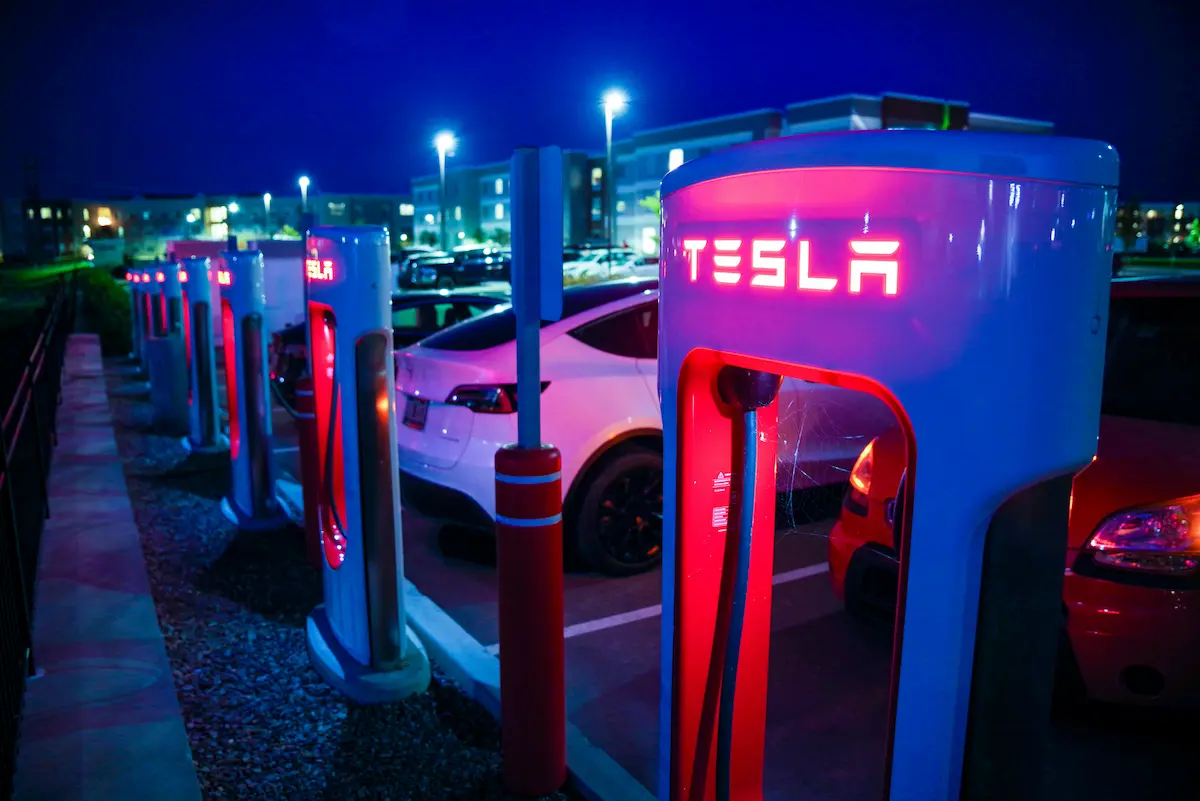
DC fast charging is the second factor. High-power DC fast charging above 100kW correlates with up to 3.0% degradation per year. That’s essentially double the wear rate of predominantly Level 2 home charging.
This doesn’t mean you should never use a fast charger — road trips happen. But if you have home charging available and you’re defaulting to DC fast as your daily habit, that’s worth reconsidering.
The Nissan Leaf problem — and why it doesn’t apply to your EV
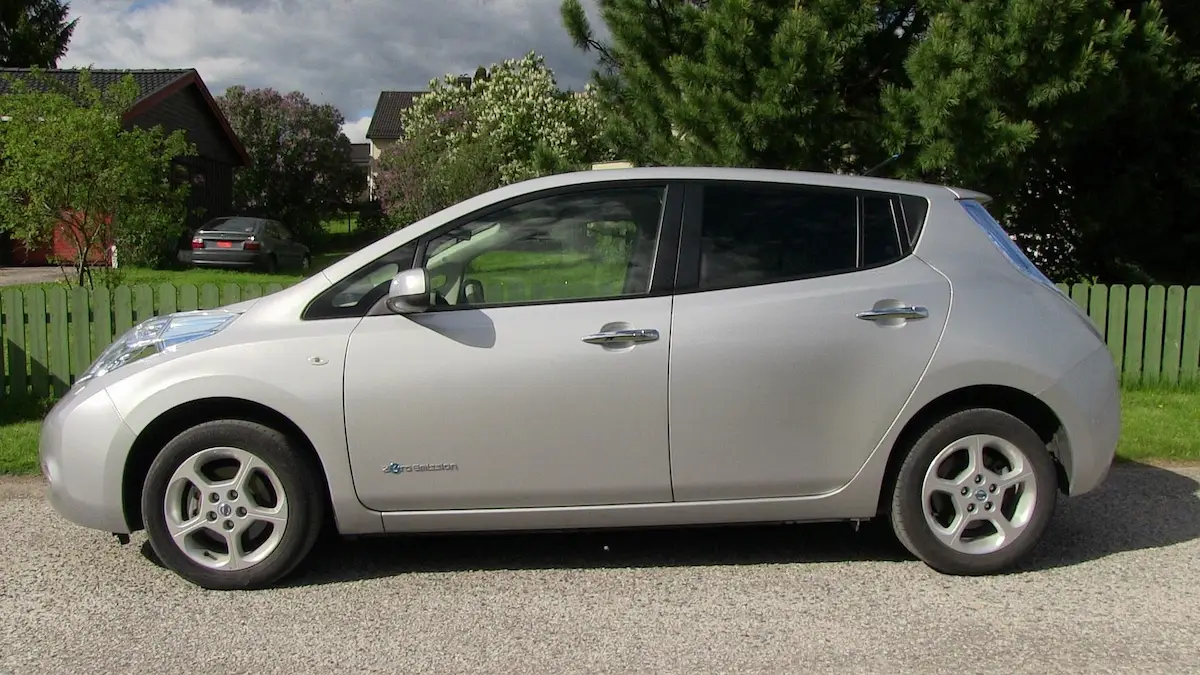
Early Nissan Leafs (2011–2015) used purely passive cooling — no thermal management of any kind. In hot climates like Phoenix, some first-gen Leafs degraded at around 10% per year, dropping below 70% capacity in 5–6 years. Modern EVs with active liquid cooling degrade roughly 3× slower — the coolant holds cells at optimal temperature regardless of outside heat. The Leaf problem was real. It’s also a completely different era of technology from anything on a dealer lot today.
The third factor is chronic 100% charging. Lithium-ion cells prefer to live in the middle of their range. Most manufacturers recommend a daily charge cap of 80%, with 100% reserved for long trips.
This ties directly into the EV maintenance habits that actually matter — it’s not oil changes, it’s how you charge.
Does It Matter Which EV You Buy?
Yes — more than most buyers realize. Battery chemistry and thermal management vary significantly across manufacturers, and those differences show up in 10-year data.
The two chemistry types worth understanding:
- NMC (Nickel Manganese Cobalt): Higher energy density, longer range per pound of battery — used by most premium EVs (Model Y, Ioniq 5/6, Mach-E, Kia EV6/EV9). Slightly more sensitive to heat and charging habits.
- LFP (Lithium Iron Phosphate): Lower energy density but exceptional cycle life and tolerance for 100% charging. Tesla’s standard-range vehicles, BYD, and some Chinese EVs use LFP. You can charge these to 100% daily without penalty.
If you can only charge at 100% because of your situation — LFP is your friend. If you can manage daily charge limits — NMC gives you more range in the same package.
Thermal management matters just as much as chemistry. Active liquid cooling is now standard on virtually every mainstream EV sold in the US. The Nissan Leaf is the notable exception — no version of the Leaf ever got liquid cooling, including the Leaf Plus. Nissan improved battery chemistry and added some HVAC-based thermal conditioning in later models, but it remained fundamentally passive-cooled through the entire Leaf lineup. The Ariya finally got proper liquid cooling — but that’s a different vehicle entirely.
The cars that show the best 10-year numbers tend to share three traits: active liquid cooling, LFP chemistry or robust NMC management, and solid battery software. Tesla, Hyundai, Kia, and Chevrolet (post-recall Bolt) are all showing strong aging curves in real-world data.
What Does the Warranty Actually Cover?
The federal baseline: most EVs must carry a battery warranty of at least 8 years or 100,000 miles. The floor is 70% state of health. If your battery drops below 70% capacity while under warranty, the manufacturer is on the hook to address it.
Some vehicles sold in California and other CARB/ZEV-compliant states may carry extended battery coverage. Depending on emissions classification and model year, that can stretch to 10 years / 150,000 miles. If you’re buying in California, Oregon, Washington, or another ZEV state, it’s worth checking your specific vehicle’s warranty documentation to see what applies.
The manufacturers going above the federal floor:
- Hyundai / Kia (2020+): 10 years / 100,000 miles — class-leading
- Tesla: 8 years / 100,000–150,000 miles depending on variant
- GM / Chevy: 8 years / 100,000 miles (post-recall Bolt)
- Ford: 8 years / 100,000 miles
- Rivian / Lucid: 8 years / 150,000 miles
Battery coverage on a used EV is model-, year-, market-, and VIN-specific, and transfer rules are not universal. If you’re shopping for a used electric car, verify the exact vehicle’s in-service date, applicable warranty terms, and any battery-replacement history with the manufacturer or dealer instead of assuming coverage from a history report.
Is It Ever Worth Replacing an EV Battery?
Rarely. And the math explains why.
Out-of-warranty EV battery replacement costs in 2026 break down roughly like this, based on current replacement cost data and Recurrent’s battery replacement research:
- Small packs (20–30 kWh — original Leaf): $4,000–$9,000
- Mid packs (40–60 kWh — Chevy Bolt, early Model 3): $7,000–$14,000
- Large packs (75–100 kWh — Model Y LR, Ioniq 5, Mach-E): $10,000–$18,000
- Flagship / truck packs (100+ kWh — Model S Plaid, Rivian, Lucid): $15,000–$25,000+
Add $1,000–$3,000 for labor on top of that. Refurbished packs can save 30–50% versus OEM, but availability is still limited and quality varies.
So when does replacement make sense? Two situations.
First: the warranty covers it. Then it’s free — get it done. Second: you own a high-value vehicle (a Model S, Rivian, Lucid) where the car is worth more than the battery costs, and you genuinely love the car. In that case the math might work.
For most people with a mainstream EV at 10 years old, the lost capacity probably doesn’t hurt daily driving. The replacement cost likely exceeds the car’s value — so it’s easier to keep driving it as-is, or sell it and move on.
Remember: 0.3% of 2022+ EVs have ever had a battery replaced. Most 10-year-old EVs just keep running.
What Happens to the Battery After the Car Is Done?
Here’s the part most battery anxiety articles skip entirely: the battery probably isn’t done when the car is.
When an EV battery drops below roughly 70% state of health, it’s no longer ideal for a car — range becomes too unpredictable. But it still holds significant energy, which is extremely useful for stationary storage where weight and range don’t matter.
Second-life battery projects add 5–10 years of useful service in applications like home backup power, commercial energy buffers, and grid stabilization. Nissan partnered with Sumitomo to formally reuse Leaf packs for grid storage; BMW and Audi are running similar programs.
And when the battery is genuinely done, up to 95% of the materials — lithium, cobalt, nickel, manganese — are recoverable through recycling. The industry is actively scaling this up.
In many cases, the battery you buy today will outlive the usable life of the car. That’s a good place for the technology to be.
How Do You Keep Your EV Battery Healthy for the Long Haul?
Most of this is simple. From a mechanic’s perspective, the principles aren’t complicated — they’re just different from what gas car owners are used to.
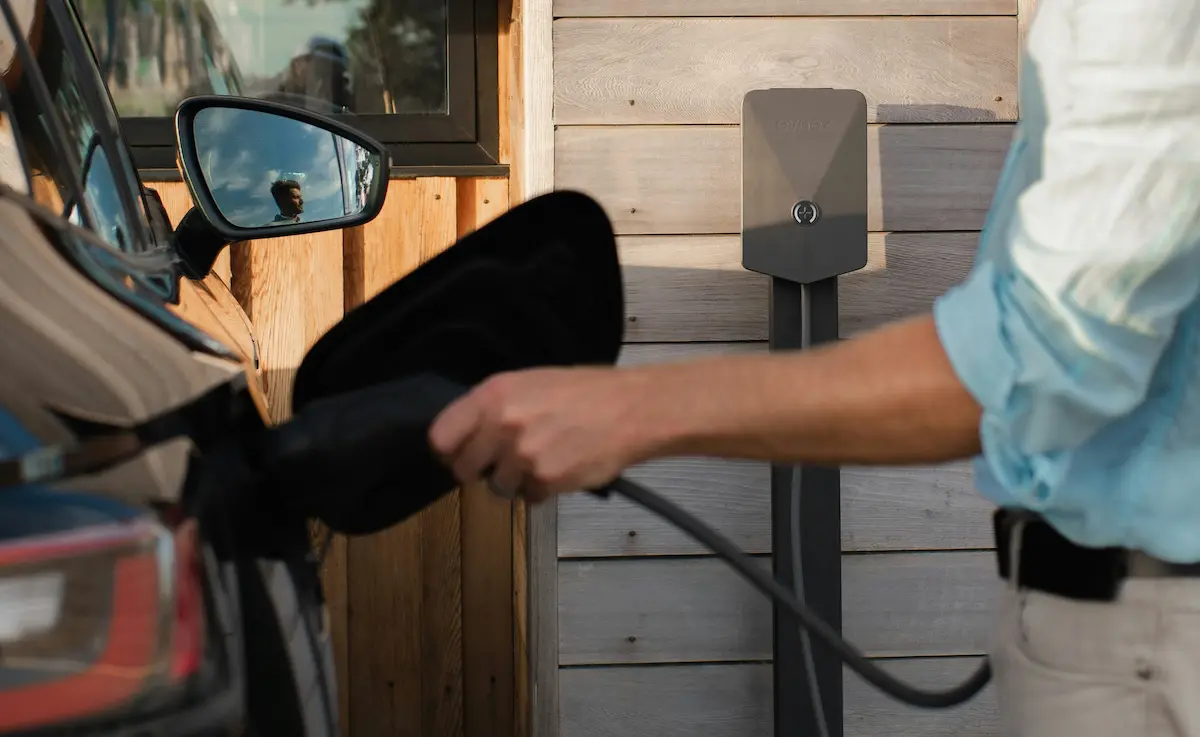
Set your daily charge limit to 80%. Almost every EV’s app or onboard settings will let you cap charging at 80% for daily use. Reserve 100% for road trips only. If you’re not sure what charging level to use at home, our guide on how long it takes to charge an electric car covers every option and what each one costs per mile. This is the highest-impact habit you can build — the cells live happiest in the middle of their range.
Use Level 2 as your primary charger. If you have home charging or workplace charging, use it. Save DC fast for actual road trips. The Geotab data is clear: predominantly Level 2 charging cuts degradation roughly in half compared to heavy fast-charging use.
Not sure what Level 2 charging actually involves or what it costs to set up at home? Our full guide covers what Level 2 charging is, what installation costs, and whether you actually need it.
Don’t let it sit at 0% or 100% for extended periods. If you’re parking for a week — charge to 50–60% and leave it. Both extremes stress the cells more than the middle.
Let the car precondition before DC fast charging. Most modern EVs (Tesla, Hyundai, Kia, GM) will automatically warm the battery on the way to a fast charger if you use the navigation. This matters — cold batteries charged aggressively degrade faster than warm ones.
And don’t confuse a cold battery with a worn one — cold cuts range and slows charging temporarily, but the capacity returns once the pack warms back up. Here’s what really happens to an electric car in cold weather.
Don’t sweat the rest. You don’t need special EV maintenance beyond the basics: tire rotations, cabin air filter, brake fluid check every couple years, coolant check per the owner’s manual schedule. The overall EV maintenance cost picture is genuinely simpler than a gas car. Focus on charging habits and let the car do the rest.
What Will My EV Battery Look Like in 10 Years?
Plug in your numbers. This uses the Geotab degradation rates from their 22,700-vehicle study — 1.5%/yr for mostly home charging, 2.3%/yr for mixed, 3.0%/yr for heavy fast charging.
EV Battery Range Estimator
Frequently Asked Questions
Can an EV battery last 20 years?
Possibly — but it depends on the generation of EV and how it’s been charged. Based on current degradation data, a well-maintained modern EV with liquid cooling, managed charging habits, and no extreme climate exposure could retain 65–70% capacity at 20 years. That’s still a functional daily driver for most people. The Geotab data shows degradation stabilizes over time, which makes 20-year batteries increasingly realistic for 2022+ vehicles. We won’t know for sure until those cars actually get there — but the early indicators are good.
What happens to Tesla batteries after 10 years?
Tesla batteries generally age well relative to the market. Recurrent’s data shows Tesla in the Gen 2 replacement rate of around 2% — for cars now approaching 10 years old. The Autopilot-era Model S and X batteries had some early issues, but Tesla has since moved higher-range vehicles to LFP or improved NMC management. For Model 3 and Y owners specifically, the battery picture at 10 years looks strong.
Can you keep an EV for 10 years?
Yes — and plenty of people already are. The original Tesla Roadster is pushing 15 years in service. The earliest Model S sedans are over 12 years old and still driving daily. The real-world data from Recurrent shows that battery replacements are rare and mostly warranty-covered when they do happen. Keeping an EV for 10 years is no different from keeping any other car for 10 years — routine maintenance and smart charging habits go a long way.
Is it worth replacing an EV battery?
In most cases, no. If the car is under warranty and the battery fails, it’s covered — get it replaced. Out of warranty, replacement costs range from $7,000 to $18,000+ depending on pack size, often exceeding the car’s market value at 10+ years old. The exception is high-value vehicles (Model S, Rivian, Lucid) where the car is still worth significantly more than the battery costs. For most mainstream EVs, it makes more sense to keep driving the degraded battery or sell the vehicle than to pay for a full replacement.
The bottom line: EV batteries are aging better than anyone expected. The horror stories exist, but they belong to a different era of the technology.
If you’re still deciding if an EV makes sense for you, the honest breakdown of whether you should buy an electric car covers the real trade-offs. Including when it genuinely isn’t the right call.
And if you’re shopping used, the used EV buyer’s guide shows how to use the strongest battery evidence the exact model supports — such as OEM battery-health tests where available, OEM or dealer records, controlled charging observations, and model-specific tools. Dashboard range or a seller’s claim is only a clue, not proof.
Battery degradation doesn’t just affect range — it’s the single biggest driver of electric car depreciation and resale value. We break down which models lose 70% in five years and which hold nearly half their value.
Any questions — the EV Guide has more where this came from.