Quick answer: Tesla’s routine maintenance schedule is genuinely light, but your real ownership budget still needs room for tires and unscheduled repairs.
CarEdge currently estimates $1,167 in maintenance and repairs over the first five years for a Model 3, while its Model Y estimate is $1,387.
Kelley Blue Book is much higher for a 2026 Model Y, estimating $3,115 in maintenance plus $2,178 in repairs over five years. That spread is exactly why one universal “$X per year” Tesla number is misleading.
Article fact review completed September 1, 2026 using current Tesla maintenance, warranty, and protection-plan information.
Before you buy a Tesla, the useful question is not whether it needs oil changes.
It does not.
The useful question is what still wears out, what Tesla actually schedules, and what happens after the factory warranty ends.
I’ve spent 25 years around cars, so I care more about that ownership math than the “fewer moving parts” sales pitch.

What Does Tesla Maintenance Actually Cost?
There is no single honest annual number for every Tesla.
The biggest reason is methodology. Some estimates count routine maintenance, wear items, and expected repairs together. Others separate repairs or use different mileage assumptions.
| Current source | Vehicle / period | Estimate | What it means |
|---|---|---|---|
| CarEdge | Model 3, first 5 years | $1,167 | Maintenance and repairs combined; warranty work excluded. |
| CarEdge | Model Y, first 5 years | $1,387 | Maintenance and repairs combined; warranty work excluded. |
| Kelley Blue Book | 2026 Model Y, 5 years | $3,115 maintenance + $2,178 repairs | A much higher planning model than CarEdge. |
| RepairPal | Tesla brand average | $832 per year | Repair and maintenance average across age, mileage, location, and shop. |
Those figures are planning tools, not invoices.
A new Model 3 driven gently on smaller wheels can have very cheap years. A higher-mileage Model X with suspension work can land nowhere near that.
My budgeting rule: separate predictable wear from repair risk.
Tires, filters, wipers, and brake-related inspections belong in the first bucket. Suspension, HVAC, electronics, glass, and post-warranty failures belong in the second.
For the broader EV picture, see the EV maintenance cost guide.
What Is on Tesla’s Current Maintenance Schedule?
Tesla says its vehicles do not require an annual maintenance service or regular fluid changes.
That does not mean “nothing ever needs service.”
| Item | Current Tesla guidance | What I would do |
|---|---|---|
| Tire rotation | Every 6,250 miles or at 2/32-inch tread-depth difference, whichever comes first | Measure tread instead of blindly following mileage. |
| Cabin air filter | Schedule varies by model, model year, and environment; Tesla now directs owners to the Maintenance Summary for the latest interval | Replace when the car calls for it or airflow/odor says it is due. |
| Brake fluid | Health checks are specified in owner manuals; exact guidance can vary by vehicle and use | Use the car’s current Maintenance Summary and test condition rather than replacing fluid on a made-up universal interval. |
| Brake calipers in salted-road areas | Clean and lubricate every 12 months or 12,500 miles when recommended for salted-road use | This matters much more in the salt belt than in Florida. |
| Wiper blades | Inspect/replace as needed; some Tesla manuals specify yearly replacement | Replace on condition. Florida heat can destroy rubber faster than a calendar suggests. |
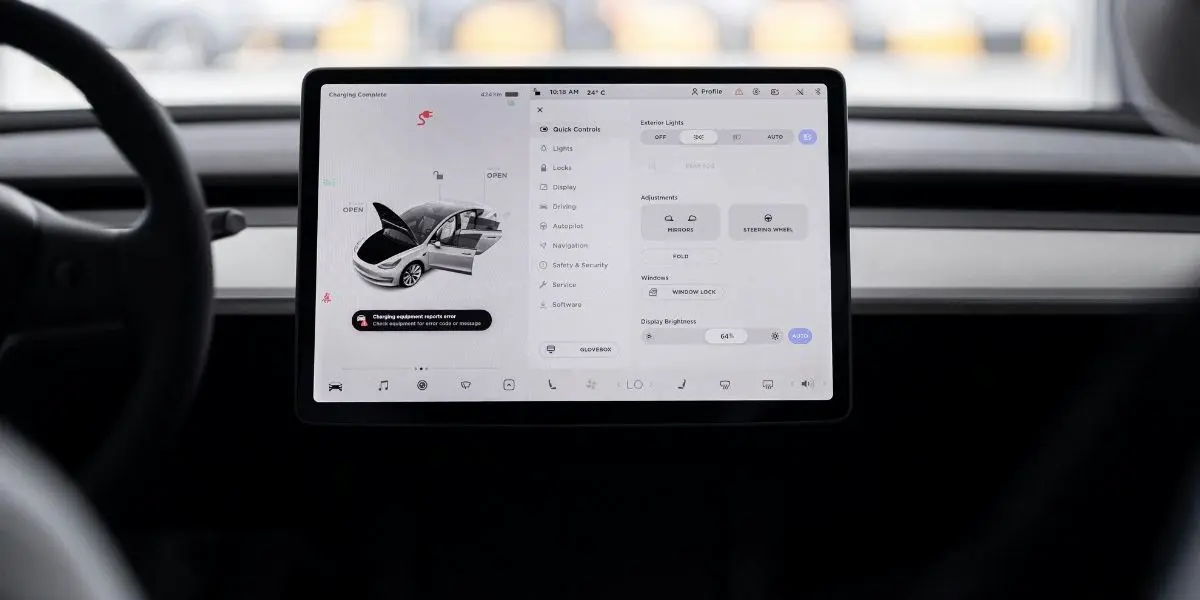
Your Tesla’s touchscreen is now one of the best places to check current maintenance because the Maintenance Summary can show what is due, overdue, or coming up.
Does a Tesla Really Have “No Transmission Fluid”?
No. That old EV shortcut is wrong.
A Tesla does not have a conventional multi-speed automatic transmission with the normal fluid-service schedule you see on many gas cars.
But the drive units still contain gears, lubrication, pumps, and filters.
Tesla’s own Model Y service manual includes a front drive-unit gearbox-fluid drain-and-refill procedure, and its Model 3 service manual contains comparable drive-unit fluid procedures.
The accurate version: Tesla does not list routine drive-unit gearbox-fluid replacement as a normal owner maintenance interval.
That is very different from claiming the car has no gearbox fluid.
Why Tires Can Be Your Biggest Predictable Tesla Expense
This is the part of the budget I would pay the most attention to.
Teslas are heavy, powerful, and available with large wheel-and-tire packages.
Those three things can be rough on tread life, especially with aggressive acceleration or bad alignment.

I would not promise every owner a 25,000- or 40,000-mile replacement interval.
Tesla itself focuses on tread depth, wear difference, and rotation rather than promising a fixed tire life.
Affiliate disclosure: SpotForCars may earn a commission through the Tire Rack links below, at no extra cost to you.
You do not have to buy tires from Tesla. Tire Rack, reputable national chains, and competent local tire shops can all be sensible choices.
The important part is correct tire specification, proper lifting, torque, alignment when needed, and a shop that understands the vehicle in front of it.
Model 3 vs Model Y Maintenance Cost
For the two Teslas most people actually cross-shop, current CarEdge estimates keep the Model 3 cheaper.
| Model | Current 5-year CarEdge estimate | SpotForCars guide |
|---|---|---|
| Tesla Model 3 | $1,167 maintenance and repairs | Model 3 maintenance cost |
| Tesla Model Y | $1,387 maintenance and repairs | Model Y maintenance cost |
That does not mean your Model 3 will cost exactly $233 a year or your Model Y exactly $277.
It means the current model-based estimate is lower than the old $500–$700 blanket budget this article previously used.
KBB’s much higher Model Y estimate is a useful reminder not to pretend the forecast is precise.
What Can Get Expensive on a Tesla?
Routine maintenance is the easy part.
The bigger ownership question starts when the Basic Vehicle Limited Warranty expires.
Battery and drive unit
Tesla’s current U.S. warranty gives the Battery and Drive Unit 8 years of coverage, with mileage depending on configuration.
That is why I would not treat an internet battery-replacement quote as an expected maintenance expense.
If you are shopping used, remaining factory coverage matters far more than a scary worst-case number.
Suspension, HVAC, electronics, and glass
These are ordinary repair-risk categories once a car ages.
The exact price depends heavily on model, year, part, labor, and whether the repair goes through Tesla or a qualified independent specialist.
I would rather tell you to price the actual failure than publish a fake nationwide range that looks authoritative.
For battery aging specifically, read what happens to an EV battery after 10 years.
What Warranty and Extended Coverage Does Tesla Offer?
This changed enough in 2026 that it deserves a real section.
Tesla’s Basic Vehicle Limited Warranty is 4 years or 50,000 miles, whichever comes first.
The Battery and Drive Unit warranty lasts longer, as explained above.
Tesla now also offers optional extended coverage for eligible vehicles:
- Vehicle Extended Service Agreement: separate post-basic-warranty coverage for eligible Model S, 3, X, and Y vehicles.
- Battery and Drive Unit ESA: available for eligible Model 3 and Model Y vehicles while their original Battery and Drive Unit warranty is still active.
That does not automatically make extra coverage a good buy.
You still need to compare the real coverage clock, exclusions, deductible, price, and how long you plan to keep the car.
If you’re deciding whether to buy extra coverage: use my extended car warranty guide to compare the contract’s actual coverage window, claim rules, deductible, financing cost, and aggregate limits before paying for it.
Tesla Maintenance Budget Calculator
Build a simple five-year maintenance reserve
This is a budgeting tool, not a repair forecast. It starts with current CarEdge five-year estimates and lets you add your own tire reserve.
How Do You Keep Tesla Maintenance Costs Down?
- Measure tire tread and rotate on time. Tesla’s 6,250-mile / 2/32-inch rule is there to control uneven wear.
- Do not blindly buy the biggest wheels. Larger performance tires usually cost more and give you less sidewall protection.
- Use independent shops where appropriate. Tesla says non-warranty maintenance can be performed by a non-Tesla service center, although Tesla is not responsible for damage caused by improper work.
- Follow the charge limit your car actually recommends. Tesla says different batteries require different charging routines. Do not apply one universal 80% rule to every Tesla.
- Check warranty status before buying used. Four years/50,000 miles of basic coverage and the longer battery/drive-unit coverage create very different risk profiles.
- Inspect before you buy. A service contract is not a substitute for finding an existing problem first.
If you’re shopping used, start with the used EV buying guide.
Bottom line: Tesla maintenance is cheap in the traditional sense because the scheduled list is short.
Do not confuse that with “nothing can get expensive.” Budget tires separately, know exactly when your warranties expire, and treat any extended coverage as a contract decision rather than automatic protection.
Frequently Asked Questions
How much does it cost to maintain a Tesla?
It depends heavily on model, age, mileage, and what a source counts. Current CarEdge estimates put first-five-year maintenance and repairs at $1,167 for a Model 3 and $1,387 for a Model Y. KBB’s 2026 Model Y model is substantially higher at $3,115 in maintenance plus $2,178 in repairs over five years.
Does a Tesla require annual maintenance?
No. Tesla says its vehicles do not require an annual maintenance service or regular fluid changes. Owners should follow the Maintenance Summary and model-specific manual for tires, filters, brake fluid checks, wipers, and salted-road brake-caliper service.
Does a Tesla have transmission fluid?
Tesla does not use a conventional multi-speed transmission, but its drive units do contain gearbox fluid. Tesla publishes official drain-and-refill procedures in its service manuals. What Tesla does not publish is a routine owner replacement interval for that fluid in the normal maintenance schedule.
How often should Tesla tires be rotated?
Tesla recommends rotation every 6,250 miles or when tread-depth difference reaches 2/32 inch, whichever comes first. Some staggered wheel setups cannot be rotated front-to-rear, so check the exact tire configuration.
Should every Tesla be charged to 80% daily?
No. Tesla says to use the charge limit recommended for the battery installed in your specific vehicle. Different batteries can have different charging routines, so the car’s touchscreen or Tesla app should be the authority.
Can an independent shop maintain a Tesla?
Yes for non-warranty maintenance and repairs, according to Tesla. Warranty-covered service must go through Tesla, and Tesla can exclude damage caused by improper third-party repair or maintenance.
Does Tesla sell extended warranty coverage?
Yes. Tesla currently offers an Extended Service Agreement for eligible Model S, 3, X, and Y vehicles, plus a separate Battery and Drive Unit ESA for eligible Model 3 and Model Y vehicles. Eligibility, coverage, pricing, and exclusions should be checked in the Tesla app and current terms.