
Quick Answer
An electric car is worth it in 2026 if you can charge at home, drive 10,000+ miles per year, and plan to keep it at least 5 years.
You’ll save roughly $709/yr on fuel and $949/yr on maintenance — but the federal tax credit is gone, and depreciation now makes new EVs more expensive to own overall in most categories.
The best financial move in 2026: buy a 2–3 year old used EV.
They’re already depreciated, often still under factory battery warranty, and priced just $1,300 above comparable used gas cars. The math is dramatically better than buying new.
What’s in This Guide
- Is an EV worth it in 2026? (Quick answer)
- Fuel cost savings — the real numbers
- Maintenance savings — a mechanic’s view
- Why new EVs often still lose on total cost
- What happened to the $7,500 tax credit?
- 5-Year savings calculator
- The 4 variables that decide your answer
- No home charging? Read this first
- Low mileage driver? The math changes
- Is a used EV the right move in 2026?
- Hidden EV costs nobody mentions
- Best used EVs for value right now
- Who should buy now — who should wait
- FAQ
I’ve spent 25 years under cars — oil changes, timing chains, transmissions going dark from neglect.
So when people ask me whether an electric car is worth it, I don’t give them a brochure answer.
I give them the math — including the parts both EV cheerleaders and EV haters conveniently skip.
Here’s what nobody will tell you straight: for many buyers, the math on a new EV still doesn’t beat a comparable gas car over 5 years — even with fuel and maintenance savings.
But the right EV, bought the right way, in the right state, can save you a genuine $8,000–$12,000 over five years. The difference is knowing which variables actually matter.
That’s what this article is about. No agenda. Just the honest math a mechanic runs before spending real money.
Is an electric car worth it in 2026?
In 2026, an electric car is worth it if you have home charging, drive at least 10,000 miles per year, and plan to own it 5+ years.
Fuel and maintenance savings average about $1,650 combined per year — but the $7,500 federal credit is gone, and new EVs still cost more overall. A used EV is often the smarter entry point right now.
Here’s the full picture by situation — then we’ll run the actual math.
| Your Situation | Verdict |
|---|---|
| Home charging + 10,000+ miles/yr + keeping 5 years | ✓ Yes — the math works |
| Buying a 2–3 year old used EV | ✓ Usually yes — best deal right now |
| Apartment or no home charging access | ✗ Usually no — go hybrid |
| Buying new luxury EV at full MSRP | ⚠ Depends — run the numbers carefully |
| Under 7,000 miles/yr | ⚠ Hybrid often better — savings too slow |
| State with strong EV incentives (CO, CA, NY) | ✓ Yes — incentives change the math significantly |
How much cheaper is it to fuel an electric car?
At 15,000 miles per year, a compact EV costs an average of $546 in electricity versus $1,255 for a comparable gas car.
That’s about $709 per year in fuel savings, per AAA’s 2025 Your Driving Costs report.
That number assumes the national average electricity rate of 16.7¢/kWh and gas at $3.15/gallon. Your actual savings depend heavily on where you live and where you charge.
(15k mi/yr, national avg)
(same mileage, $3.15/gal)
driving EV vs. gas
The reason is efficiency. EVs convert 87–91% of battery energy into motion, per the EPA.
Gas engines convert only 16–25% — the rest exits as heat.
You’re buying the same miles; you’re just buying them from a dramatically more efficient energy process.
Florida’s electricity rate averages around 15¢/kWh — below the national average of 16.7¢, meaning EV charging costs less here than in most of the country.
A BMW iX in Florida costs roughly $625/yr in electricity, versus $2,300–$3,300/yr for a comparable gas BMW X5, per Consumer Reports’ March 2026 state-by-state analysis.
The fuel savings math breaks down fast if you’re relying on public DC fast chargers.
Fast-charging networks run 3–5x higher than home electricity rates.
At those prices, the fuel savings shrink dramatically or disappear.
Home charging at night is where the EV fuel savings actually live.
If you can plug in at home, you’re getting the full $709/yr. If you can’t, you’re not.
What does EV maintenance savings really look like?
This is where I can speak with some real authority. After 25 years in shops, I know exactly what a gas car needs that an EV doesn’t.
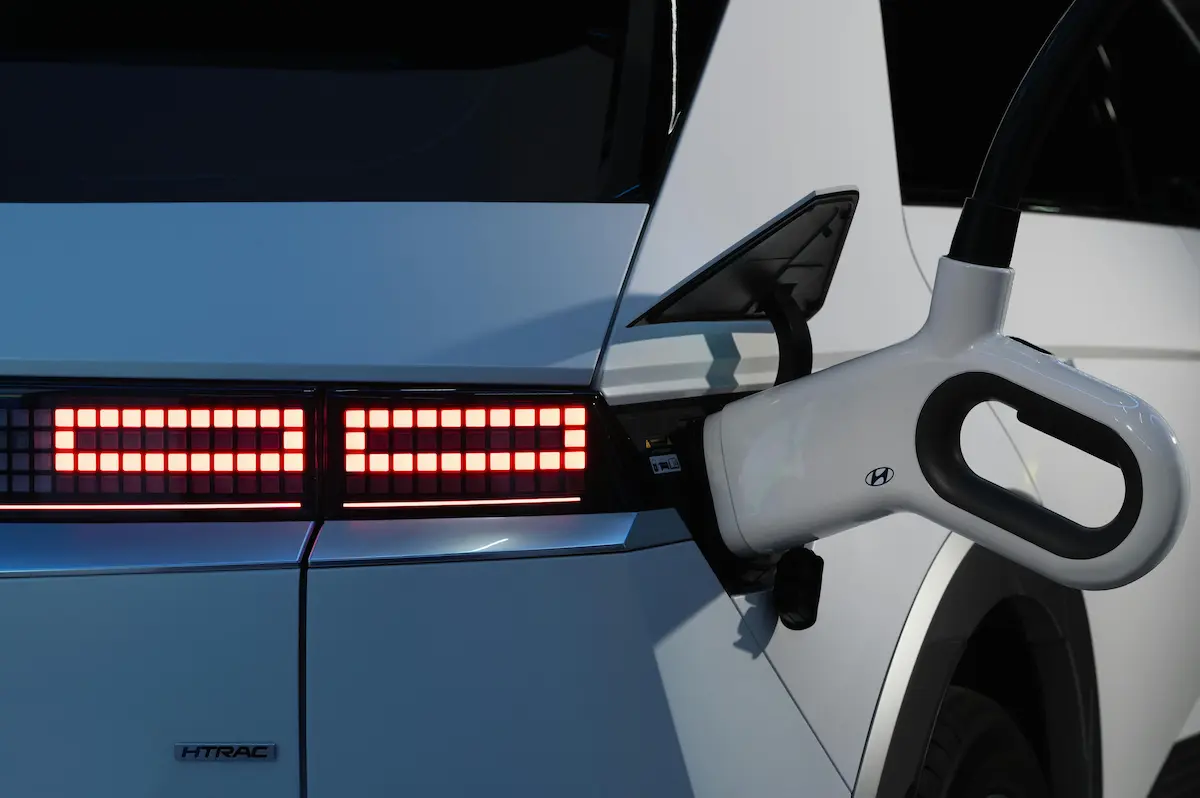
An EV eliminates: oil changes, spark plugs, timing belt or chain, alternator, starter motor, exhaust system, catalytic converter, and transmission fluid.
That’s not a marketing claim. Those are parts I literally don’t see on the lift with EVs.
What’s left? Tires, cabin air filter, brake fluid, and wiper blades.
That’s basically it for the first 100,000 miles if you’re buying right.
EVs cost $949 less per year in maintenance than comparable gas cars, according to AAA — that’s $4,745 over five years. This is a real number, and in my experience as a mechanic, it’s actually conservative for high-mileage gas owners.
One caveat: the $949/yr figure compares new EVs to new gas cars at 15,000 miles/yr — your mileage may vary.
Brakes also last dramatically longer on EVs because regenerative braking does most of the stopping. I’ve seen EV owners at 60,000 miles still on original front pads — almost unheard of in a gas car.
The maintenance story on EVs is genuinely good. It’s the rest of the total cost picture that’s more complicated.
Why new EVs often don’t win on total cost — and what that means
Here’s the honest part of this that most EV articles skip: fuel and maintenance savings are real, but they’re not the whole story.
AAA’s 2025 report found that EVs are now the most expensive vehicle segment to own overall — across all four vehicle categories they studied.
The culprits: depreciation, higher insurance, and the upfront price premium wiping out the operating savings on many models. That’s a finding that surprised a lot of people, including me.
Depreciation: EVs lose value faster than most gas cars — often 50–65% over 5 years.
Insurance: EVs cost $200–$500 more per year to insure due to higher repair costs and parts expense.
Purchase price: The average new EV still costs about $6,500 more than a comparable gas car as of early 2026, even after prices have fallen.
The Consumer Reports March 2026 state-by-state analysis shows exactly how wide the spread is. The Ioniq 9 costs $16,710 more than a Palisade Hybrid upfront — it could take 22 years to break even in some states.
The Equinox EV versus a gas Equinox: 6 years to break even in California, 16 years in Massachusetts.
But the BMW iX versus a BMW X5 gas in Florida breaks even in 3–4 years due to massive fuel savings.
Same principle, wildly different result depending on where you live and which model you pick.
Model selection and location matter more than people realize. The “are EVs worth it” question has no single answer — it has a 4-variable answer.
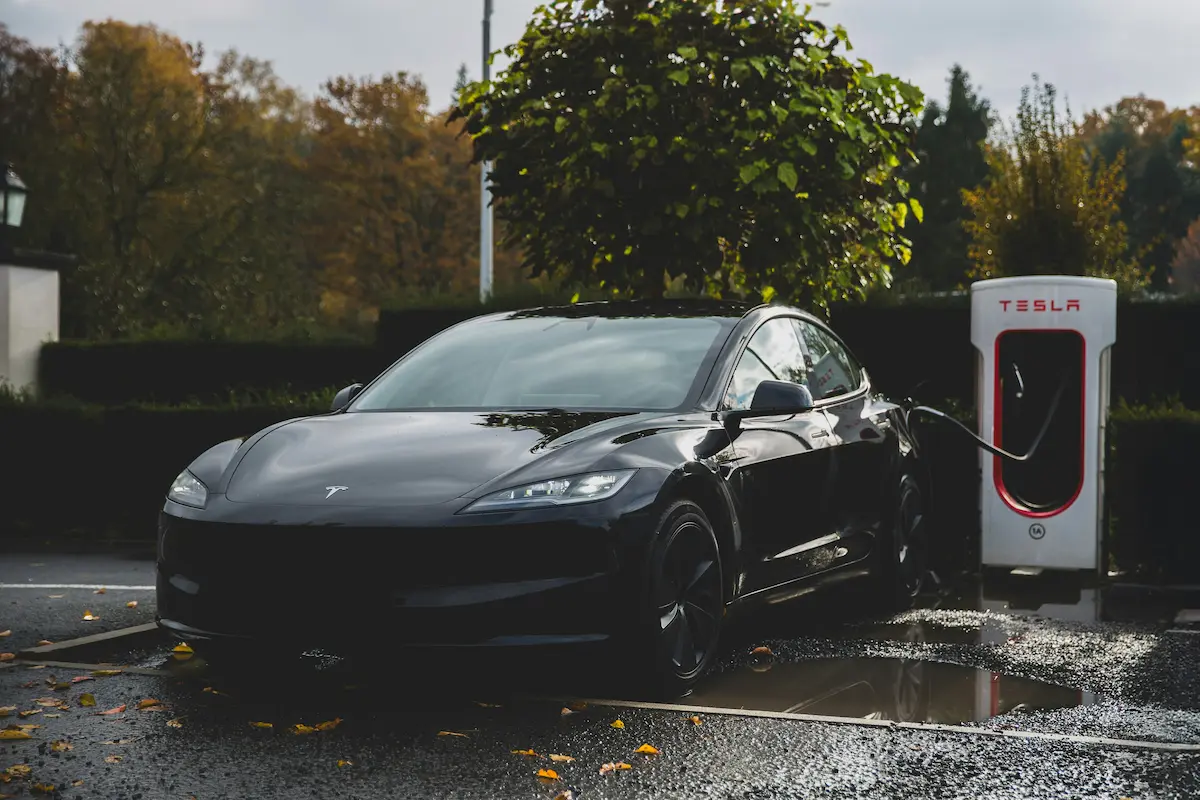
How long until an EV pays for itself?
Operating costs only — fuel + maintenance savings vs. price premium.
Operating cost estimates only (fuel + maintenance) — depreciation and insurance not included. Sources: AAA 2025, Consumer Reports 2026.
What happened to the $7,500 EV tax credit?
This is the section where every competitor article is either wrong, outdated, or vague. Let me be clear: the federal $7,500 new EV credit and the $4,000 used EV credit are both gone.
Congress eliminated them via the One Big Beautiful Bill Act (OBBBA), signed July 4, 2025. Both credits expired for vehicles acquired after September 30, 2025.
If any article you read still mentions a $7,500 credit as currently available, it’s outdated and wrong.
Gone: $7,500 new EV credit (Section 30D), $4,000 used EV credit (Section 25E), and the commercial clean vehicle credit — all ended October 1, 2025.
Still available (barely): The Section 30C home charger credit — 30% up to $1,000 — applies through June 30, 2026 only, and only for eligible census tracts.
What replaced it: The OBBBA auto loan interest deduction — deduct up to $10,000/yr in loan interest on a new, U.S.-assembled vehicle through 2028.
It’s an above-the-line deduction that saves ~$2,200/yr at the 22% tax bracket. Income phase-out begins at $100k single / $200k joint.
One narrow exception exists. If you signed a binding purchase contract and made a qualifying payment on or before September 30, 2025, you may still be able to claim the credit on your return.
You’ll need the dealer’s time-of-sale report and IRS Form 8936. Talk to a tax professional if that applies to you.
State incentives are now the real money. Colorado offers up to $9,000 for new EVs; California has programs up to $12,000 for income-qualified buyers.
Check your state’s energy office — that’s where the savings are in 2026.
Florida has no state EV purchase incentive as of May 2026 — and as of March 2026, proposed registration surcharge legislation (SB 804) died in committee. Watch for future attempts, as the revenue pressure on states is real and ongoing.
5-Year EV Savings Calculator — Run Your Own Numbers
Every situation is different. Plug in your actual numbers and see what the math looks like for you specifically.
EV 5-Year Savings Estimator
Operating cost estimate based on AAA 2025 methodology. Results vary by vehicle, state, mileage, and trim — does not include depreciation or insurance.
The calculator uses AAA’s flat $949/yr maintenance savings figure, based on new vehicles at 15,000 miles/yr.
It doesn’t account for depreciation or insurance differences — think of this as your operating cost baseline, not your full financial picture.
What are the 4 variables that determine if an EV is worth it?
Forget the generic “EVs save money” or “EVs are too expensive” arguments.
The real answer comes down to four things — run them on your situation and the answer becomes clear.
| Variable | Favors EV | Doesn’t Favor EV |
|---|---|---|
| 1. Where you charge | Home charging at night (7–15¢/kWh) | Public fast charging only (35–50¢/kWh) |
| 2. Your local rates | Low electricity + high gas prices (Florida, Southeast) | High electricity + low gas (parts of New England) |
| 3. New vs. used | 2–3 year old used EV (already depreciated, often warrantied) | New EV at full MSRP (depreciation front-loads your losses) |
| 4. Which model | Equinox EV, Ioniq 5, Model Y — strong total cost performers | Ioniq 9, luxury EVs — massive upfront gap, years to break even |
The math doesn’t lie — but you have to run it on your specific situation.
A Floridian in a used 2022 Ioniq 5, charging at home, is in a completely different financial position.
A Massachusetts buyer who paid MSRP for a new luxury EV is in a different game entirely.
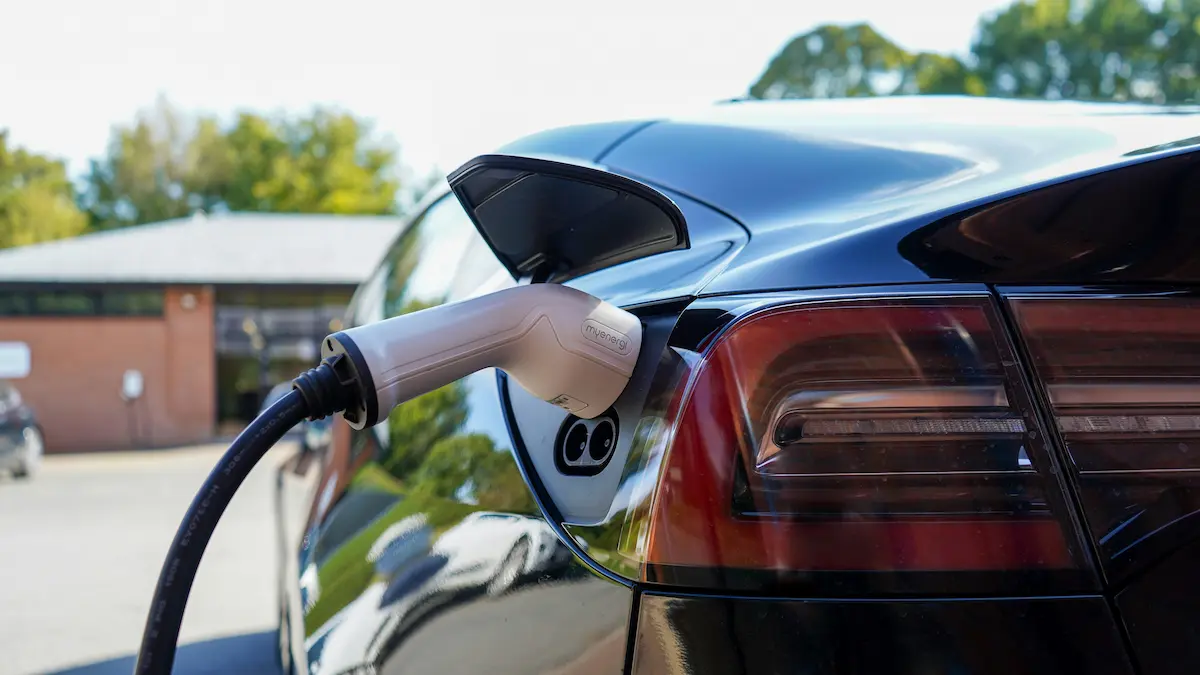
Is an electric car worth it if you can’t charge at home?
In most cases: no, not a fully electric car. This is the answer that the pro-EV crowd doesn’t like, but it’s the honest one.
Without home charging, you depend on public networks for most or all of your charging. Public Level 2 charging runs $0.20–$0.35/kWh; DC fast charging runs $0.35–$0.55/kWh at Electrify America and similar networks.
At those rates, your fuel savings shrink dramatically or disappear entirely.
At 40¢/kWh on a public fast charger, driving 15,000 miles/yr in an EV costs roughly $1,680/yr in electricity — more than the $1,255/yr in gas for a 28 MPG car. The savings disappear and you’re also dealing with the inconvenience of planning every charge stop.
If you rent an apartment, park on the street, or have no dedicated spot, a hybrid is a far smarter call than a full EV. Our hybrid versus electric car breakdown covers exactly this scenario in detail.
One exception: some workplaces offer free Level 2 charging. If you charge at work 4–5 days a week, the math improves.
But you’re dependent on that staying available — a real risk if you change jobs or employers change policy.
Is an EV worth it if you don’t drive much?
The AAA savings figures are based on 15,000 miles per year. If you’re driving 7,000–8,000 miles, those annual savings shrink proportionally — roughly half.
At 7,500 miles/yr with home charging, fuel savings drop to about $350/yr. Add the $949/yr maintenance savings and you’re at roughly $1,300/yr total.
That’s real money — but recovering a new-car price premium takes longer at half the mileage.
If you drive 8,000 miles a year or less, buying a new EV is hard to justify financially. A used EV that’s already absorbed its steepest depreciation is a completely different calculation — especially if you’re keeping it 5–7 years.
Low mileage also means you’re not wearing out the battery quickly.
A 7,000-mile/yr driver in a 2022 Ioniq 5 might still have 85%+ battery capacity at 10 years.
That’s another reason the used EV play is strong for light drivers.
Is a used electric car worth buying in 2026?
This is where the real opportunity is right now — and it’s the angle that almost nobody in the mainstream media is explaining clearly.

KBB analyst Brian Moody has called used EVs “the best car deal in 20 years” right now — and the Edmunds numbers back that up.
Between 2023 and 2025, automakers leased EVs aggressively while the $7,500 federal credit was available. Those leases are now returning as off-lease vehicles — well-maintained, low-mileage, often still under factory battery warranty.
Cox Automotive reports used EV prices averaged $34,821 in early 2026 — just $1,300 more than a comparable used gas car. Edmunds shows 2023 Ioniq 5s averaging $23k–$27k used versus $39,340+ new.
That gap between used EVs and used gas equivalents was over $10,000 just a few years ago — now it’s near parity.
A 3-year-old EV has already absorbed its steepest depreciation — often 40–55% of original MSRP. You skip that loss entirely.
Many 2022–2023 models still have 5+ years left on the federal battery warranty, and you’re buying into fuel and maintenance savings without the new-car price premium.
When buying used, get a battery health report first — Recurrent or through the dealer.
Check the charging standard (older EVs use CCS, newer ones use NACS) and verify warranty transferability before signing anything.
Our complete used EV buying guide walks through every inspection step in detail.
The flood of lease returns includes some genuinely strong models: 2022–2023 Ioniq 5, Mach-E, VW ID.4, Kia EV6, and Chevy Bolt.
The Bolt especially — excellent car, poor resale due to GM ending the line.
Buy one used and that weak resale becomes your advantage. Understanding which EVs depreciate the most tells you which ones offer the best used deals.
What are the hidden EV costs nobody talks about?
Every EV article covers fuel and maintenance. Almost none cover these.
Insurance Premium
EVs cost $200–$500 more per year to insure than comparable gas cars.
Reason: pricier repairs, sensors, fewer qualified shops. This directly eats into your maintenance savings.
Registration Surcharges
41 states charge extra annual EV fees to replace lost gas tax revenue — median $138.50/yr.
Pennsylvania: $250/yr — Virginia: $131.88/yr. Florida currently has none (proposed SB 804 died in committee, March 2026).
Home Charger Setup
This section contains affiliate links. If you buy through them, SpotForCars may earn a commission at no extra cost to you.
Level 2 charger: $300–$800 for the unit, $200–$800 for installation. One-time cost, $500–$1,600 total.
Section 30C credit (30%, up to $1,000) runs through June 30, 2026 in eligible areas. The Emporia Level 2 Charger supports up to 40A through its NEMA 14-50 plug, or up to 48A when professionally hardwired.
Tire Wear
EVs weigh more and deliver instant torque — both chew through tires faster than gas cars.
Budget for replacing tires 15–20% sooner over a 5+ year ownership period.
Battery Replacement Risk
Federal warranty: 8 years / 100,000 miles, minimum 70% capacity. Most batteries exceed this comfortably.
Outside warranty, a failed battery costs $8,000–$25,000 depending on model. Always verify warranty status before buying used.
Which used EVs make the best financial sense in 2026?
Not all used EVs are equal deals right now. These are the five I’d look at first — solid range, proven track records, and realistic pricing.
| Model (Used 2022–2023) | Why It Makes Sense | Watch For |
|---|---|---|
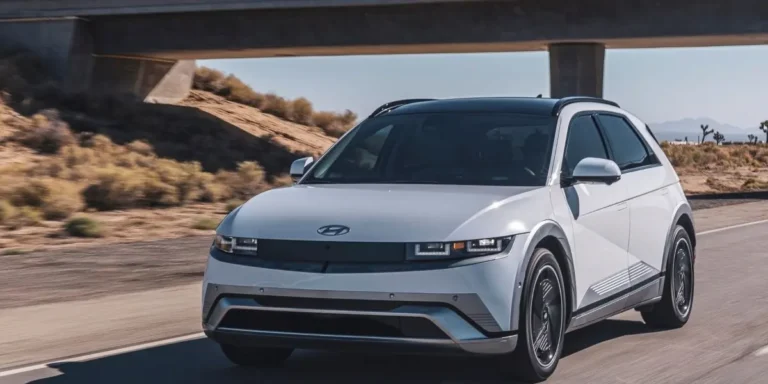
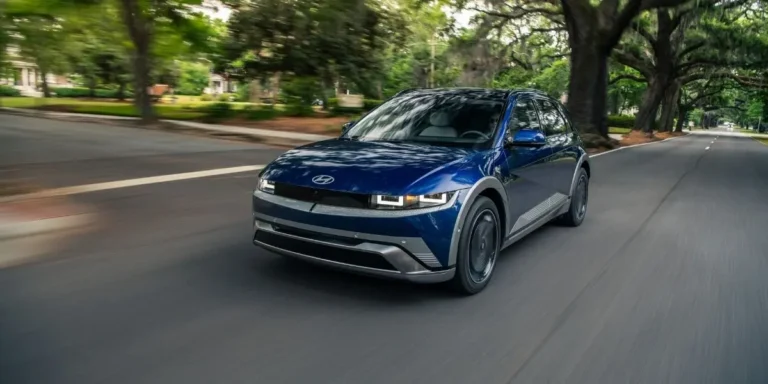
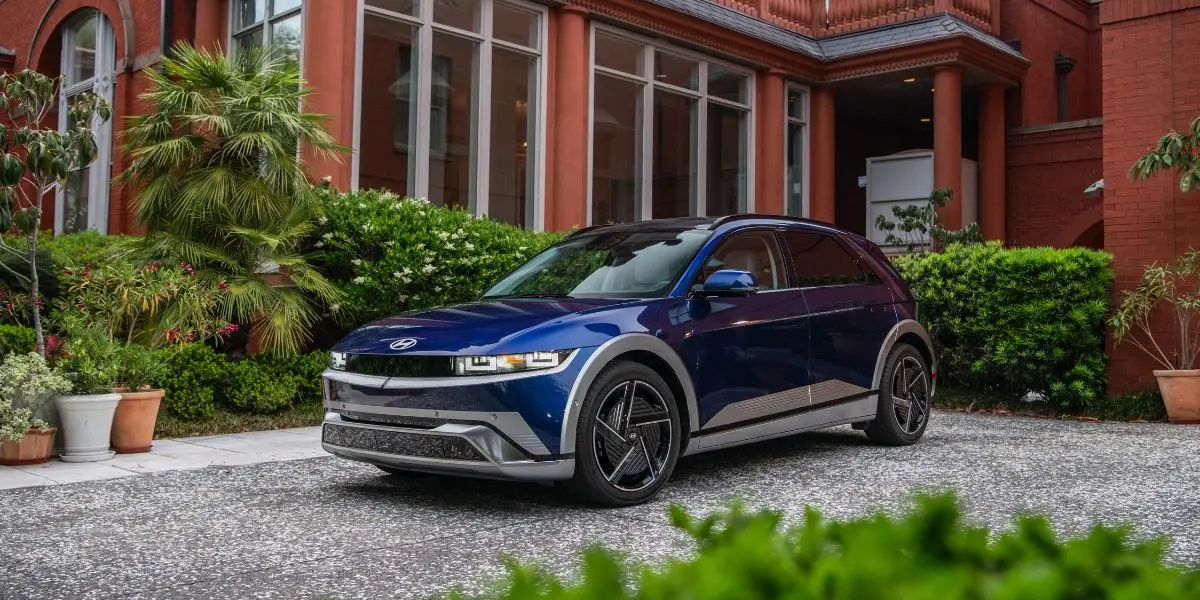
| Hyundai Ioniq 5 | ~$21k–$27k avg (Edmunds), 266–303 mi range, often still under warranty | Original uses CCS charging — check NACS adapter availability |
| Ford Mustang Mach-E | Strong depreciation = big discount, good real-world range | Verify software is updated; some early infotainment issues |
| Kia EV6 | Same platform as Ioniq 5, excellent efficiency, often priced slightly lower | Same CCS charging — confirm adapter situation |
| Chevy Bolt EV | Often under $15k used — 259 mi range, solid reliability history | GM ended the line (for now) — weak resale, but irrelevant if you keep it |
| Tesla Model 3 (RWD) | Best charging network access via Supercharger, strong software, solid range | Resale has softened — buy used, avoid overpaying on certified pre-owned |
The Ioniq 5 and EV6 are my personal picks for value right now. Strong range, proven platform, depreciation already behind them.
For the full picture on EV ownership — from charging to batteries to real costs — the SpotForCars EV Guide covers every angle.
Who should buy an EV right now — and who should wait?
✓ Buy an EV now if you…
- Can charge at home every night
- Drive 10,000+ miles per year
- Plan to keep it 5+ years
- Are buying a 2–3 year old used model
- Live in Florida, Southeast, or Southwest (favorable electricity rates)
- Have access to state incentives (Colorado, California, New York)
- Are sick of oil changes and maintenance appointments
✗ Wait or go hybrid if you…
- Can’t charge at home (apartment, no dedicated spot)
- Drive under 7,000 miles per year
- Frequently tow or need maximum range
- Are buying new in a state with no incentives
- Are considering a large luxury EV (long break-even)
- Are in a region with high electricity rates
- Need a vehicle decision in the next 30 days with no time to research
If you’re in the “wait” column, a regular hybrid is the honest answer — not a consolation prize.
Hybrids have the lowest maintenance costs of any vehicle type per AAA. They offer great fuel economy with zero charging infrastructure, and hold resale value better than most EVs right now.

My honest take: I’m planning to get a used EV — probably a 2022 or 2023 Ioniq 5. I’ll charge at home in Saint Augustine where electricity is cheap, and I’ll be buying off-lease at a significant discount with battery warranty still intact.
Buying a new one at full price right now, without a federal credit, in a state with a pending $250/yr registration fee? I’d run those numbers very carefully first.
Frequently Asked Questions
Are electric cars financially worth it in 2026?
It depends on four variables: where you charge, your local electricity and gas rates, new versus used, and which model you pick.
With home charging, a used 2–3 year old EV is the strongest financial case right now.
New EVs at full MSRP take longer to break even — for many models, operating savings don’t fully offset the higher purchase price over 5 years.
What happened to the $7,500 EV tax credit?
The $7,500 new EV credit and $4,000 used EV credit both ended for vehicles acquired after September 30, 2025, eliminated by the One Big Beautiful Bill Act (OBBBA) signed July 4, 2025.
What replaced it is the OBBBA auto loan interest deduction — up to $10,000/yr deductible on new, U.S.-assembled vehicle loans through 2028. It’s a deduction, not a credit, so it saves roughly $2,200/yr at the 22% tax bracket.
How long does it take for an EV to pay for itself?
With home charging and typical usage, an EV costing $5,000–$7,000 more than its gas equivalent breaks even in 4–7 years on operating costs — faster with state incentives, slower with public charging.
A used EV at today’s prices often breaks even in 2–3 years because the price premium is already gone.
What happens to an EV after 8 years?
The federal battery warranty (8 years / 100,000 miles, minimum 70% capacity) expires. Most batteries perform well beyond that — real-world data consistently shows modern EV batteries retain strong capacity well past 100,000 miles under normal use.
Battery replacement costs run $8,000–$25,000 if it does fail — that’s the real risk on high-mileage used EVs outside warranty.
What is the 80% rule for EVs?
Most EV manufacturers recommend charging to 80% for daily use rather than 100%. Lithium-ion batteries experience more stress at full charge — consistently topping off accelerates long-term capacity degradation.
In practice, 80% covers most daily driving without compromise. Save the full charge for road trips or days you genuinely need maximum range.
Is an electric car worth it if you don’t drive much?
At 7,000–8,000 miles per year with home charging, the fuel savings drop to roughly $350/yr — but maintenance savings still apply.
Under 5,000 miles annually, the break-even math on even a used EV gets difficult. A hybrid may serve you better at that mileage.
Are electric cars cheaper to maintain than gas cars?
Yes, significantly. AAA’s 2025 data shows EVs cost $949 less per year in maintenance than comparable gas cars — that’s $4,745 over five years.
As a mechanic, that tracks: no oil changes, no timing chains, no exhaust systems, brakes that last 60,000+ miles. The maintenance savings are the most reliable financial benefit of EV ownership.
Will EV prices go down in 2026?
New EV prices have been falling — the average transaction price hit $55,300 in early 2026, down from over $65,000 in 2022. Automakers are offering incentives averaging nearly $8,000 per vehicle on 130 days of inventory.
Used EV prices are near parity with gas cars at around $34,821 on average.
The trend is downward for both. Federal credit elimination caused a temporary bump on new models in late 2025, but that has largely settled.
Is an electric car worth it if you can’t charge at home?
In most cases, no. Without home charging, public networks cost 3–5x more than home electricity rates.
At 40¢/kWh on a public fast charger, EV fuel costs can exceed what you’d spend on gas in a 28 MPG car. If you’re apartment-bound with no charging access, a hybrid delivers fuel savings with none of the infrastructure challenges.
Is 100,000 miles a lot for an electric car?
No. 100,000 miles is where the federal battery warranty ends, not where the car gives up.
Most modern EV batteries reach 150,000–200,000 miles with manageable degradation.
A 2022 Ioniq 5 at 80,000 miles is not a high-risk purchase. It likely still has 85%+ battery capacity and years of service ahead.
Do electric cars save money in the long run?
Over a long enough timeline with home charging, yes — the operating savings compound. The problem is recovering the higher upfront cost and early depreciation, which requires actually keeping the car long enough.
Drivers who keep their EV 7–10 years typically come out significantly ahead. The full EV maintenance cost breakdown covers the long-term picture in more detail.