Quick Answer
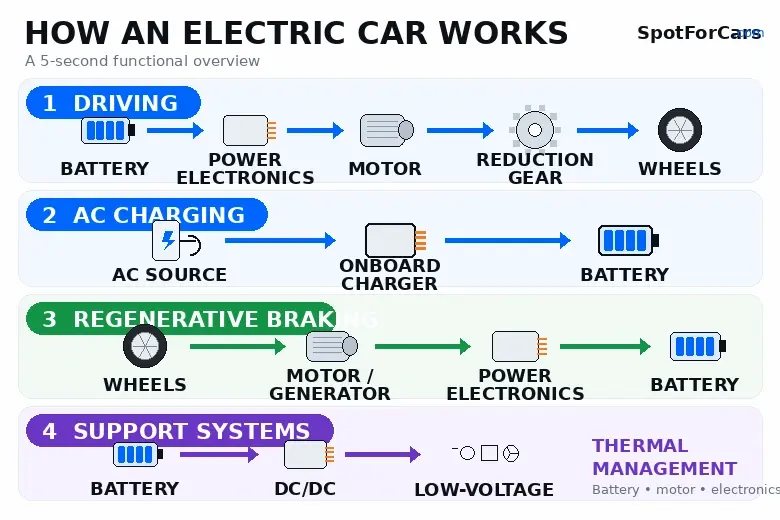
A battery-electric car stores energy in a high-voltage traction battery. Power electronics control the traction motor, the motor sends torque through reduction gears or a transmission to the wheels, and low-voltage and thermal systems keep the car’s controls and major components working.
AC charging normally uses the car’s onboard charger to convert AC to DC. DC fast charging supplies DC without that onboard AC-conversion step. Many EVs use a single-speed reduction gear, but EVs are not universally “gearless,” and their low-voltage systems are not universally 12 volts.
The useful way to understand an EV is not as “a battery and a motor.” It is a group of electrical, thermal, and mechanical systems working together. Once you separate those jobs, charging problems, low-voltage faults, maintenance questions, and driveline parts make a lot more sense.
In This Guide
- What actually moves an electric car?
- How does the electric motor work?
- How does power get from the battery to the motor?
- What changes during AC and DC charging?
- What does 400V or 800V really tell you?
- What is the difference between kW and kWh?
- Do electric cars have gears?
- How does regenerative braking fit into the system?
- Why does an EV still need a low-voltage system?
- What does thermal management do?
- What maintenance disappears — and what remains?
- Where should you go for the next EV question?
What Actually Moves an Electric Car?
In a battery-electric vehicle, the traction battery supplies electrical energy, power electronics control the traction motor, and the motor produces torque. That torque still has to pass through mechanical parts before it reaches the tires.
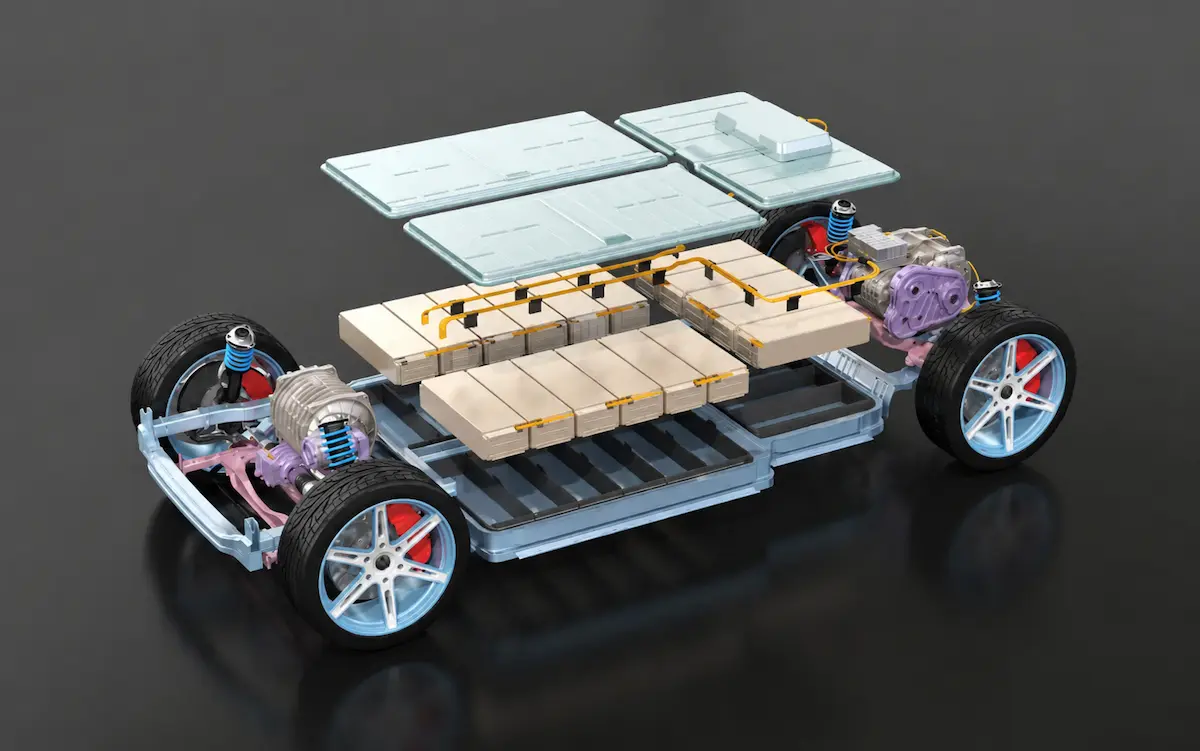
Basic propulsion path: traction battery → power electronics/inverter → electric motor → reduction gears/transmission → differential/axles → wheels.
The U.S. Department of Energy’s Alternative Fuels Data Center lists the traction battery, power-electronics controller, electric traction motor, onboard charger, DC-DC converter, thermal system, and transmission as separate EV components. That is the right mental model: the motor is important, but it is not the entire propulsion system. DOE/AFDC: How All-Electric Cars Work.
How Does the Electric Motor Work?
An electric traction motor uses controlled magnetic fields to turn electrical energy into mechanical rotation. The stationary part is the stator; the rotating part is the rotor. The inverter or motor controller changes the electrical input so the motor can produce the torque and speed the driver requests.
There is no single motor design used by every EV. Permanent-magnet synchronous, induction, and externally excited synchronous designs all exist, and some vehicles use different motor types on different axles. The important owner-level point is simpler: the motor is controlled electrically, but it still drives mechanical reduction gears, bearings, shafts, and wheels.
How Does Power Get From the Battery to the Motor?
The traction battery stores energy chemically and supplies high-voltage DC electricity when the car needs it. In an EV with an AC traction motor, the inverter turns that DC supply into controlled AC for the motor. During regenerative braking, the energy flow can reverse: the rotating drivetrain drives the motor as a generator and power electronics send recoverable electrical energy back toward the battery.
A separate DC-DC converter supports the vehicle’s low-voltage electrical system. That matters because the traction battery and the low-voltage system do different jobs even though they are connected through the vehicle’s power electronics and controls.
Practical takeaway: a traction battery showing charge does not prove the low-voltage system is healthy. If an EV will not wake up or enable drive, the fault still has to be identified rather than blamed automatically on the traction battery.
What Changes During AC and DC Charging?
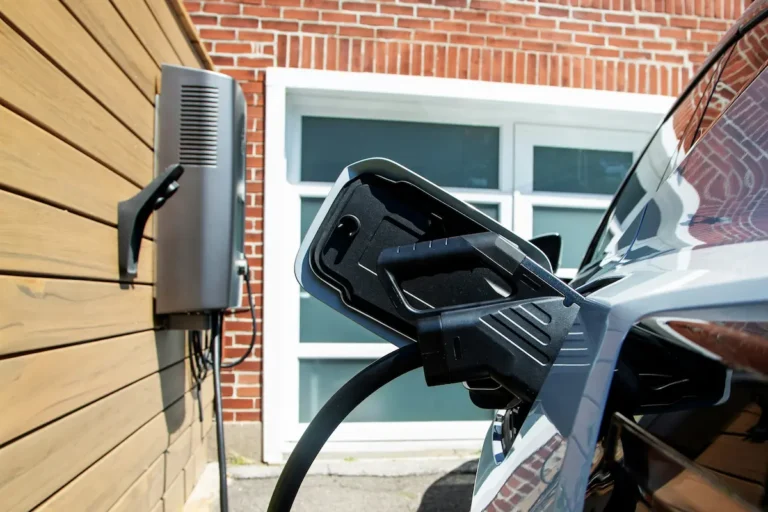
With AC charging, the car’s onboard charger converts incoming AC electricity to DC so the traction battery can store it. That is why the onboard charger’s rating can limit AC charging power even when the wall equipment can provide more.
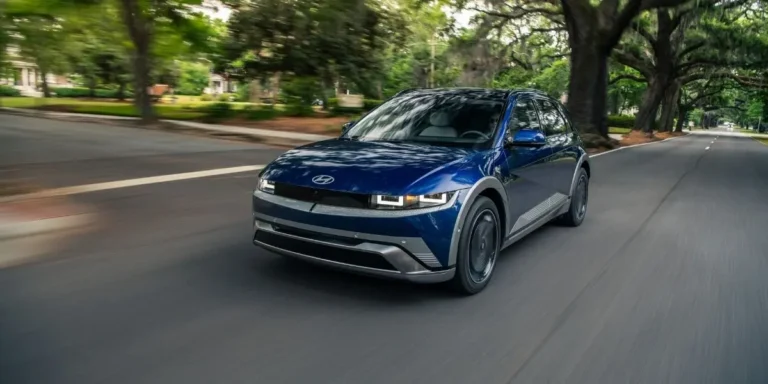
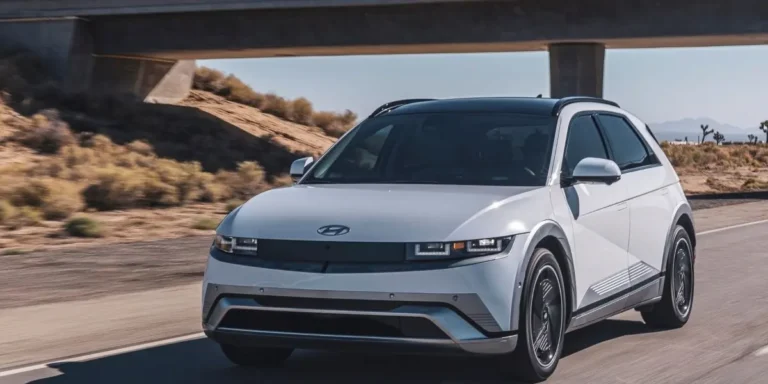
With DC fast charging, the charging station performs the main AC-to-DC conversion outside the car, so the charging path does not use the onboard charger for that AC-conversion job. But it is too broad to say DC fast charging “bypasses the inverter entirely” on every EV. Hyundai’s E-GMP documentation, for example, describes using the motor and inverter to boost a 400-volt DC input for its 800-volt architecture. Hyundai E-GMP technical release.
For charging levels, connectors, and the full charging process, use How Does EV Charging Work?. For public fast-charging speed and tapering, go to What Is DC Fast Charging?. For home and workplace AC charging, see What Is Level 2 Charging?.
What Does 400V or 800V Really Tell You?
Voltage is one part of the electrical architecture, not a charging-speed guarantee. At the same electrical power, a higher voltage can deliver that power with less current. Lower current can reduce resistive losses in a given conductor path and can help engineers design a high-power system, but the actual charging rate still depends on the battery, charging hardware, state of charge, temperature, software limits, and the station.
Even the common labels are approximate architecture classes rather than a rule that every pack must be exactly 400 or 800 volts. Current vehicle documentation shows why universal numbers are risky: Tesla’s Model 3 manual lists a 355-volt nominal high-voltage system for the configuration documented there, while Porsche describes the Taycan as using 800-volt technology. Tesla Model 3 subsystem specifications; Porsche Taycan technical overview.
What Is the Difference Between kW and kWh?
kW (kilowatts) measures power — how fast energy is being delivered or used at that moment. kWh (kilowatt-hours) measures energy — the amount stored, delivered, or consumed over time.
That distinction is useful when reading an EV spec sheet. Battery capacity is normally discussed in kWh. Motor output and charging power are discussed in kW. A charger’s advertised kW rating is not a promise that the car will accept that power for the whole charging session.
Do Electric Cars Have Gears?
Yes. What most EVs avoid is the multi-ratio transmission and shifting strategy used by a typical combustion car. Many EVs use a fixed reduction gear between the motor and the wheels because an electric motor can operate across a wide speed range.
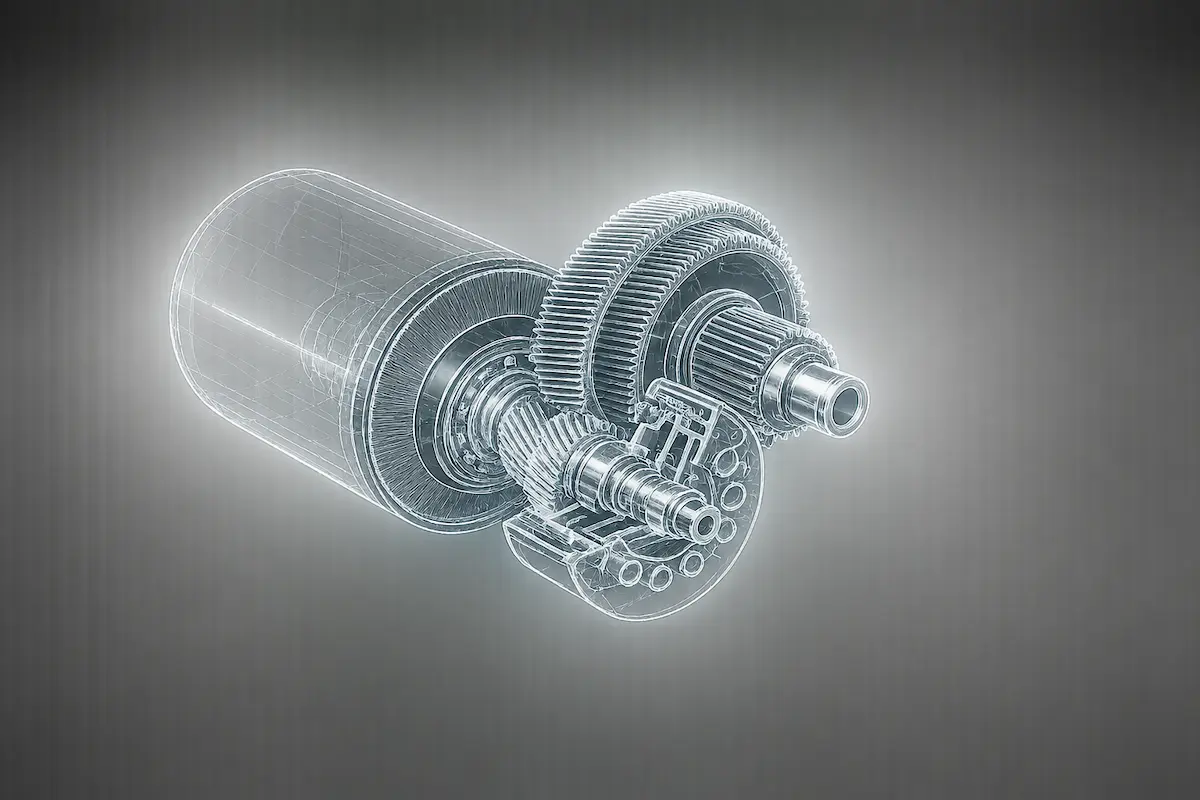
That does not make every EV “gearless.” Tesla’s current Model 3 documentation describes a single-speed fixed-gear transmission with a 9.03:1 gearbox ratio. Porsche’s current Taycan page documents an automatically shifting two-speed transmission. Those are two different implementations of the same basic job: matching motor speed and torque to the wheels. Tesla Model 3 subsystem specifications; Porsche Taycan.
How Does Regenerative Braking Fit Into the System?
During regenerative braking, the drivetrain can use the traction motor as a generator. The vehicle’s motion is converted back into electrical energy and some of that energy can be returned to the battery. The shaft does not need to reverse direction; it is the direction of energy transfer that changes.
Friction brakes are still part of the car, and the amount of regeneration depends on the vehicle, battery condition, temperature, speed, state of charge, and control strategy. For the braking side of this topic, use How Does Regenerative Braking Work?. For driver controls and lift-off behavior, see What Is One-Pedal Driving?.
Why Does an EV Still Need a Low-Voltage System?
The low-voltage system powers and supports controls, computers, locks, lighting, contactors, displays, and other vehicle functions. It is not safe to assume every EV uses a conventional 12-volt battery. Tesla’s current Model 3 manual, for example, lists a 15.5-volt low-voltage battery for the documented configuration, while Cybertruck uses a 48-volt low-voltage battery. Tesla Model 3 subsystem specifications; Tesla Cybertruck electric-vehicle components.
The practical lesson is not to diagnose an EV by battery percentage alone. If the car has traction-battery charge but will not power up normally, record the warnings and symptoms and check the exact model’s documentation or have a qualified service provider diagnose the system.
What Does Thermal Management Do?
EV thermal systems can manage the temperature of the traction battery, power electronics, motor, and cabin. The exact hardware varies by vehicle. Some systems use heat pumps, some use resistive heating, and some recover heat from other components.
Temperature can change available power, charging behavior, energy use, and range, but this systems overview is not the place for a universal winter-loss percentage or a one-size-fits-all charging target. For practical winter use, see Electric Cars in Cold Weather. For real-world range expectations, use How Far Do Electric Cars Go?.
What Maintenance Disappears — and What Remains?
A battery-electric vehicle has no combustion engine, so engine-oil changes, spark plugs, exhaust-system service, and fuel-system maintenance disappear. That does not mean the entire vehicle is oil-free, fluid-free, or maintenance-free.
DOE notes that all-electric vehicles generally have fewer moving parts and fewer fluids to change than combustion vehicles, while still directing owners to the manufacturer for battery, coolant, and maintenance details. Tesla’s service documentation is a useful concrete reminder that a drive unit can still contain gearbox fluid and an oil filter. DOE/AFDC EV maintenance guidance; Tesla Model 3 rear drive-unit oil-filter procedure.
Use the exact owner’s manual and service information for intervals and fluid specifications. For the broader ownership-cost and service question, go to EV Maintenance Costs.
Do not open or probe high-voltage EV components to answer a basic ownership question. If a charging, propulsion, or high-voltage warning needs diagnosis, document the symptoms and use qualified service information or a properly trained technician.
Where Should You Go for the Next EV Question?
This page owns the system overview. The detailed buying, charging, cost, weather, and battery-health decisions belong to their dedicated guides.
- Buying a Used Electric Car — evidence to verify a specific used EV before purchase.
- What Happens to an EV Battery After 10 Years? — degradation, aging, warranty context, and replacement questions.
- Is an Electric Car Worth It? — ownership-cost math and the financial decision.
- Should I Buy an Electric Car? — whether an EV fits your charging access, driving pattern, and budget.
Technical examples in this guide are model- or platform-specific where stated. They are examples of why universal EV claims fail, not specifications for every electric vehicle.