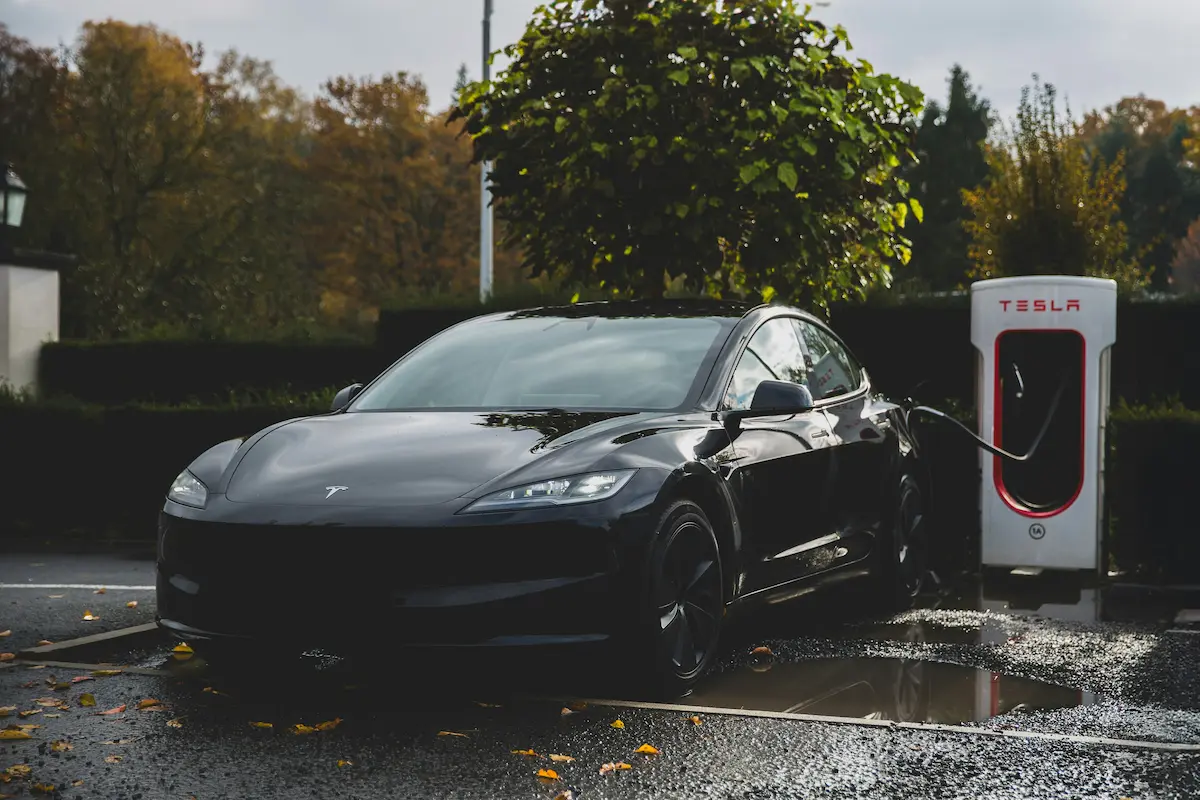
Quick Answer: DC fast charging converts grid power to DC outside the vehicle and sends that power to the battery without using the car’s onboard AC charger. The charging rate you actually see depends on both the vehicle and the charging equipment, plus conditions such as state of charge, battery temperature, and any site power limit. A charger labeled 350 kW is a maximum capability, not a promise that your car will receive 350 kW.
What’s in This Guide
- What Is DC Fast Charging?
- Why Does Charging Speed Change?
- What Actually Limits DC Fast-Charging Speed?
- How Much Does DC Fast Charging Cost?
- Which Charging Network Should You Use?
- CCS versus NACS — What Connector Do You Need?
- What Is Battery Preconditioning?
- Does DC Fast Charging Damage Your Battery?
- Can You Install a DC Fast Charger at Home?
- FAQ
DC fast charging is easy to misunderstand because three different numbers get mixed together: what the station is capable of, what the vehicle can accept, and what the session is actually delivering at that moment.
A 350 kW label does not mean every EV connected to that stall will charge at 350 kW. The useful question is what is limiting the session right now — the vehicle, the station, the battery’s current condition, or a combination of those factors.
This guide stays focused on public DC fast charging: how the session works, why power changes, what to verify before a stop, and when the right answer is simply that more evidence is needed.
What Is DC Fast Charging — and What Is a DC Fast Charger?
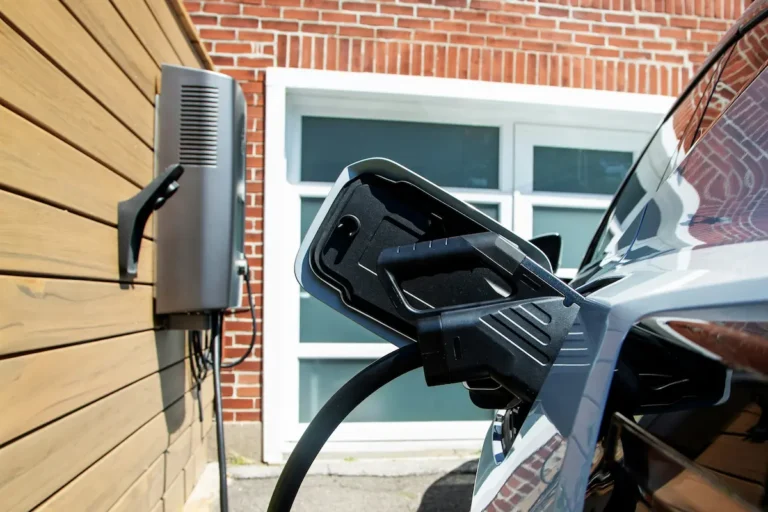
Level 1 and Level 2 charging deliver AC power to the vehicle, where the onboard charger converts it to DC for the battery. A DC fast charger performs that conversion in the charging equipment instead, so DC power is delivered to the vehicle battery without relying on the onboard AC charger.
That is why DC fast charging can deliver much more power than ordinary home AC charging. But the station’s advertised rating is only one part of the picture. EVgo’s charging-speed guidance and Electrify America’s station guidance both describe vehicle, battery, and charging-equipment limits that can affect the rate you see.
For the broader explanation of Level 1, Level 2, DC charging, connectors, and power flow, use the separate guide on how EV charging works.
Why Does DC Fast-Charging Speed Change During a Session?
Charging power is not a fixed number from plug-in to unplug. The vehicle and charger continuously operate within their current limits, and the vehicle can request less power as the battery’s state of charge or temperature changes.
Higher state of charge often means lower charging power, but there is no universal rule that every EV changes behavior at exactly 80%. The exact charging curve depends on the vehicle, battery, software, temperature, and charging conditions. The same is true for battery preconditioning: it can matter, but its operation and benefit are model-specific.
There Is No Magic 80% Rule
Eighty percent can be a useful road-trip planning shorthand, but it is not a universal technical cutoff. Charge enough for the next leg and your reserve, then use the vehicle’s current route planning and charging information instead of leaving only because the display reached one round number.
Station-side limits can matter too. Some equipment shares power or operates within current and voltage limits that may be lower than the number printed on the cabinet. Electrify America documents shared-power behavior on some equipment, while EVgo explains how vehicle and charger voltage/current limits can constrain power.
If you want the battery, inverter, motor, thermal-management, and charging hardware explained as one system, that belongs in the separate guide on how an electric car works.
What Actually Limits DC Fast-Charging Speed?
The simplest answer is: the session is limited by whichever relevant constraint is lowest at that moment. That can include the vehicle’s requested power, the charger’s available power, the station’s voltage or current capability, power sharing, battery temperature, and state of charge.
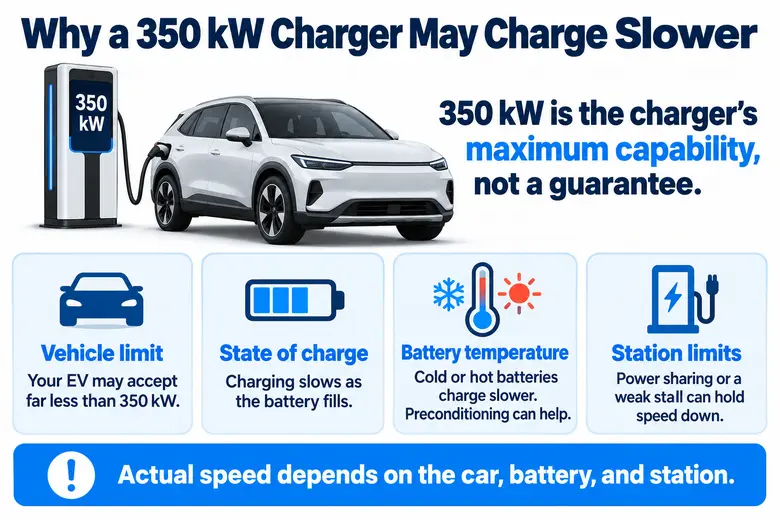
That is why a higher-rated stall does not automatically mean a shorter stop. If your vehicle cannot use the extra available power, moving from a 150 kW stall to a 350 kW stall may not change the useful charging rate. On the other hand, a capable vehicle can still receive less than expected if the site or current battery conditions are limiting the session.
Check the Car and the Exact Station
Before a road trip, verify your exact vehicle’s DC fast-charging capability in the owner’s manual or manufacturer documentation. Then check the exact station for connector access, charger capability, current status, and any network-specific requirements. Peak kW alone does not tell you how many minutes the stop will take.
For general charging-time math and setup choice, use the separate guide on how long it takes to charge an electric car. This page does not use a universal trip-stop estimator because a defensible stop time needs the actual vehicle, energy window, charging curve, and station conditions.
How Much Does DC Fast Charging Cost?
There is no single DC fast-charging price that is safe to hard-code as a national answer. Session pricing can vary by network, location, membership plan, and other site-specific terms.
The practical move is to check the current rate in the network app or on the charger before starting the session. Electrify America publishes its current pricing terms, and EVgo does the same on its pricing page.
If you are comparing DC fast charging with gasoline or home charging, use your own vehicle efficiency, the actual session price, and the actual fuel or home-electricity rate. One invented national average can easily produce the wrong conclusion.
For the broader ownership-cost decision, use the separate five-year EV cost guide.
Which Charging Network Should You Use?
Do not choose a network from a permanent “best” or “most reliable” label. What matters on a trip is whether the exact site works for your vehicle and whether it is a sensible stop for that route.
Before relying on a station, check the exact location for vehicle access, connector or approved-adapter requirements, charger capability, current status, pricing, and a backup option. Recent driver reports can be useful context, but they are not a guarantee that a stall will still be available or working when you arrive.
The full stop-planning workflow belongs in How to Find EV Charging Stations Without Getting Stuck.
CCS versus NACS — What Connector Do You Need?
The connector that physically fits the vehicle is only one part of compatibility. Network authorization, vehicle support, approved adapters, software, and the exact charging site can also matter.
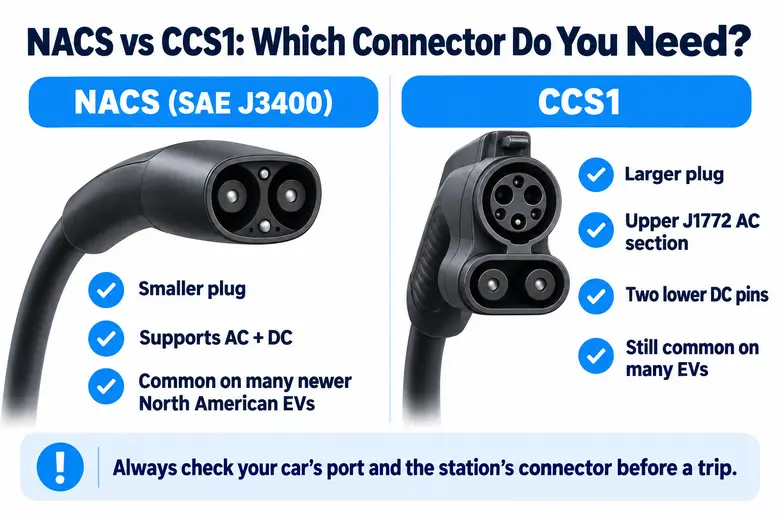
Tesla’s current Supercharging guidance for other EVs, for example, distinguishes between sites that are available to supported non-Tesla vehicles and sites that remain Tesla-only. A compatible plug or adapter does not automatically make every Supercharger usable.
If you own or are shopping for a CCS- or NACS-equipped EV, check the exact model year and the automaker’s current charging guidance before assuming compatibility. The same rule applies to an older vehicle using CHAdeMO: verify the car’s actual connector and the stations you expect to use rather than treating a broad market trend as proof that the charging fit is acceptable.
For a used EV, charging compatibility is part of the candidate-specific proof process in the used electric-car buying guide.
What Is Battery Preconditioning — and Why Does It Matter?
Battery preconditioning uses the vehicle’s thermal-management system to prepare the battery for fast charging before arrival. On vehicles that support it, that preparation can help the battery accept more charging power under conditions where temperature would otherwise limit the session.
Do not assume every EV preconditions the same way, that a phone-navigation route will trigger it, or that it saves a fixed number of minutes. The activation method and behavior are model- and software-specific. For example, Tesla’s current Model 3 documentation describes cold-weather and charging preparation for the applicable vehicle/software scope.
If fast charging is unexpectedly slow in cold conditions, battery temperature may be relevant, but it is not automatically the only cause. Check the vehicle’s charging messages and the station information before blaming the battery or the charger.
Does DC Fast Charging Damage Your Battery?
There is no responsible single percentage that predicts how much capacity an individual EV will lose because it uses DC fast charging. Battery aging depends on the vehicle, battery system, temperature history, time, use, charging behavior, and other factors.
Geotab’s large observational battery-health analysis found faster degradation in some cohorts with more frequent or higher-power DC fast charging, but the data cannot turn a fleet average into a forecast for one car. Recurrent’s Tesla analysis did not find a statistically significant range-degradation difference between its heavy- and light-fast-charging groups at the reported follow-up. Those studies use different populations and methods, so they should not be treated as interchangeable proof.
The practical rule is to follow the exact vehicle manufacturer’s charging guidance and avoid treating a single fast-charging session as a battery-health test. If you are evaluating long-term battery aging, use the separate guide on what happens to an EV battery after 10 years.
Can You Install a DC Fast Charger at Home?
For a normal residential charging plan, the practical home solution is usually Level 1 or Level 2 AC charging rather than the public-style DC fast charging discussed on this page.
DC equipment and electrical-service requirements are site-specific, so this guide does not use a universal equipment price, panel-size rule, or three-phase-service claim. If you are planning home charging, start with the actual vehicle, daily mileage, parking setup, electrical service, and a qualified installer or electrician where required.
The dedicated Level 2 charging guide owns the residential equipment, power, installation context, and daily-use decision.
Frequently Asked Questions About DC Fast Charging
What is DC fast charging?
DC fast charging converts grid power to DC in the charging equipment and delivers that power to the vehicle battery without using the car’s onboard AC charger. The actual rate depends on both the vehicle and the charging equipment, plus current battery and site conditions.
Why does DC fast charging slow down as the battery fills?
The vehicle can request less charging power as state of charge rises and battery conditions change. The exact taper point and charging curve vary by vehicle, so 80% should not be treated as a universal technical cutoff.
Why am I getting much less power than the number on the charger?
The stall’s advertised rating is only its maximum capability. Your vehicle’s request, state of charge, battery temperature, station voltage/current limits, power sharing, or another site condition may be limiting the session. One kW reading by itself usually cannot prove which cause is responsible.
Can every EV use every DC fast charger?
No. Physical connector compatibility, approved adapters, vehicle support, software, network authorization, and the exact site can all matter. Check the automaker and charging network for your exact vehicle and location before relying on a stop.
Does battery preconditioning guarantee faster charging?
No. Preconditioning can help when battery temperature would otherwise limit charging, but the activation method and benefit vary by vehicle and conditions. It does not override a vehicle or station power limit.
Does frequent DC fast charging damage an EV battery?
Research does not support one universal damage rate for every EV. Observational studies show that charging behavior can be associated with different degradation outcomes, but they cannot predict one car’s future capacity. Follow the exact vehicle’s charging guidance and use longitudinal vehicle-specific evidence for battery-health decisions.
How much does DC fast charging cost?
It depends on the exact network, site, plan, and current pricing terms. Check the network app or charger before the session instead of relying on a permanent national average.
Can I install a DC fast charger at home?
For normal residential use, plan around Level 1 or Level 2 charging rather than public-style DC fast charging. Any specialized DC equipment or electrical-service question needs site-specific equipment and electrical review.
DC fast charging works best when you stop treating the number on the charger as the answer. Verify the exact vehicle, the exact station, the connector and access rules, and the conditions that can limit the session. Then charge for the route you actually need rather than following a universal kW or state-of-charge rule.
For the bigger ownership decision — charging access, fuel cost, depreciation, maintenance, and total value — use the EV five-year cost guide.