
Quick Answer: EV charging moves electricity from an outlet or station into your car’s battery. There are three levels — Level 1 (any wall outlet), Level 2 (240-volt circuit), and DC fast charging, which bypasses the car’s onboard charger for maximum speed.
Plugging in an EV is simple. What happens after you plug in is actually interesting — and most explainers miss the part that matters.
After 25 years turning wrenches, I’ve spent plenty of time inside car electrical systems. This guide explains EV charging from outlet to battery — including what’s happening inside your car while it charges.
Still deciding if an EV makes sense? Start with the EV Guide — charging is the most practical thing to understand before you buy.
What Are the Three Levels of EV Charging?
EV charging splits into three levels based on power flow speed. The level determines your hardware, location, and wait time.
| Level | Power Source | Speed | Best For | Typical Cost |
|---|---|---|---|---|
| Level 1 | 120V standard outlet | 3–5 miles per hour | Overnight at home, plug-in hybrids | ~$0.18/kWh (home rate) |
| Level 2 | 240V dedicated circuit | 20–30 miles per hour | Home charger, workplace, public stations | ~$0.20–$0.40/kWh |
| DC Fast Charging | Direct DC, 50–350 kW | 100–200+ miles in 30 min | Road trips, emergency top-off | ~$0.45–$0.60+/kWh |
Level 1 — The Slow One
Level 1 uses a standard 120-volt outlet — no special equipment needed. You get a cord with the car, adding 3 to 5 miles of range per hour.
That’s workable for short daily commutes. A large-battery EV on Level 1 from empty could take two to three days to fully charge.
Level 2 — The One You Actually Want at Home
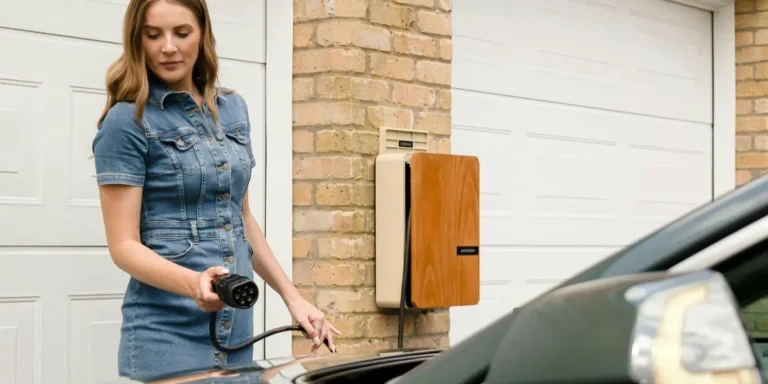
Level 2 charging runs on 240 volts — same as a dryer or oven. A licensed electrician installs a dedicated circuit and a wall-mounted EVSE.
Typical home units deliver around 7.2 kW, adding 20 to 30 miles per hour. Most owners plug in at home and wake up to a full battery.
If you want that setup at home, see my best home EV charger options before buying the wall unit.
According to the U.S. Department of Energy, about 80% of EV charging happens at home.

Level 3 — DC Fast Charging
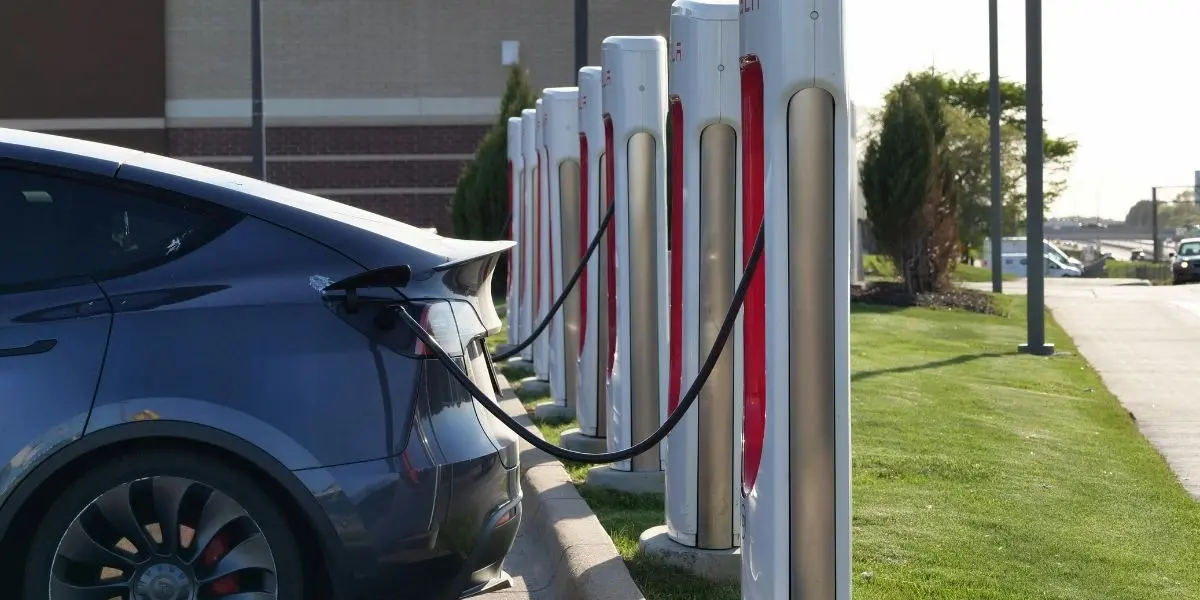
DC fast charging is what you use on a road trip. These stations push 50 to 350 kilowatts, per the Massachusetts Clean Energy Center.
That translates to 90 to 200+ miles in roughly 30 minutes. The speed depends on what your car can accept — not what the station can push.
For the full breakdown of how DC fast charging works — charge curves, network comparisons, and what actually determines your speed — the DC fast charging guide covers it in depth.
What Actually Happens When You Plug In?
This is the part most EV articles skip. Here’s how a technician thinks about it.
You insert the plug and a “handshake” begins. The proximity pin signals the station that a connection exists.
A pilot wire then negotiates the maximum safe amperage. Only after that does the EVSE energize the cable.
Nothing flows until the car and station agree on terms.
AC Charging — Levels 1 and 2
Level 1 and Level 2 stations deliver alternating current. AC can’t be stored in a lithium-ion battery — it needs direct current.
Your car handles the conversion internally, using a component called the onboard charger (OBC).
The OBC converts AC to DC and delivers it at the voltage the battery management system (BMS) specifies. The BMS watches voltage, temperature, and state of charge the entire time.
The OBC is also the speed ceiling on Level 1 and 2. Your 7.2 kW OBC won’t pull more than 7.2 kW from a 19.2 kW station.
Mechanic’s note: The OBC is a real power electronics module — it can fail. If Level 2 charging suddenly gets slow, the OBC is worth investigating before blaming the charger.

DC Fast Charging — The Bypass
DC fast charging works completely differently. The station converts AC to DC externally, then injects it straight into the battery pack.
That bypasses the onboard charger entirely — which is why it’s so much faster.
On Levels 1 and 2, the OBC is the bottleneck. On Level 3, the limit is the battery’s own acceptance rate.
As EVBox explains, a DC fast charger is essentially the OBC moved outside the car and scaled up massively.
That’s also why heat is a bigger concern at DC fast speeds. The BMS throttles input current when the pack gets too warm.
What Connector Does Your EV Use?
This used to be confusing. In 2026 it’s getting simpler — but a few things are still worth knowing.
NACS (SAE J3400) — The New Standard
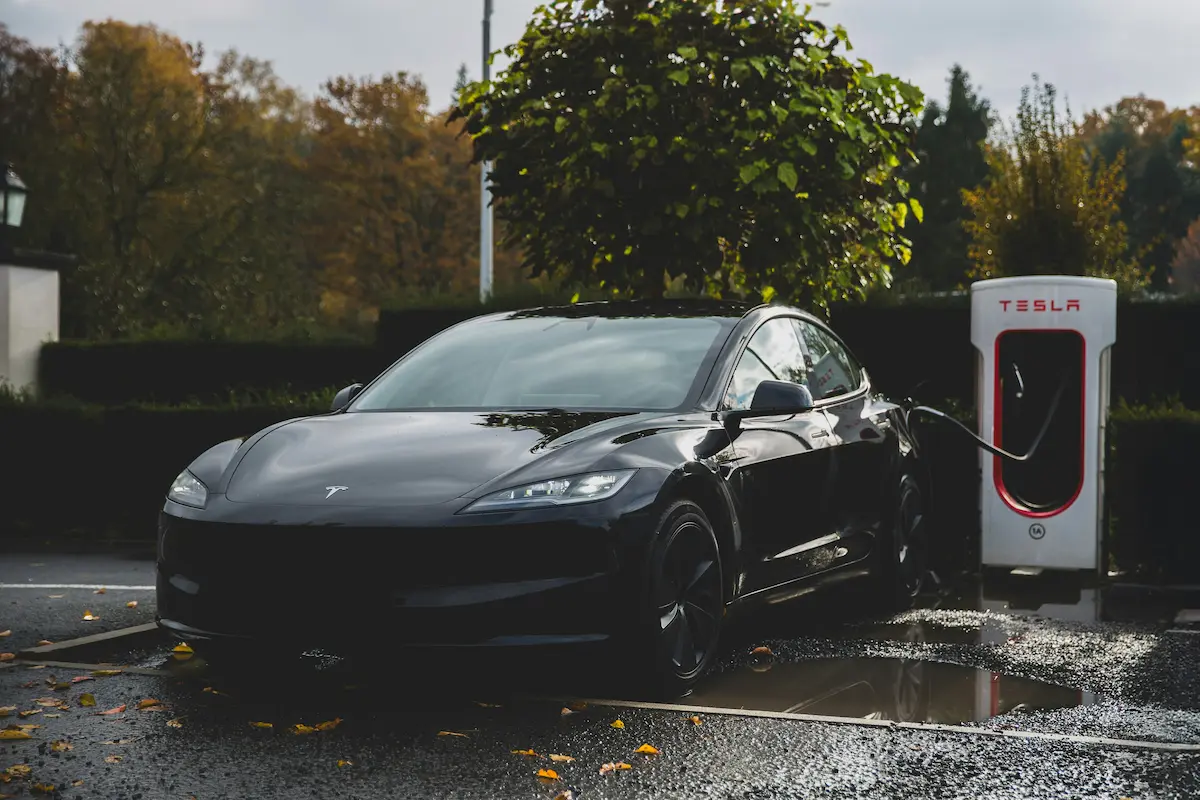
Tesla developed NACS, opened it in 2022, and SAE standardized it as J3400 in 2023. According to CarGurus, virtually every major automaker has committed to NACS.
Many 2025 and newer EVs are transitioning to native NACS ports. The full rollout continues through 2026 and beyond.
CCS1 — The Previous Standard
CCS1 was the North American standard before NACS. Most non-Tesla EVs built before 2025 use it.
CCS isn’t dead — stations still support it. But it’s moving toward legacy status.
J1772 — The AC Connector
J1772 is the five-pin connector on every Level 1 cord set and most public Level 2 stations. NACS ports accept it with an adapter.
Hotel and parking garage chargers almost always have a J1772 plug.
CHAdeMO — Mostly Gone
CHAdeMO was a Japanese DC standard used mainly by Nissan and Mitsubishi. It’s largely gone from the U.S. market.
Quick rule of thumb: 2025 or newer from a major brand almost certainly means NACS. Pre-2025 non-Tesla almost certainly means CCS1 — with a manufacturer NACS adapter now available.
Once you know which plug your car needs, use this guide to find compatible EV charging stations that actually work for your route and vehicle.

How Much Does It Cost to Charge an EV?
Home is cheapest. Public Level 2 is mid-range, and DC fast on a road trip can get expensive fast.
Home Charging
The national average residential rate is about 18.2 cents per kWh in 2026, per the EIA’s May 2026 Short-Term Energy Outlook. Rates are up roughly 5% from 2025.
Florida rates typically run 12 to 16 cents per kWh depending on your utility.
Charging a 75 kWh battery from 20% to 80% costs about $8.20 at the national average. A full charge runs around $13.65.
Public Level 2 Charging
Public Level 2 stations typically run $0.20 to $0.40 per kWh, per ChargePoint’s own pricing documentation. Some use flat session fees or per-minute billing instead.
DC Fast Charging
DC fast charging typically runs $0.45 to $0.60 per kWh — sometimes more on premium networks.
A 45 kWh top-off on a road trip can cost $20 to $27. Heavy DC fast reliance closes the fuel cost gap significantly.
Do the honest math before assuming an EV always saves money over gas. See the full 5-year cost breakdown for the real numbers.
Off-peak tip: Many utilities drop overnight rates to 10 to 12 cents per kWh. Schedule your Level 2 charger to run after midnight and your charging cost drops substantially.
EV Charging Cost Calculator
Estimate what a full charge costs you based on your battery size and charging location.
Why Does Fast Charging Slow Down After 80%?
Every charging estimate says “10–80%.” That number isn’t arbitrary — there’s a real mechanical reason for it.
Lithium-ion cells accept high current easily when the battery is between 20 and 80 percent charged. Above that, the chemistry changes.
Forcing high current into a nearly full cell causes lithium to plate on the anode instead of intercalating correctly. That plating permanently damages the cell.
The BMS knows this. Above 80%, it deliberately throttles incoming current to protect the cells.
The charging curve drops from fast to slow — the car is protecting itself, not malfunctioning.
On a road trip: charge to 80% and drive. The last 20% takes nearly as long as the first 80% did.
For times by car model and charger level, see how long it actually takes to charge an electric car.
What Is Smart Charging and Do You Need It?
Smart charging is any setup that does more than just push power into the battery. The most useful features are scheduled charging and off-peak optimization.
Scheduled charging tells the car or charger to start at a set time — usually after midnight when rates drop. Most modern EVs handle this through the car’s own app.
More advanced chargers add energy monitoring, load balancing, and solar integration. Some newer EVs support vehicle-to-load (V2L) — powering appliances directly from the car.
Vehicle-to-grid (V2G) bidirectional charging is emerging but still rare in production vehicles today.
Honest take: most drivers don’t need a smart charger. A reliable Level 2 unit and a car that schedules its own charging gets you 90% of the benefit.

Your EV Charging Questions Answered
Yes — every EV includes a Level 1 cord set for standard 120-volt outlets. It works for slow overnight charging, though Level 2 home equipment is a separate purchase and installation.
Most networks accept payment by app, credit card, or RFID card. Newer stations support Plug & Charge, which authenticates automatically when you connect — no card or app needed.
Some stations are free — certain garages, hotels, and dealerships offer complimentary charging. Most charge a per-kWh, per-minute, or session fee.
At 18.2 cents per kWh (EIA, May 2026 national avg), a 75 kWh battery costs about $13.65 to fill. Overnight off-peak charging can cut that by 30 to 40%.
Yes, with the right connector. NACS vehicles plug in directly — CCS vehicles need a NACS adapter, which most automakers now offer. You pay through the Tesla app regardless of vehicle.
Yes, with properly installed equipment. Modern EVs stop drawing power automatically when full — use a dedicated circuit, not an extension cord.
Most hotels offer Level 2 J1772 stations, either free or paid through a network app. Expect to add 20 to 30 miles of range per hour at a standard hotel charger.
The rental company should give you charging instructions. Most rental EVs use CCS1 or NACS — confirm the connector before leaving the lot. Network apps like ChargePoint work regardless of vehicle.
Stop DC fast charging at 80% and drive — the last 20% takes as long as the first 80%. BMS throttling protects cells from lithium plating damage.
Most owners plug in nightly, like a phone. Under 200 miles per day means you’ll rarely run low — road trips need DC fast charger planning.
ChargePoint is a charging network — create a free account, tap to start at any ChargePoint station. Pay through the app or an RFID card. Some stations accept credit cards directly.
Is EV Charging Really That Simple?
For most people, yes. Plug in at home overnight, wake up full, only think about public charging on road trips.
Know your connector type, understand the 80% rule before long trips, and run honest math on DC fast charging costs.
Still figuring out if an EV fits your life? See the honest answer on whether you should buy one — or start with how an electric car works.