
To negotiate a used car price, control the out-the-door number — not the monthly payment. Research the car’s real market value before you ever walk in.
Inspect it, then turn any repair findings into a written discount before you sign. Keep the price, your trade-in, and your financing as three separate deals.
Bring your own pre-approval, so the dealer sells you one thing — the car. Refuse the junk add-ons, and the buyer who controls the numbers controls the deal.
Last updated: July 19, 2026
Most articles about how to negotiate a used car price tell you to research the price, be polite, and be ready to walk. That advice is fine, and also bloodless.
Here is the sharper version, because the dealer is not really selling you a car. They are selling you a loan and a stack of add-ons.
You win by controlling one number, the out-the-door price. I have bought and sold a lot of cars, and I have learned to show up knowing exactly what I want.
- What are you actually negotiating against?
- How do you know what a used car is worth?
- How much can you actually negotiate off a used car?
- How do inspection findings become real money?
- Why negotiate the out-the-door price, not the payment?
- How do you set your out-the-door target?
- What is the four-square, and how do you beat it?
- Trade-in and financing: which comes first?
- Which add-ons should you refuse or question?
- What should you say (and not say)?
- When should you walk away?
- Is it different with a private seller?
- Still have questions?
What are you actually negotiating against?
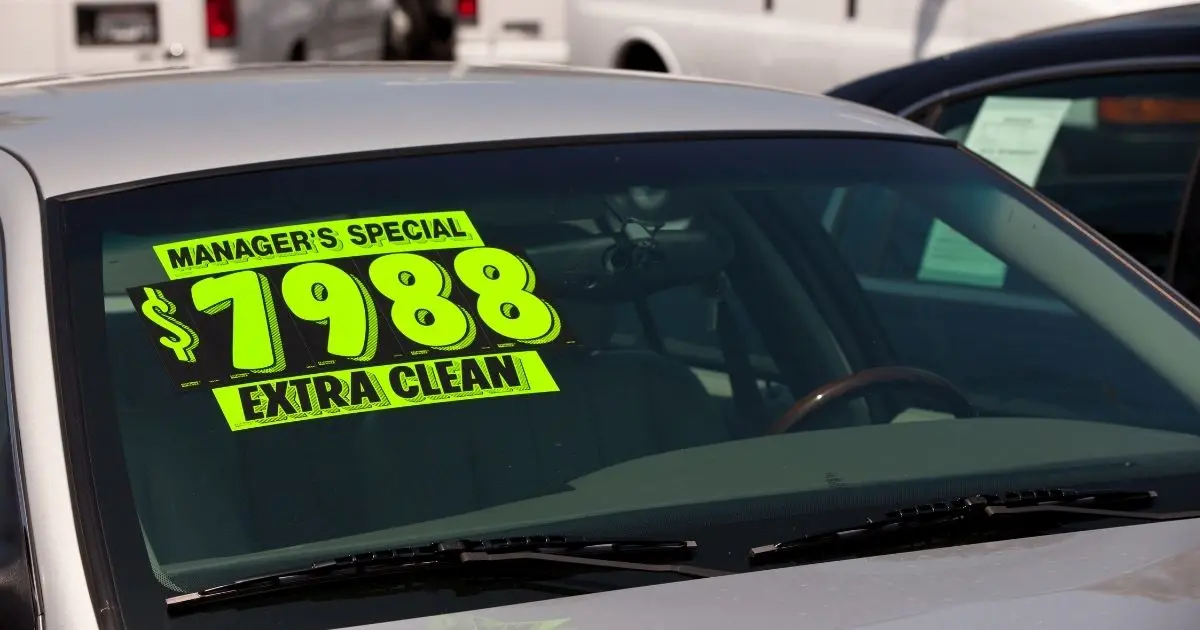
The price on the windshield is bait. The real game starts the moment you say yes.
At a big dealer group, the finance office can earn more per car than the store makes on the used car itself. In 2025 that gap got wide and stayed there.
Public dealer groups averaged about $2,534 in finance-office profit per vehicle. On the used car itself, front-end profit averaged about $1,528.
Read that again, because it matters. The finance office out-earns the actual car.
The sticker is the part they let you see. The loan and the add-ons behind it are where the deal is really won or lost.
So a deal can feel like a win even when the total barely improves. A little off here, a better-looking payment there, and you stop watching the full number.
Here is the part that helps you, though. They are running a script, and a prepared buyer breaks it.
You do not need to act tough. You need to show up with facts, a fair number, and the patience to hold it — which is what the rest of my buying advice is built on.
How do you know what a used car is worth before you negotiate?
You cannot negotiate a number you have not done homework on. Walk in blind and you will overpay, every time.
Before you go, pull the car’s market value from a few places. Check Kelley Blue Book and Edmunds, then compare real local listings.
Match the exact year, trim, mileage, condition, and history. A clean one-owner car is not the same animal as its salvage-title twin.
Then check how long that exact car has been sitting. Many dealers finance inventory through floor-plan lines of credit, so a car that ties up money and lot space for months gets easier to negotiate.
Mileage swings value more than the model year on a lot of cars. I wrote a whole piece on how many miles is too many on a used car, because the real answer surprises people.
Shopping a used electric car instead? Same playbook, but the battery adds a step, which I cover in buying a used electric car.
Keep your numbers on your phone. When the salesperson floats a price, you answer with a fact, not a feeling.
How much can you negotiate when learning how to negotiate a used car price?
Everybody wants a magic percentage. There is not one, and anyone who hands you a flat number is guessing.
How much a used car moves depends on the car, the market, and the leverage you find. A truck everyone wants barely moves on price, while a slow seller the dealer is stuck with has real room.
Demand, days on the lot, the season, the specific flaws in that exact car — those set the room. Not a rule you read online.
So skip the made-up averages floating around. “Used cars drop six percent on average” is a number somebody invented to fill a paragraph.
Your job is not to hit a percentage. Your job is to find this car’s weak spot and press on it.
That is what I call situational leverage. For one car it is a worn set of tires; for another, it is that almost nobody else is shopping for it.
How do inspection findings become real money?
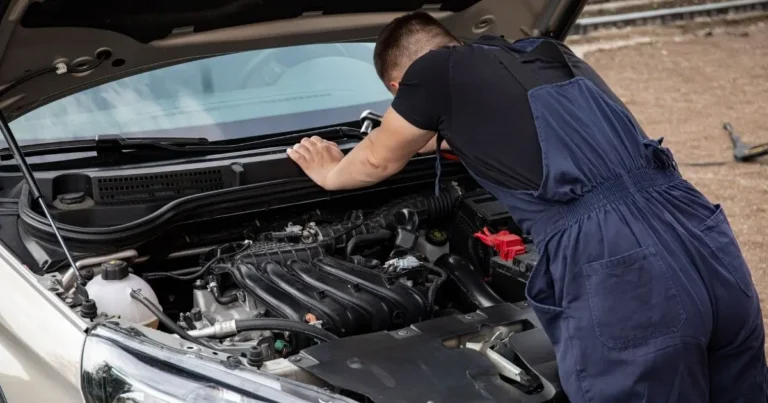
This is where a mechanic’s eye turns into cash. Most buyers see a problem and walk away; I see a discount.
Every real fault has a number. A worn set of tires, dying headlights, a leaking water pump — each one carries a repair cost you can name.
Find the fault, price the repair, and bring it as a written ask. Not “the car has some issues” — “this brake job has a real repair bill, take it off the price.”
Tires are the easiest example of this. If a fresh set is your finding, that is real money on the table — and here is how I would pick tires for comfort and noise.
That works cleanly when the car is up for negotiation. “Sold as is” changes who carries the repair risk after signing, but it does not stop you from negotiating before the deal closes.
Understand what an as-is car sale actually means, then push for a completed repair, a written promise, or a price cut. On the right car, even an as-is deal can move.
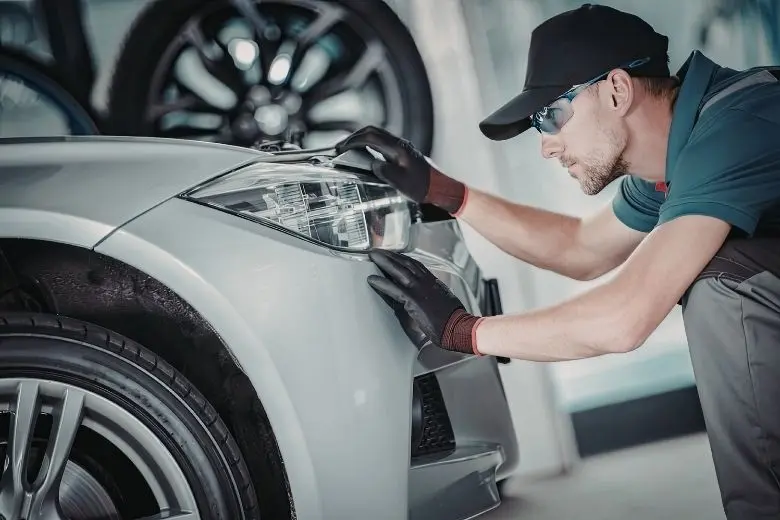
Take a 2022 Cadillac CT5-V my son was looking at — around seventy thousand miles, sold as is, with dying headlights. Those OEM units are expensive enough to change the deal.
That car had a weak hand, and I knew it. It is expensive, used Cadillac reliability scares buyers, and almost nobody shops for a performance trim like the V.
So I pushed hard and stuck to my number, and they agreed to replace both headlights with new OEM units. It went on the buyer’s order in writing, before anyone signed.
I will be straight with you: that is not how most as-is deals go. It worked because the car was a slow mover, and I was willing to be the difficult one.
The lesson that always holds is simpler. Whatever a dealer agrees to fix, get it in writing first — a verbal promise is worth nothing once you sign.
Spotting those problems early is its own skill. Here is what to check before buying a used car before you ever talk price.
Why negotiate the out-the-door price, not the monthly payment?
The monthly payment is the dealer’s favorite magic trick. It hides every single thing you actually care about.
A low payment can mean a long loan, a marked-up rate, and three add-ons buried inside. You feel like you won, and you quietly lost.
The out-the-door price is the whole number — vehicle price, tax, title, registration, every required fee, every add-on. That is the one number that cannot lie to you.
Negotiate that, out the door, and the payment sorts itself out afterward. Never let them open with “what payment are you looking for?”
Fees can wreck a negotiated price after the car number looks settled. In March 2026, the FTC warned 97 dealership groups that advertised prices must include every mandatory fee.
Do not fight each charge in isolation. Compare the written out-the-door total, then use my car dealer fees guide to separate government and manufacturer charges from dealer-controlled fees and optional add-ons.
How do you set your out-the-door target?
Here is a quick way to turn your homework into three real numbers. Drop in what you know, and it frames your opening offer, target, and walk-away line.
What is the four-square, and how do you beat it?
If you finance at the desk, you may meet the four-square. It is a worksheet split into four boxes.
The four boxes are the trade-in value, the purchase price, the down payment, and the monthly payment. As CarEdge lays it out, the salesperson bounces numbers between them while you try to keep up.
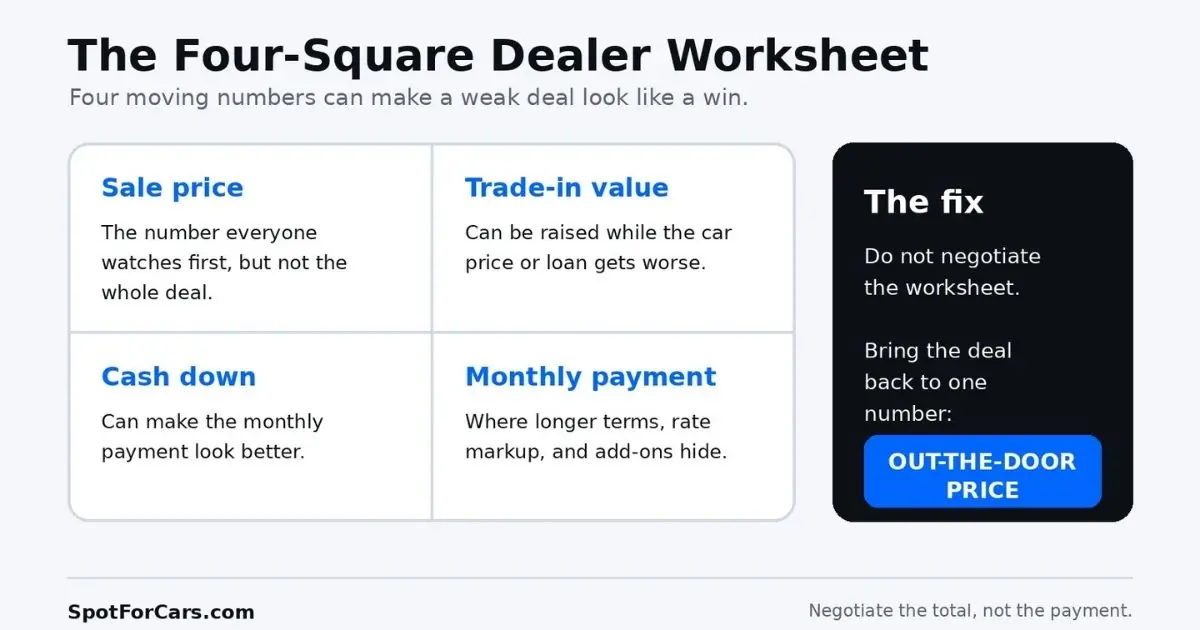
The four-square moves attention between price, trade-in, cash down, and monthly payment. Bring the deal back to the out-the-door price.
Give a little here, take a little there, and the payment looks fine. Meanwhile the total quietly climbs.
It works because four moving numbers are three too many. You cannot track price, trade, down, and payment at once, and that is the entire point.
Beat it the boring way. Refuse to negotiate the worksheet at all, and bring everything back to one number — the out-the-door price.
“I am not working in payments. Give me your best out-the-door price on the car, and we will talk.” That sentence ends the game.
Trade-in and financing: which comes first, and why separate them?
Here is the order that protects you. Settle the car’s out-the-door price first, then the trade, then the financing.
Mash them together and you are juggling three deals at once. That is exactly where you lose money you will never see again.
Do your trade homework before you go. Get quotes from Carvana and CarMax, so you know your floor and do not bring the trade until the car price is set.

Then bring your own financing. Pull your credit and get pre-approved at your bank or credit union first.
The CFPB says it plainly: the interest rate is negotiable, and the dealer may not offer the lowest rate you qualify for.
They can mark the rate up above the bank’s buy rate and keep part of that spread. Walk in pre-approved and you take that profit center off the table.
One trade-in warning, because it is a real trap right now. In early 2026 a near-record 30.9 percent of trade-ins were underwater, owing about $7,183 more than the car was worth.
If you owe more than your trade is worth, the dealer will happily roll it into the new loan. That is how a deal gets ugly fast.
One more thing the trade-in game taught me. Do not pay extra just because a listing uses soft words like reconditioned or inspected.
I sold my 2019 Volkswagen Jetta to Carvana, and days later it was relisted — same coffee stain, same cup holder.
They had not touched it. They marked the price up and flipped it, stain and all.
Which add-ons should you refuse or question?
Once you agree on the car, you meet the finance office. This is where the real margin lives.
They will offer paint protection, fabric protection, nitrogen in the tires, VIN etching, an extended warranty, and more. A few might suit the right buyer, but most are high-margin padding you can decline.
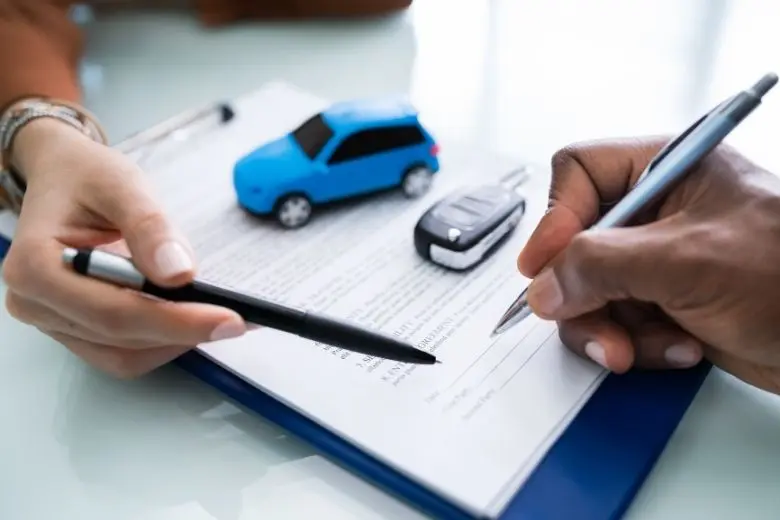
Among dealers that do require add-ons, CarEdge found the extras average about $1,188, on things like paint sealant and nitrogen. Me? I buy cars a year or two old and keep them about three years, so I skip almost all of it.
Here is the tell. The hard sell lands on the everyday buyer in for a used Corolla, never on the collector who knows exactly what paint and coatings are worth.
The pitch targets whoever is least able to judge it. That is not a coincidence; that is the whole business model.
GAP is the exception — but only if you financed with little down. A totaled car once taught me why it matters, and I would still price it through my own insurer before taking the dealer’s version.
Everything else in that room, you can wave off. “No add-ons, thanks — just the car” is a complete sentence.
What should you say (and not say) when negotiating?
Words matter less than numbers, but a few lines do real work. Stay in out-the-door dollars, and the rest takes care of itself.
| Say this | Not this |
|---|---|
| “I am negotiating the out-the-door price, not the payment.” | “What monthly payment can you get me?” |
| “This repair changes my number — take it off the price, or fix it before I sign.” | “I love this car.” (there goes your leverage) |
| “Give me your best out-the-door price and I will say yes or no.” | “I have to buy something today.” |
| “If we hit that number, I am ready to buy.” | “Appraise my trade while we talk.” (trade comes last) |
The theme is simple. Do not act excited, keep everything tied to one number, and never let them see you have fallen for the car.
When should you walk away?
Walking away is real leverage, but it is the last tool, not the first. The better move happens before you ever arrive.
I have honestly never stormed out of a dealership. I do enough homework first that I already know whether the car is worth the fight.
That is the reframe most advice misses. Preparation beats theater — know the car cold and you rarely need a dramatic exit.
Still, a few things should end it on the spot. Walk if they will not give you an out-the-door number.
Walk if they refuse a pre-purchase inspection, or change the contract terms at signing. Walk if they push mandatory add-ons, or will not put a promise in writing.
And walk if the history smells off — a clean story that does not match the car. Your willingness to leave only works if it is real.
Is it different with a private seller?
A private sale is a different animal, and usually a friendlier one. No finance office, no add-ons, no four-square worksheet.
The price is often softer because the seller just wants the car gone. But you give up the safety net almost entirely.
Most private sales are effectively as-is, with far less backup if something breaks later. So the inspection matters even more here than at a lot.
Before discussing price, use these questions to ask when buying a used car to test the seller’s story, ownership, maintenance history, and willingness to allow an inspection.
Then follow the full private-seller car purchase guide for the title, VIN, lien, payment, bill of sale, and paperwork checks before any money changes hands.
Private-party buying deserves its own process. The trade-off is simple: lower price, higher risk, inspect twice.
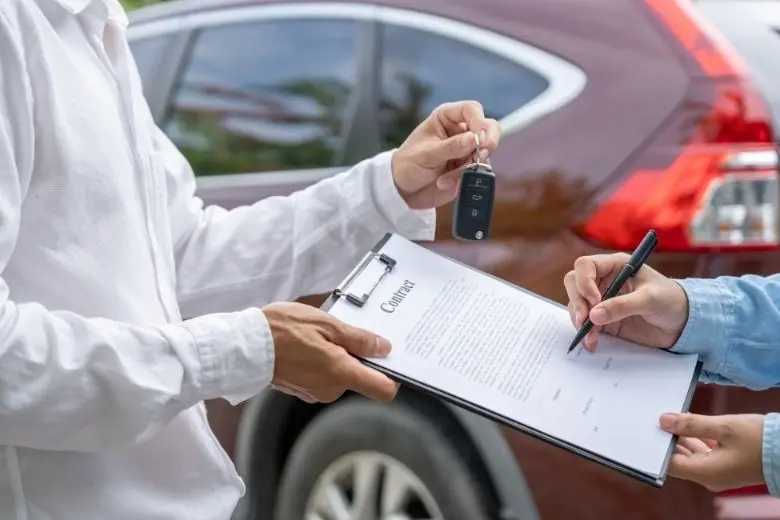
Control the out-the-door number, and you control everything that follows it.
Still have questions about negotiating a used car price?
How much can you typically negotiate on a used car?
There is no fixed percentage, despite what the internet tells you. How far a price moves depends on demand, days on the lot, and the specific flaws you find in that car; a slow-selling model with real issues can move thousands, while a hot one barely budges.
Is asking 10 percent off a used car too much?
It is a fine opening, not an insult, as long as your number is backed by something. Tie your offer to market value and repairs the car actually needs; a reasonable seller answers a researched offer, while an overpriced one gets offended.
Should you negotiate the monthly payment or the out-the-door price?
Always the out-the-door price. The payment hides long loan terms, marked-up interest, and buried add-ons, so lock the total number first and let the payment fall out of that.
Can dealer doc fees be negotiated?
Sometimes, but the line often stays even when the deal moves. State law may cap or regulate the fee, so ask for an equal vehicle-price offset and judge the written out-the-door total.
Should you tell the dealer you are paying cash?
Not early. Dealers often expect to make money on your financing, so revealing cash up front can cost you discount room. Settle the out-the-door price first, then tell them how you are paying.
Can you negotiate a used car sold “as is”?
Yes. As is limits your recourse after the sale, but it does not stop you from negotiating before you sign. Get any repair the car needs written onto the buyer’s order, or knocked off the price, before anyone signs.
What should you not say when negotiating?
Do not say you love the car, that you must buy today, or ask what payment they can get you. Each one hands the dealer leverage you cannot take back, so stay calm, stay in out-the-door dollars, and look ready to walk.