
Quick answer: Car dealer fees fall into three buckets. Government charges (tax, title, registration) and manufacturer charges (the destination fee) are real — you pay those.
Everything else — doc fees, prep, reconditioning, add-ons — is dealer-added, and every added line can be questioned, offset, or refused. Judge every deal on one number: the out-the-door total, in writing.
Last updated: September 1, 2026
In this guide:
You spent an hour grinding the price of the car down. Then the buyer’s order shows up with $2,100 in charges nobody mentioned.
Dealer-fee enforcement stayed active throughout 2026, especially around hidden mandatory charges and unwanted add-ons. In March, the FTC warned 97 dealership groups that advertised prices must include every mandatory fee.
In August, the FTC secured a $4 million Manchester City Nissan settlement. The case involved alleged double-charging and unauthorized fees inside financing agreements for buyers.
I’ve spent 25 years fixing cars, and more hours than I’d like in finance offices. This guide sorts every line on that paper into pay, negotiate, or refuse — with the receipts to back it up.

Which car dealer fees do you actually have to pay?
Only two kinds of charges are truly fixed. Government fees — sales tax, title, registration — go to the state, and the dealer just collects them.
Manufacturer charges like the destination fee are also real, because the factory already billed the dealer for shipping. Everything else on the paper is a dealer decision, which means it’s your decision too.
Every dealer fee was typed onto that paper by a person who can also take it off. That’s an attitude, not a legal guarantee — the dealer may remove it, claw it back in the vehicle price, or refuse the deal.
You control the only vote that matters: whether the final number earns your signature. So judge every version of the deal on the out-the-door price — vehicle, fees, add-ons, and taxes, totaled in writing.
If a fee disappears but the out-the-door total doesn’t drop, nothing actually changed. The money just moved to a different line.
Who actually sets each fee on your buyer’s order?
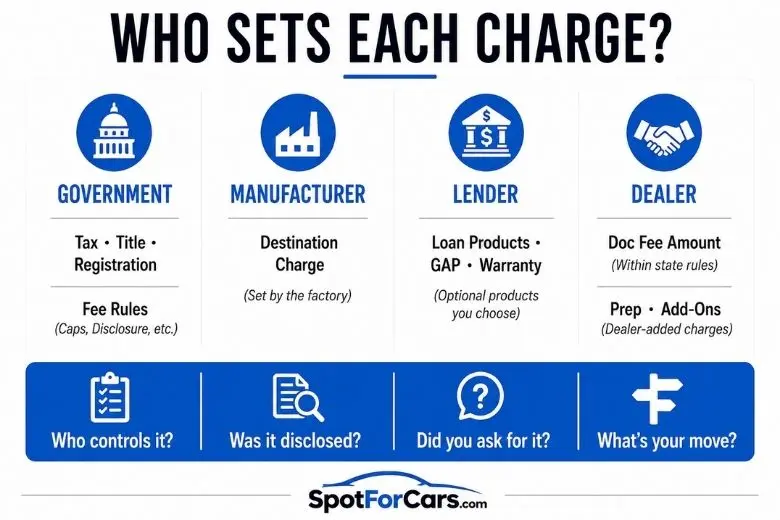
Four hands touch that paper: the government, the manufacturer, the lender, and the dealer. Sorting fees by who controls them beats memorizing fee names, because names change and control doesn’t.
You’ll read that dealer fees run 8 to 10 percent of the purchase price. That figure lumps sales tax and registration in with dealer charges, so it tells you nothing useful.
Taxes scale with the price of the car no matter where you shop. The dealer-controlled portion — doc fee, prep, add-ons — varies from nearly zero to several thousand dollars between stores.
So when a charge looks creative, ask one question: who actually receives this dollar? A “conveyance fee,” a “processing fee,” and a “dealer service fee” all answer the same way — the dealer does.
Which fees are government or manufacturer charges?
Sales tax, title, and registration are the honest lines on the sheet. The dealer forwards them to the state, and no negotiation touches them.
One catch most buyers miss: in Florida, dealer fees sit inside the taxable sales price, per the Florida Department of Revenue. A $900 doc fee adds $54 in state sales tax before any applicable local surtax.
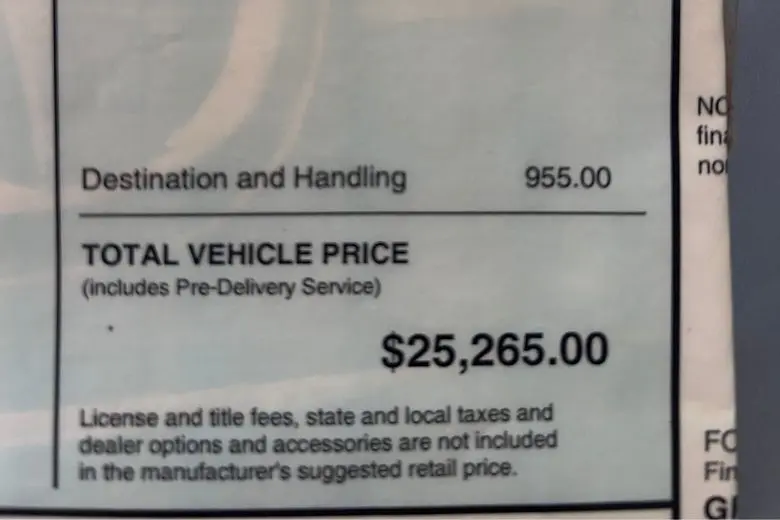
The destination charge is a manufacturer fee, and federal law has required it on the window sticker since 1958. 15 USC 1232 makes every new car’s Monroney label disclose the transportation charge, right under the MSRP.
A second line labeled “freight” or “destination” on a new car deserves an immediate explanation. The Monroney label already discloses the manufacturer’s transportation charge for that vehicle.
New-car “dealer prep” is my favorite fee to challenge because manufacturer-required predelivery work may already be reimbursed. If the dealer wants extra money, make them explain exactly what separate work you are buying.
Florida Statute 501.976 bars charging customers for manufacturer-required predelivery work when the manufacturer reimburses the dealer. It also requires a printed disclosure when a separate predelivery service charge appears.
Which dealer fees should you challenge?
The dealer doc fee — also billed as a documentation fee, processing fee, or conveyance fee — leads this category. It covers paperwork, and in most states the dealer picks the number.
Here’s how differently three states handle the same fee. This is why “is it legal?” always depends on where you’re standing.
| State | Doc-fee cap | What the law adds | Source |
|---|---|---|---|
| California | $85 with a DMV partner agreement, $70 without | Cannot be represented as a government fee. A 2025 bill to raise the cap was vetoed, and the veto was sustained in March 2026. | CA DMV manual, CalMatters |
| New York | $175 | The invoice must print “THIS IS NOT A DMV FEE” next to the charge. | NY DMV Regulation 78.19 |
| Florida | No numeric cap in Statute 501.976 | Advertised prices must include mandatory dealer fees, and predelivery charges need a printed “costs and profit” disclosure. | Fla. Statute 501.976 |
One California quirk worth knowing: even that capped fee can legally sit outside the advertised price, per Vehicle Code 11713.1. A cap limits the number — it doesn’t put the number in the ad.
Florida, my home state, shows what an uncapped dealer-fee market can look like. CarEdge’s August 2026 report lists Florida’s average doc fee at $913.
That was $509 above the report’s $404 national average, ranking Florida first among states tracked. Those figures can change as new verified quotes enter CarEdge’s database.
Then there’s reconditioning, the used-car version of prep. It’s legitimate when tied to documented work — brakes, tires, fluids — and pure invention when it isn’t.

My son bought a used 2022 Cadillac CT5-V, and I ran the negotiation. The buyer’s order carried roughly $1,500 to $1,700 labeled “reconditioning” — with no repair order behind it.
I asked for the documented work. What came back described a fancy car wash, on an expensive used car that had been sitting while identical ones sat on every corner nearby.
So we stayed. Past closing time, past the third manager visit, until the fee came off and the revised out-the-door total actually dropped by the same amount.
That last check matters more than the victory. A dealer can delete a line and quietly claw the money back into the vehicle price, so always compare the original and revised totals.
Aim the same skepticism at certification fees stacked on an already-priced CPO car, “e-filing” charges duplicating the doc fee, advertising fees, and market adjustments. Common is not the same thing as required.
Which dealer add-ons can you refuse?
Search results love lists like “9 fees to never pay a car dealership.” The count changes by author, but the pattern doesn’t — these are products or charges you never asked for.
The usual nine suspects, roughly in order of how often I see them:
- Nitrogen tire fill
- VIN etching
- Paint and fabric protection
- Theft-recovery or GPS products
- Dealer prep on a new car
- Advertising fees
- Duplicate admin or e-filing fees
- GAP coverage you didn’t request
- Service contracts you didn’t request
My framing is question or refuse, not “never pay.” GAP and service contracts aren’t worthless products. The problem is being charged without consent or before you’ve compared the price and contract.
The consent part is exactly what regulators keep hammering. In the Lindsay Auto case, the FTC’s complaint found 88 percent of sampled buyers paid more than the advertised price from 2020 to 2023 — over $2,000 more on average.
The same complaint found 68 percent of surveyed consumers were charged for at least one add-on they never agreed to buy or were falsely told was required. Some were even told dealership financing was mandatory — including military buyers holding credit-union approvals.
Are dealer doc fees negotiable?
Here’s the honest answer nobody’s ad gives you: the line often stays, but the price can move. Many dealers genuinely won’t delete their standard doc fee, and some states expect it charged consistently.
That’s fine, because you’re not negotiating a line item. You’re negotiating one number.
If the dealer “can’t touch” a $999 doc fee, ask for an equal $999 cut in the vehicle price instead. The finance office calls the fee company policy; your wallet calls the out-the-door total the only policy.
A charge can be common without being government-required, and negotiable even when it’s labeled mandatory. Every uncapped doc fee in America proves both halves of that sentence.
How does a dealer decide to drop a fee?
Fee removal isn’t luck — it’s a calculation running in the sales manager’s head. After decades of watching it from both sides of the desk, here’s the math:
- How replaceable is the car? A common trim with ten local twins has zero pricing power.
- How long has it sat? Aged inventory costs the dealer money every single day.
- How much margin is in the price? Thin deals defend fees harder.
- Is the fee tied to documented work? Paper trails get defended; air does not.
- Is your financing and paperwork ready? A buyer who can sign today has weight.
- Does the dealer believe you’ll leave? This one decides everything.
The CT5-V fee came off because five of those six answers favored us. The car had sat, comparables were everywhere, our financing was arranged, and they believed we would walk.
Notice what’s missing from that list: how loudly you argue. Leverage removes fees; volume just entertains the showroom.
How do you read the buyer’s order without getting buried?
Run every line through four quick checks. Who controls it — government, manufacturer, lender, or dealer?
Was it disclosed — in the ad, the first quote, or only once you reached the finance office? Did you ask for it — especially protection products, GAP, and service contracts?
Then make your move: pay, verify, negotiate the offset, remove, or walk. Here’s the whole system on one table.
| Line item | Usually set by | Required? | Negotiable? | Your move |
|---|---|---|---|---|
| Sales tax | Government | Yes | No | Pay — verify the math |
| Title and registration | Government | Yes | No | Pay — verify against state fee schedule |
| Destination charge | Manufacturer | Yes, on new cars | No | Pay once — reject any second freight line |
| Doc fee | Dealer, within state rules | Not by law | Yes, via price offset | Negotiate the out-the-door total |
| E-filing or tag agency fee | Dealer | No | Yes | Question — often duplicates the doc fee |
| Dealer prep (new car) | Dealer | No | Yes | Ask what non-reimbursed work it covers — or remove it |
| Reconditioning (used car) | Dealer | No | Yes | Demand the repair order or remove |
| Certification or CPO fee | Dealer | No | Yes | Question if the CPO price already includes it |
| Advertising fee | Dealer | No | Yes | Remove — their marketing, their bill |
| Market adjustment | Dealer | No | Yes | Negotiate hard or shop elsewhere |
| Nitrogen, VIN etch, protection | Dealer | No | Yes | Refuse unless you wanted it |
| Theft or GPS product | Dealer | No | Yes | Refuse unless chosen; compare price, terms, and subscriptions |
| GAP or service contract | Dealer or lender | No | Yes | Buy only by choice, after comparing prices |
One more layer people forget: financed fees grow. Take a $1,000 fee rolled into a 72-month loan at 8 percent interest.
By the last payment, that fee cost you about $1,262. Every junk line you remove at the desk saves you interest for six straight years.
What should you do when a fee appears at the last minute?
Late-appearing fees are the oldest play in the building, because tired buyers sign things. The March 2026 FTC letters named the tactic directly: concealing mandatory fees until the final stage of purchase.
Your defense starts before you drive over. Screenshot the ad, including the price, the date, and the stock number.
Then request a written, itemized out-the-door quote before you ever sit in the finance office. A dealer who won’t put the total in writing is answering your real question early.
At the desk, cross out add-ons you didn’t request and ask for a corrected total. If the advertised price grows a mystery fee, point at your screenshot and ask them to honor their own ad.
And if it feels bigger than a mistake, the enforcement door is open. Lindsay Auto’s April 2026 settlement made over $75 million in charges eligible for redress, plus a $3.1 million civil penalty.
You can file at ReportFraud.ftc.gov and with your state attorney general — no promises on refunds, but complaints are how those cases get built. The paperwork you saved is exactly what investigators ask for.
When should you walk away?
Some fee behavior isn’t a negotiation opening — it’s a diagnosis. Walk when the dealer refuses a written out-the-door quote, when a removed fee reappears on the final contract, or when add-ons are declared mandatory.
Walk when the advertised price requires their financing, and when “everyone charges this” replaces an actual explanation. The surrender math works both ways — a store that won’t budge with every factor against it is telling you about the next four years of service visits too.
No-haggle stores eliminate the argument. They do not eliminate the need to inspect the car, verify its history, and judge the total deal.
And fee games don’t care what’s under the hood. A used EV gets the same reconditioning line as a used V8 — my guide to buying a used electric car covers the battery-and-charging half of that homework. In our 15-listing used EV sample under $20,000, one Bolt advertised at $19,495 disclosed $1,394 in dealer charges, pushing the displayed sale price to $20,889 before tax and title.
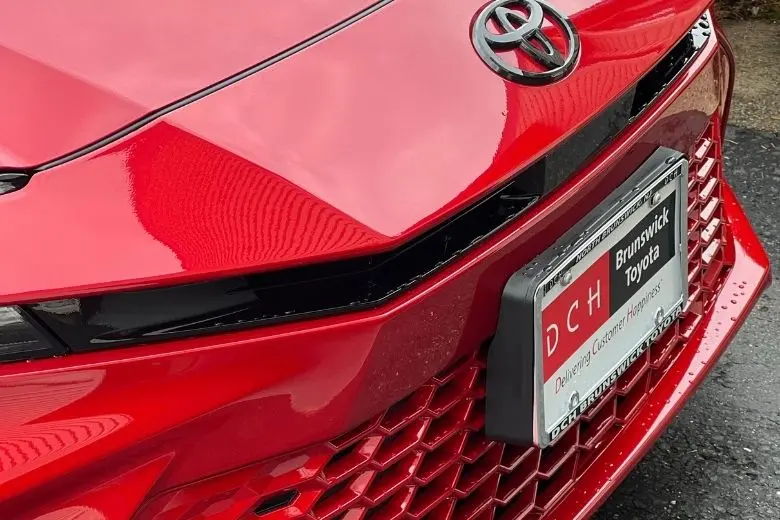
A Jacksonville-area dealer once bolted their badge and branded plate frame onto a car I was signing for. At the desk, I asked the finance manager for the advertising contract — if they want ad space on my trunk, where’s my compensation?
No contract meant no signature until the badging came off, and somebody removed it before delivery. Nothing attached to the deal, or the car, gets automatic consent just because the dealer always does it.
Fees are one battle in a longer war, and winning them means nothing if you lose the price. My full playbook for negotiating a used car price covers the offer strategy, the four-square, and the monthly-payment traps.
Bring the right questions, know the red flags that end a deal, and understand what as-is means before anything gets signed. More of that thinking lives in the full Buying Advice guide.
What else do people ask about dealer fees?
Can you refuse to pay dealer fees?
You can refuse any dealer-created fee, and the dealer can refuse to sell — both sides hold that power. Government charges like tax, title, and registration are not refusable. The practical move is negotiating the out-the-door total until the deal works or you leave.
How much should I expect to pay in fees at a car dealership?
Government fees depend on your state’s tax rate and registration schedule, so they scale with the car’s price. The dealer-controlled portion ranges from nearly zero to several thousand dollars between stores. That spread is exactly why comparing written out-the-door quotes beats comparing sticker prices.
What is the average dealer fee in Florida?
CarEdge’s August 2026 report lists Florida’s average doc fee at $913. That was $509 above the $404 national average in the same report. Florida Statute 501.976 still sets no numeric cap on dealer doc fees.
Are dealer fees taxable?
In Florida, yes — dealer fees are part of the taxable sales price, per the Department of Revenue. A $900 doc fee adds $54 in state sales tax before any applicable local surtax. Treatment varies by state, so check your own state’s revenue department.
How much are dealer fees on a used car?
Used cars carry the same buckets as new ones, minus the destination charge, plus one extra risk: reconditioning. That fee is legitimate only when the dealer can produce the repair order behind it. Ask for the documentation before you accept the number.
What hidden fees do car dealerships charge?
The usual suspects are reconditioning, prep, advertising, duplicate filing charges, market adjustments, and preinstalled products like VIN etching or nitrogen. What matters isn’t the name — it’s whether each charge was disclosed, requested, documented, and inside the written total. Anything failing those tests is a negotiation, not a bill.
How do you get rid of dealership fees?
Get a written out-the-door quote before visiting, then cross out add-ons you didn’t request. When a store won’t remove its standard fee, ask for an equal cut in the vehicle price instead. If the total still fails your number, leave — that’s the removal method that always works.
Can you cancel dealer add-ons after purchase?
For optional products financed on your loan, the CFPB says you have the right to cancel GAP and extended warranties during the loan term. Check your contract for refund terms, request cancellation in writing, and confirm the credit reaches the loan balance. Installed accessories and one-time fees are far harder to unwind.
What about lease buyout dealer fees?
Your purchase-option price and any buyout fee are set in the lease contract you already signed. Extra dealer charges stacked on top of that contract deserve the same who-gets-this-dollar scrutiny as any other fee. Read the lease first — it outranks whatever the desk says.
Which states cap dealer doc fees tightly?
California currently caps dealer document-processing charges at $85 for DMV-partner dealers and $70 for others. New York caps its optional dealer registration or title processing fee at $175 under current DMV rules. Compare the whole out-the-door deal because taxes and other charges still vary by state.