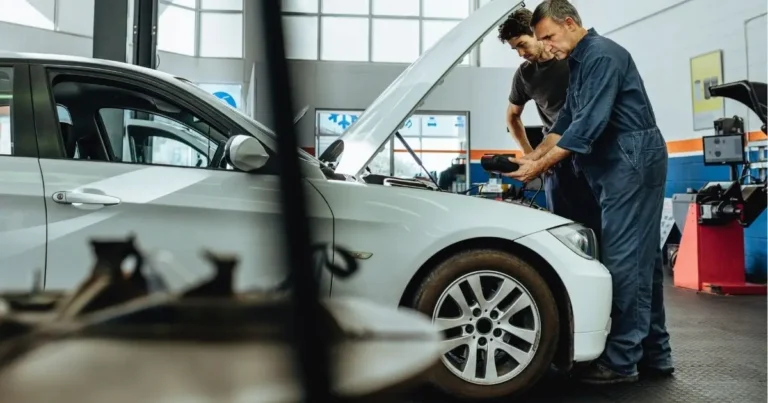
A used car test drive checklist runs in one sequence: touch the hood to confirm a cold engine, key on to check every warning light, feel the first shifts, test brakes and steering at city speeds, make a full-lock turn, cruise on the highway, then let it idle hot — and get back underneath afterward. Parked and moving are two different inspections. The drive tells you what the parking lot can’t.
Last updated: July 8, 2026
The walkaround shows you what the seller cleaned. The test drive shows you what the car can’t hide.
I’ve test-driven more used cars than I can count in 25 years as a mechanic. This is the exact checklist I run — what to feel, hear, and check, in order.
It pairs with my full used car inspection guide, which covers the parked half of the job. This article covers everything in motion, plus the one step almost everybody skips at the end.
Download the printable test drive checklist (PDF)

Why does a used car test drive matter after you already inspected it?
A while back I was looking at a V8 Nissan Pathfinder from a dealership. The salesman told me it “just got traded in”, and on the lot it looked clean enough to keep inspecting.
I did my full parked inspection, including underneath. The undercarriage looked normal for the age and mileage, so we headed out.
On the drive, a noise showed up and grew with road speed. I came back, got under the car again, and found the plastic engine cover loose and fighting the wind — a screw or two missing, with signs of light off-road use.
Cover off: no leaks, no damage. The loose cover was the whole story, and my parked inspection had missed it completely.
That’s the lesson this entire article is built on. Parked and moving are two different inspections, and the test drive is a loop — inspect, drive, then inspect again.
And run the claim test while you’re at it. If the car “just came in” but ceramic coating and tint add-ons are already installed, the story doesn’t add up.
How should you set up the used car test drive?
The setup decides how much the drive can tell you. Get these right before you turn a key.
Show up to a cold car and touch the hood — warm means someone ran the engine before you arrived. A warm start hides rough cold-start behavior, so ask them to leave it parked next time.
Drive your route, not theirs — Consumer Reports recommends at least 30 minutes on a route you choose, since a seller’s loop is picked to flatter the car. You want rough pavement, stop-and-go, a parking lot, and a highway on-ramp.
Windows down first, radio off. Open windows let you hear squeaks, rattles, and hums — and whether the pitch changes with speed.
KBB’s checklist says to shut the audio off and judge cabin noise with windows closed, and that’s right too. They answer different questions: down tells you about the car, closed tells you about the insulation.
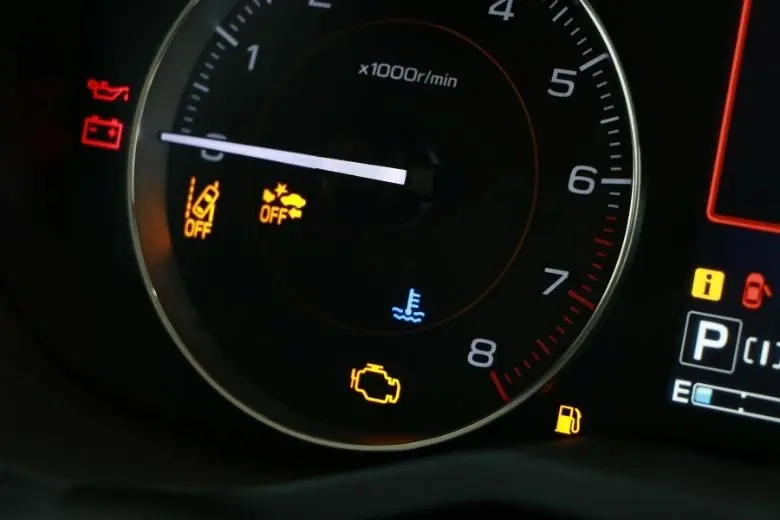
Run the key-on dash test — turn the key to ON without starting, and make sure the major warning lights do their normal self-check before going out after start. If the check-engine, ABS, airbag, or brake warning never lights at all, treat that as suspicious until you know why.
This post contains affiliate links. If you buy through them, I may earn a small commission — at no extra cost to you.
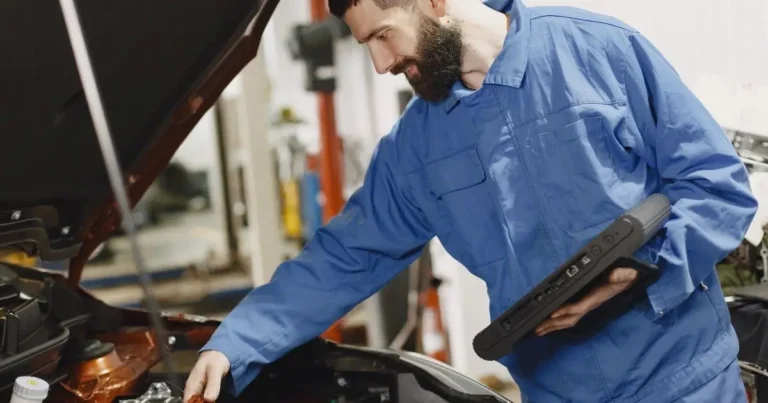
Bring a code reader — a basic scanner like the ANCEL AD310 OBD2 scanner shows stored codes, and whether someone cleared them right before your visit. If you’d rather not buy one, most parts stores scan codes for free — swing by one mid-drive.
Bring your license, and proof of insurance is smart at a dealership. For a private seller, confirm whose insurance covers the drive before you leave the curb.
One more thing: nobody rushes you. It’s your money, and a salesman talking fast is not a reason to drive fast through your checklist.
What should you feel in the first five minutes of the drive?
Pop the hood for the cold start and listen from outside. You’re listening for rattles, knocks, or a squeal in the first few seconds — the noises a warmed-up engine conveniently forgets.
Watch the idle settle. A cold engine idles high, then drops smoothly; hunting or stumbling at idle is a real symptom, not a personality trait.
Now run the shift pause test: P to R, pause, N, pause, D. Each gear should engage within about a second, with no clunk and no delay — a hard thunk into reverse is the transmission introducing itself.
Roll out gently and try the brakes early, in the first block. The pedal should feel firm and high, not soft or sinking toward the floor.
What should you check at city speeds?
City streets are where brakes and steering tell the truth. Find an empty stretch and brake firmly from around 40 mph.
The car should stop straight, with no pull to either side. Pulsing through the pedal usually means warped rotors, and a pull means a caliper or alignment problem.
Feel the steering on rough patches. Clunks over bumps point at worn suspension joints, and a wheel that doesn’t return to center after a turn points at the steering itself.
Then find a parking lot and do slow, tight, full-lock circles both directions. A clicking sound in full-lock turns is the classic worn CV axle, and groaning or popping brings ball joints into the conversation.
These few minutes catch more expensive problems than the entire walkaround. Sellers can detail an interior — they can’t detail a warped rotor.
What does highway speed reveal that city streets can’t?
The on-ramp is a free load test. Accelerate hard onto the highway and feel for hesitation, slipping shifts, or a warning light under real load.
At cruise, relax your grip slightly on a straight, safe stretch. The car should track straight; a drift means alignment, tires, or something bent.
Feel for vibration through the seat or the wheel at steady speed. Wheel vibration usually points at the front end, seat vibration at the rear or driveline.
Now make the split a mechanic’s ear makes first: does the noise rise with road speed, or with engine RPM? Shift to neutral and coast for a second — if the noise stays, it’s tied to road speed.
Road-speed noise means bearings, tires, driveline, or a loose panel. RPM noise means engine, transmission, or accessories — two completely different repair bills.
My Pathfinder noise grew with road speed, which is exactly why the return lap on this checklist exists.
What should you check after the test drive?
You’re not done when you park. The hot half of the inspection starts now.
Let it idle for a minute and listen — a hot engine hides less than you’d think. Then walk to the front and smell: sweet means coolant, sharp and burnt means clutch or brakes, hot oil smells like a pan left on the stove.
Look under the car for fresh drips. Green or pink is coolant, amber to brown is oil, red is transmission fluid — and a fresh drip after one drive becomes a puddle after a month.
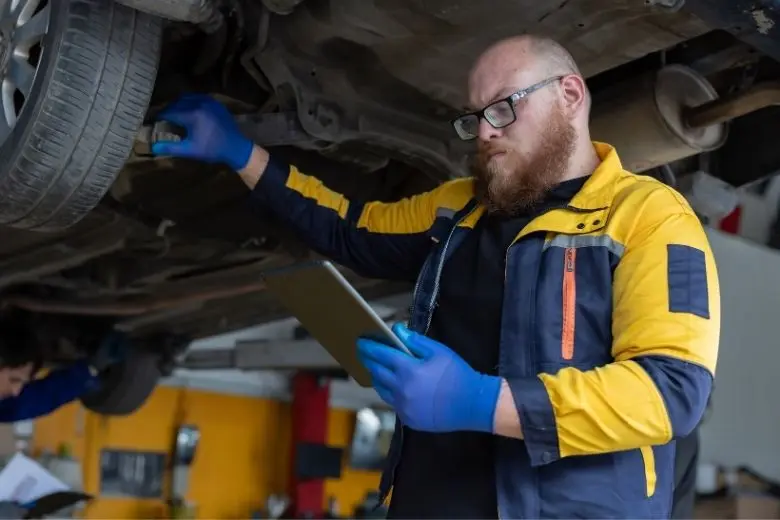
Then do what almost nobody does: get back underneath. Anything that rattled, hummed, or flapped on the drive has a source down there, and now the evidence is warm.
That return lap is how I found my Pathfinder’s loose cover. Parked, it sat flush and looked fine; only wind at road speed made it move.
If what you find underneath contradicts the paperwork, that’s a story problem, not just a parts problem. Cross-check it against the car’s service history before you talk numbers.
Why does the undercarriage matter even more on a used EV?
On an EV, the floor of the car is the battery-pack area. Scrape damage that’s cosmetic on a gas car can be structural on an electric one.
This isn’t theory. After road debris punctured battery packs and caused fires in 2013, Tesla added a triple underbody shield with a titanium plate to the Model S in 2014.
NHTSA closed its investigation saying the added protection should reduce both the frequency of underbody strikes and the resulting fire risk. Automakers armor EV floors for a reason — treat that floor accordingly.

So on a used EV, the post-drive look underneath is not optional. If you see meaningful gouges, dents, impact damage, exposed high-voltage components, flood/fire evidence, or an active high-voltage warning, stop treating it like a normal underbody check. Do not poke around the battery pack yourself. Pause the transaction and use an EV-capable specialist or OEM service path before any money moves. My guide to buying a used electric car explains how that EV-specific verification fits into the rest of the purchase decision.
Which test-drive findings mean negotiate, get a pre-purchase inspection (PPI), or walk away?
Not every symptom is a deal-killer, and treating them all the same costs you money in both directions. Here’s how I triage drive symptoms specifically — for the whole-car version, use my used car red flags list.
| What you felt or heard | Likely culprit | My call |
|---|---|---|
| Slight brake pulsing, stops straight | Worn rotors | Negotiate — known, priceable repair |
| Clunk over bumps, tight steering otherwise | Sway bar links, bushings | Negotiate — cheap parts, get a quote |
| Click in full-lock turns | CV axle | Negotiate or PPI — priceable, confirm it’s only the axle |
| Vibration at highway cruise | Tires, balance, or driveline | PPI — cheap if tires, expensive if driveline |
| Hesitation or slipping under on-ramp load | Transmission | PPI minimum — walk if the seller resists |
| Hard clunk into reverse, delayed engagement | Transmission | Walk away — you’re buying someone’s transmission bill |
| Warning light stays on, or a major warning light never appears at key-on | Hidden fault or tampering | Walk away unless fully diagnosed first |
| Fresh red or pink drip after the drive | Transmission or coolant leak | PPI minimum — walk if paired with other symptoms |
| Burnt smell plus soft brake pedal | Brake system | Walk away — safety system, not a haggling chip |
Experienced owners tell versions of the same story: they felt one symptom, ignored it, bought the car, and paid for it for years. One ignored symptom is how a good deal becomes a bad car.
And every “negotiate” row above is bargaining power with a number attached. Take the findings straight into your price negotiation — a documented symptom beats a vague “it feels off” every time.
Test Drive Symptom Triage
Tap everything you noticed on the drive. I’ll give you the same call I’d give a friend.
Used Car Test Drive Checklist FAQ
What should I check during a used car test drive?
Run one sequence: cold-start behavior, key-on dash test, shift engagement, city-speed brakes and steering, full-lock turns, then highway cruise under load. Finish with a hot idle and a fresh look underneath. The order matters more than any single item.
How long should a used car test drive be?
Aim for at least 30 minutes on a route you choose, per Consumer Reports and my own habit. Anything under 15 minutes on the seller’s loop is a demonstration, not a test. Include city streets, rough pavement, a parking lot, and highway.
What documents do you need to test drive a car?
A valid driver’s license everywhere, and dealers may photocopy it before handing over keys. Bringing proof of insurance is smart, and for a private sale, confirm whose policy covers the drive first. Sort that out before the car moves.
Can you test drive a car for 24 hours or overnight?
Some large used-car retailers offer extended test drives — CarMax offers 24-hour test drives and is the best-known example. It’s worth asking, because an overnight drive gives you a real cold start on your own schedule. Policies vary by store, so confirm terms in writing.
What is the 30-60-90 rule for cars?
It refers to the major scheduled services many manufacturers set around 30,000, 60,000, and 90,000 miles. On a test drive it’s a verification tool: ask if the 60k service was done, then check the records. My guide to checking a car’s service history shows how to verify the answer.
What if the dealer says the car just came in?
Treat it as unverified, not as a bonus. “Just traded in” can mean nobody has inspected it yet — including the dealer — so you’re the first real inspection. If add-ons like tint or ceramic coating are already installed, the timeline doesn’t add up.
Should I check under the car again after the test drive?
Yes — this is the most skipped step on the entire checklist. The drive shakes things loose, warms the fluids, and gives fresh leaks a chance to show themselves. Whatever made noise in motion has a visible source underneath.
Print the checklist, take your time, and remember the loop: inspect, drive, inspect again. The car will tell you the truth — you just have to stay long enough to hear it.
Download the printable test drive checklist (PDF)
This article is part of my Buying Advice series — the full inspection, negotiation, and paperwork guides all live there.