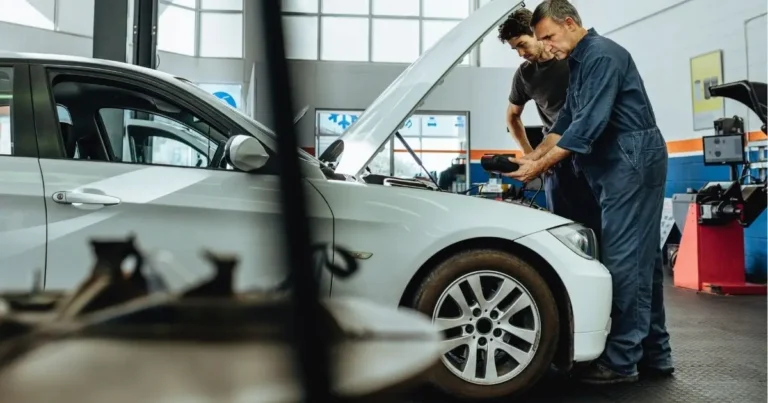

Quick answer: How to check a car’s service history starts with the VIN: run a history report, start at vehiclehistory.gov for NMVTIS-approved providers covering title, salvage, and odometer data, then use Carfax or AutoCheck for broader accident and service records. Then ask the seller for receipts and dealer records, check oil-change stickers, and call the shops on the invoices to confirm the work.
Here’s the part most guides skip: a clean report only proves nothing bad was reported — not that the car is clean. Always check the paperwork against the actual car.
Last updated: August 5, 2026
On this page
- Checking history before you buy
- Checking history with the VIN
- Checking history for free
- Records to ask the seller for
- Reading receipts like a mechanic
- What a history report misses
- Verifying records against the car
- Mileage and odometer red flags
- Normal, negotiable, or dangerous gaps
- What if there’s no service history
- Service History Trust Checker
- FAQ
A service history is a story the seller is telling you. The car is the evidence.
Most guides stop at “pull a Carfax.” That’s not the finish line — that’s where the real work starts.
I’ve spent 25 years under cars, and the cleanest paperwork I’ve ever seen sat on some of the rougher vehicles. Paper gets faked in seconds now — the car can’t lie to you the same way.
How do you check a car’s service history before buying?
Start with the VIN, pull a history report, then collect every paper the seller has and check it all against the car.
That’s the whole process, and the order matters because each step catches what the others miss. It’s the same instinct behind all our used-car buying advice — verify, don’t assume.
The report flags title brands and big events, and the seller’s receipts fill in the routine maintenance. The car itself confirms whether any of it is true.
The Federal Trade Commission says it plainly: a vehicle history report is not a substitute for an independent inspection, and it usually won’t list mechanical problems at all (FTC). Treat the paperwork as a lead, not a verdict.
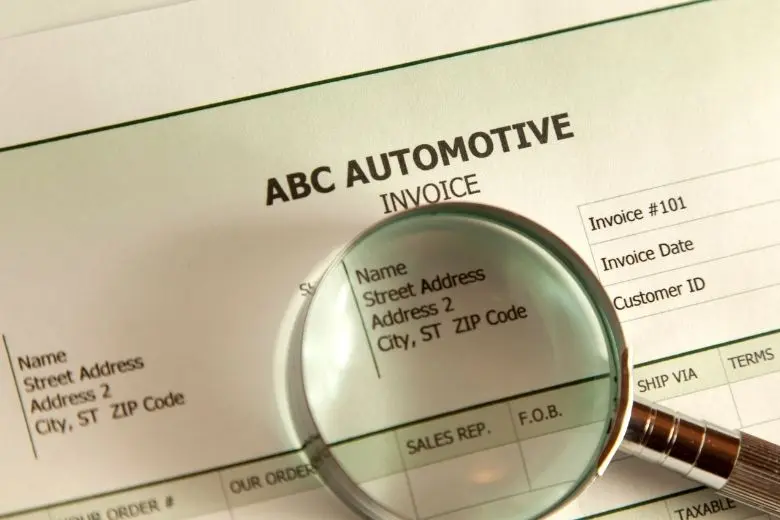
A shoebox of dated, VIN-matched receipts tells you more than any single report.
Can you check a car’s service history with the VIN?
Yes — the VIN unlocks every history database, and you should start with the free government one.
The 17-character number lives on the lower driver-side windshield and the driver’s door jamb. Every check below runs off it.
The official free source: NMVTIS
Start at vehiclehistory.gov, the National Motor Vehicle Title Information System run through the Department of Justice. The FTC points buyers here first for title, salvage, and odometer data (FTC).
It lists approved providers who charge a small fee for the full report. The title-brand data behind it is as official as it gets.
The paid commercial reports: Carfax and AutoCheck
Carfax and AutoCheck pull from thousands of sources and show the most service records of any option. They’re the closest thing to a maintenance timeline you’ll get from a database.
They pull from different sources, so they don’t always match. On a car that matters, a serious buyer sometimes runs both.
How do you check a car’s service history for free?
Free checks exist, but each one shows only a slice — know the limit before you trust it.
NICB VINCheck
The National Insurance Crime Bureau runs a free VINCheck for theft and salvage records. It’s capped at five searches per 24 hours per IP address, and it only covers cars insured by participating member companies (NICB).
It catches stolen and total-loss cars fast. It is not a full history report, and it won’t show routine maintenance.
The Carfax Car Care app trick
Carfax Car Care is a free app that shows the service history reported to Carfax for a vehicle in your garage (Carfax). Register a car you own or are about to register, and you can see what’s on file without buying a report.
The catch is real: it’s built for owners, and it still only shows what shops chose to report. Use it as a free peek, not the whole picture.
What service records should you ask the seller for?
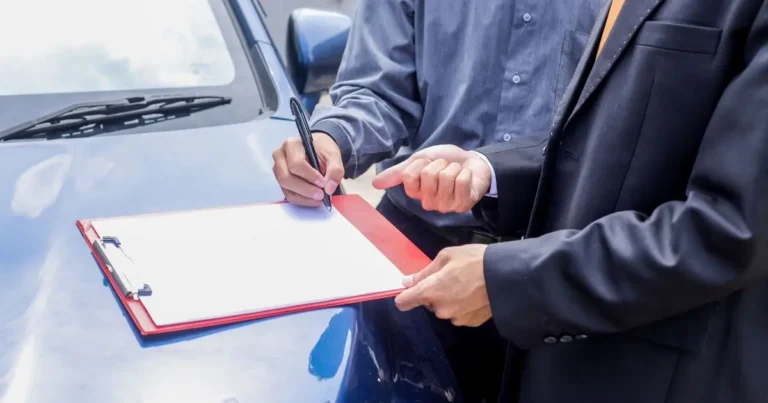
Ask for everything with a date and a VIN on it — dealer printouts and the previous owner’s receipts.
A dealer-serviced car usually has a printout the service department can pull in two minutes. A car bought from a private seller lives or dies on the owner’s shoebox.
The seller’s reaction matters too. Use these questions to ask when buying a used car to find out who maintained it, what major work was done, and whether the answers match the paperwork.
The three things worth asking for
Get the dealer service printout if the car was maintained at a franchise store. Get the previous owner’s receipts for everything else, and check the owner’s manual for stamped maintenance pages.
Say the seller hands you nothing. That’s not an automatic walk — but the burden of proof just shifted onto you.
How do you read service receipts like a mechanic?
A real receipt carries the VIN, the date, the mileage, and a shop you can call. A fake usually skips at least one.
Lay the receipts out by date and watch the mileage. It should climb steadily, never jump backward or stall for years on a daily driver.
Faking a receipt image takes seconds now, so paper alone proves nothing. The real test costs one phone call.
If a receipt claims major work, call the shop and read them the VIN. A legitimate invoice survives that call — a fake one doesn’t.
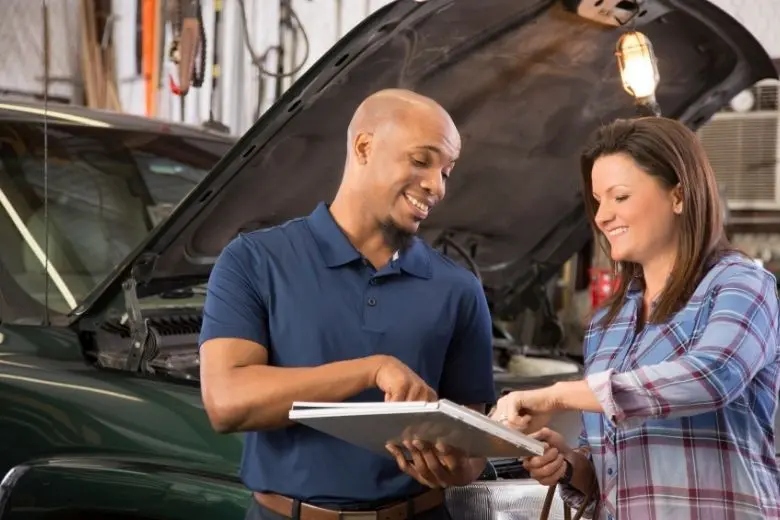
The VIN, date, and mileage on a receipt should all line up with the car.
What does a vehicle history report miss?
Two big things never make it into any report: the unreported accident and the owner-done maintenance.
The unreported accident
A car gets repaired off the books — no insurance claim, no police report, cash to a body shop. Nothing gets created, so it stays clean on the report forever.
Carfax says this itself: not every accident or damage event is reported, which is why it recommends pairing the report with a pre-purchase inspection and test drive (Carfax).
The owner-done maintenance
A careful owner changes their own oil, belts, and fluids in the garage. That work is real, and it never touches a database.
So a gap in the records doesn’t mean the work wasn’t done. Absence of a record is not absence of maintenance — it’s just a question you have to answer another way.
A clean report means nothing bad was reported — not that nothing happened. Everything else in this article is about closing that gap.
How do you verify the service history against the actual car?
This is where 25 years under cars actually pays off. The car tells you what the paper won’t.
Reading the hidden accident
I check the paint match panel to panel in direct sunlight — a repainted fender almost never matches the factory panel beside it. Then I look at panel gaps, because a hood or door that sits uneven got hung by hand after a hit.
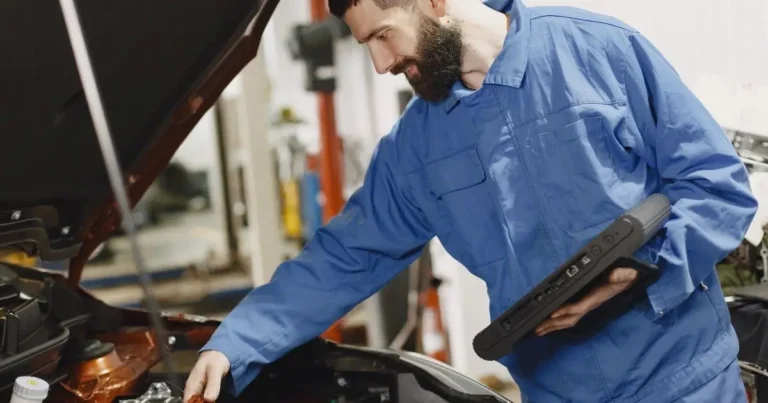
I check the bumper clips for broken or loose tabs, and the door and trunk rubber seals for pieces that are missing or don’t match. Then I open the hood, because most hits land on the front end and leave their fingerprints in there.
Reading the maintenance claim
Say a receipt claims a new belt at 60,000 miles. I look at the actual belt — if it’s cracked, glazed, and clearly original, the receipt and the car disagree, and the car wins.
That’s the whole method. Match every paper claim to a physical thing you can see, and let the metal settle the argument.

Most accident damage hits the front end. The under-hood look catches what a clean report hides.
How do you check mileage consistency and odometer red flags?
Compare the odometer against the title, the records, the stickers, and the wear — all five should agree.
The National Highway Traffic Safety Administration estimates that more than 450,000 vehicles are sold each year with false odometer readings (NHTSA). It’s more common than buyers think, and digital odometers don’t make it harder.
The checks NHTSA recommends
Compare the title mileage to the dash, and the dash to the maintenance and inspection records. Then read the physical tells: oil-change stickers, tire age on a low-mileage car, and wear on the gas and brake pedals (NHTSA).
A car showing 40,000 miles with worn-through pedals is telling on itself. Use my guide to the best mileage for a used car to judge whether the number fits the age, and the separate guide to how many miles is too many on a used car to judge the upper limit; any backward jump in the records is a serious fraud signal and a reason to walk.
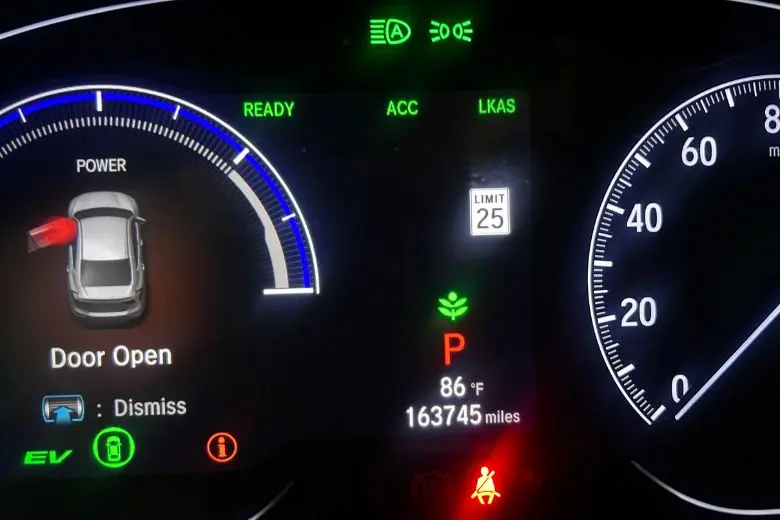
The odometer, the title, the stickers, and the receipts all have to agree.
A deeper module scan can sometimes reveal mileage stored in the car’s computers that doesn’t match the dash. Most buyers don’t need that — title, records, stickers, tire and pedal wear, and a good inspection catch the vast majority.
What service-history gaps are normal, negotiable, or dangerous?
Not every gap is a problem. The skill is sorting the harmless ones from the expensive ones from the walk-aways.
Here’s how I triage what you’re looking at — the same instinct behind spotting other used-car red flags.
| What you see | What it usually means | Your move |
|---|---|---|
| Regular receipts with VIN, mileage, dates, and matching wear | Strong paper trail | Keep inspecting |
| Clean report but no receipts | Unknown, not automatically bad | Ask for proof, inspect harder |
| Seller claims major work, no receipt | Risky | Verify physically or price it as not done |
| Mileage jumps backward or doesn’t match records | Serious fraud risk | Walk, or demand proof |
| New paint or panel gaps but no accident on record | Possible off-book repair | Get an inspection or walk |
| Missing timing belt, transmission, or coolant service at high mileage | Expensive maintenance risk | Negotiate or walk |
What if there’s no service history?
No history isn’t an automatic walk — it’s a reason to inspect harder and price the unknown.
Treat every undocumented major service as not done until the car proves otherwise. Then budget for the ones that are due.
A solid pre-purchase inspection replaces the missing paper trail with hard facts about the car in front of you. That inspection is also your strongest card when you negotiate the price down.
Plenty of well-kept cars have thin records, especially older ones with hands-on owners. The missing paper isn’t the dealbreaker — an unexplained mismatch between the story and the car is.
Service History Trust Checker
Answer what you actually know about the car. This gives you an honest read — including “this looks fine, keep going.” It does not push you toward walking away unless the answers earn it.
What do buyers ask about checking service history?
Is there a way to see a car’s service history?
Yes. Run the VIN through a history report, ask the seller for receipts and dealer printouts, and check the owner’s manual for stamps. For a car you own, the free Carfax Car Care app shows the service records reported to Carfax.
Does a VIN number tell you service history?
It unlocks it. The VIN pulls a history report that can include title brands, accidents, odometer readings, and some service records. It won’t show owner-done maintenance or work that was never reported.
Can you check a car’s service history without owning it?
Yes — a paid Carfax, AutoCheck, or NMVTIS report runs off the VIN, no ownership needed. The free Carfax Car Care app is built for cars in your own garage, so it’s the one exception.
Can you check a car’s history for free?
Partly. NICB VINCheck is free for theft and salvage records but capped at five searches a day per IP address. The government NMVTIS providers and full Carfax reports charge a fee for the complete picture.
Does a clean Carfax mean the car was never in an accident?
No. Carfax states that not every accident is reported, so a clean report only means nothing was reported. An accident repaired with cash and no claim can stay invisible — which is why an inspection matters.
Why doesn’t my maintenance show up on Carfax?
Because the shop that did the work doesn’t report to Carfax, or the work was done in a garage. Independent shops and owner-done service often never hit any database. A missing record doesn’t mean the work wasn’t done.
What if a used car has no service history?
Don’t walk on that alone. Treat undocumented major services as not done, budget for them, and get a pre-purchase inspection to replace the missing paper. Then use the gap to negotiate a lower price.
The bottom line stays the same one I’d give a buyer in Saint Augustine or anywhere else. Read the records, then read the car — and when the two disagree, believe the car.