
What’s In This Guide
- Do electric cars depreciate faster than gas cars?
- Why do EVs lose value so fast?
- How much does an EV depreciate in 5 years?
- Which EVs have the worst depreciation?
- Which EVs hold their value best?
- What is the 80% rule for EVs?
- What happens to an EV after 8 years?
- Is high depreciation actually a buying opportunity?
- Max’s mechanic checklist for a depreciated EV
- EV depreciation estimator
- FAQ

Do Electric Cars Depreciate Faster Than Gas Cars?
The short answer is yes, and the data is clear. A 2025 iSeeCars study of over 800,000 used vehicles found that EVs average 58.8% five-year depreciation, versus 45.6% for all vehicles and just 40.7% for hybrids.
But the headline number hides a massive spread between models. The worst electric cars lose over 70% of their value. The best hold nearly half — and picking the right model matters more than almost any other purchase decision you’ll make.
Average 5-year depreciation for electric cars — versus 45.6% for all vehicles | Source: iSeeCars (2025)
Gas car depreciation is more predictable because the technology changes slowly. A five-year-old Honda Accord still makes sense for most buyers.
A five-year-old EV might have half the range of a current model — or it might be nearly as capable. It depends entirely on what it is and how it was built.
Why Do EVs Lose Value So Fast?
Several forces are working against EV resale value simultaneously. Once you understand the mechanics, the depreciation numbers start making sense.
Technology Is Moving Fast
A 2020 EV might have 220 miles of range on a good day — a 2025 equivalent has 300 miles, faster charging, and better software.
Battery tech is improving quickly enough that older EVs feel “obsolete” to used buyers even when the car still drives perfectly well. That’s very different from gas cars, where the core technology hasn’t fundamentally changed in decades.
Manufacturer Price Cuts Create a Cascading Effect
Tesla slashing new car prices in 2022 and 2023 didn’t just make new Teslas cheaper — it instantly dragged down used Tesla values alongside them.
Hertz learned this the hard way, buying 100,000 Teslas at peak prices and ending up selling them used for roughly half what they paid. When a manufacturer cuts the new car price, every used example reprices downward the next day.
The Tax Credit Problem
A $7,500 federal tax credit on a new EV suppresses what buyers will pay for a used one. Why pay $35,000 used when a new one is $42,500 with a credit that makes it effectively the same price?
The credit created an artificial ceiling on used EV values for years. The federal $7,500 new EV credit and $4,000 used EV credit both expired September 30, 2025, killed by the One Big Beautiful Bill Act. That’s starting to shift the used pricing dynamic, though the hangover will take time to clear.
Battery Anxiety Is Real, Even When It Shouldn’t Be
Most buyers have no idea how to evaluate an EV battery. That uncertainty drives them to demand bigger discounts — and sellers have to give them.
Used EVs with documented battery health actually sell for significantly more than identical cars without it. The fear is often worse than the reality, but it’s still real money leaving the seller’s pocket.
Fast EV depreciation = tech obsolescence + manufacturer price cuts + tax credit compression + battery uncertainty. Remove even one variable — like documented battery health — and the resale picture improves meaningfully.

How Much Does an EV Depreciate in 5 Years?
The averages are useful, but the model-by-model breakdown is where things get interesting. Based on market data from CarEdge, iSeeCars, and other valuation sources, here’s how different EVs stack up after five years.
| Model / Segment | Est. 5-Year Depreciation | Value Retained | Verdict |
|---|---|---|---|
| Jaguar I-Pace | 72%+ | ~28% | Avoid new |
| Nissan Leaf | ~64% | ~36% | Avoid new |
| Tesla Model S / X | 63–65% | ~35–37% | Avoid new |
| Porsche Taycan | ~60% | ~40% | Avoid new |
| Tesla Model Y | ~60% | ~40% | Buy used only |
| Kia Niro EV | ~59% | ~41% | Buy used only |
| Hyundai Ioniq 5 / Kia EV6 | ~45–52% | ~48–55% | Good used value |
| Tesla Model 3 | ~50–56% | ~44–50% | Good used value |
| Rivian R1T | ~47–52% | ~48–53% | Strong hold |
These are directional ranges, not guarantees for any specific car. A Tesla Model 3 in pristine condition with documented battery health sells for more than a neglected one.
Use the table as a comparison tool and a stack ranking — not a crystal ball for your exact vehicle.
A Porsche Taycan losing 60% of its value costs you roughly $60,000 in depreciation. A Nissan Leaf losing 64% costs about $18,000 — similar percentages, wildly different dollar amounts.
Always run the actual dollar math before buying anything new. Percentages are comparison tools, not the real cost.
Which EVs Have the Worst Depreciation?
These are the models to avoid buying new — as used cars bought post-depreciation, they can be excellent values. Volunteering to fund someone else’s first-owner loss is a bad financial decision when you don’t have to.
Jaguar I-Pace: The King of Depreciation Disasters
The I-Pace lost 72.2% of its value in five years — the worst of any vehicle in iSeeCars’ entire study of 800,000 cars, including all gas and luxury models.
A 2019 I-Pace that started near $70,000 is now worth roughly $20,000. Jaguar’s limited service network, battery fire recalls, and the brand’s chaotic repositioning all crushed demand.
Buy one used at 28 cents on the dollar and you’re in a real conversation. Buy one new and you’re just funding the first-owner horror story.
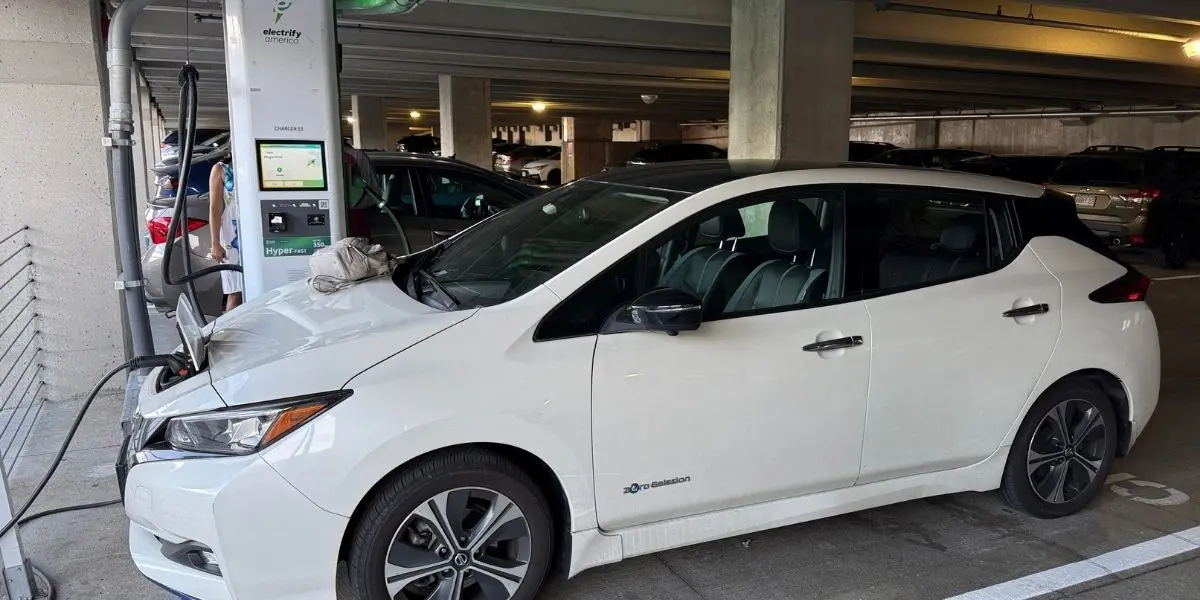
Nissan Leaf: The Pioneer That Got Left Behind
The Leaf did a lot of good for the EV industry — it was one of the first affordable options. But early versions used an air-cooled battery with no liquid thermal management, which means it degrades faster, especially in hot climates like Florida.
The Leaf drops 64.1% in five years, losing about $18,000 in real dollars — and newer competition left it looking dated fast. As a used car with good battery health it’s a deal; new, it’s hard to justify against better options at similar money.
Tesla Model S and Model X: Expensive and Volatile
Both lose around 63–65% of their value in five years, and the dollar amounts are brutal — over $52,000 for the Model S.
Continuous software updates make older hardware feel stale, aggressive price cuts drag used values down, and the sheer sticker price amplifies every percentage point of depreciation.
On the used market they can be phenomenal — buying new, you’re just subsidizing the next owner’s deal.
Which EVs Hold Their Value Best?
A few models have built real resale floors thanks to strong demand, practical utility, or technology that stays relevant long enough to hold value.
Rivian R1T: The Electric Truck That Actually Holds Its Ground
The R1T is among the best-holding EVs in multiple resale studies — well above the EV average. Edmunds 2025 data shows it retaining 68% of its value after three years, though five-year data is still limited given how new the truck is.
The R1T’s off-road capability, up-to-400-mile range depending on battery pack, and niche following create consistent demand in the used market. It’s not cheap — but it doesn’t crater either.
Hyundai Ioniq 5 and Kia EV6
These two share a platform and a story: both use 800V charging architecture, which means they charge dramatically faster than most competitors — and that advantage doesn’t become obsolete quickly.
The Ioniq 5 is holding roughly half its original value after four years — a figure that rivals many gas car competitors in the same segment.
Tesla Model 3: The Relative Safe Harbor
The Model 3 is among the better-performing mainstream EVs for resale in large-scale studies — around 50–56% over five years. It’s not immune, but it depreciates more predictably than most of the segment.
Tesla’s Supercharger network gives buyers long-term confidence, and the Model 3’s continued strong sales create robust demand on the used side. It’s the least-bad option in mainstream EVs for resale.
Long range (300+ miles), liquid-cooled batteries, and a feature set that doesn’t feel stale in five years. Hit all three and the depreciation curve flattens significantly.

What Is the 80% Rule for EVs?
You’ve probably seen “keep your battery between 20% and 80%” advice all over the internet. Here’s what it actually means, where it comes from, and how much you really need to worry about it.
The “80% rule” is a charging practice: don’t regularly charge to 100% or let the battery drain near zero. Extreme charge levels cause additional stress to the cells over time.
Geotab’s 2025 study of 22,700 real-world EVs found this matters primarily for vehicles spending over 80% of their total time at extreme charge levels. Occasional charging to 100% before a road trip isn’t going to ruin your battery.
The problem is habitual, constant extreme charging day after day — not the occasional 100% charge before a road trip.
For resale purposes, “80%” has a second meaning: a battery State of Health (SOH) at or above 80% is the general threshold for a healthy used EV battery. Below 75% SOH, range loss becomes noticeable — and resale value drops sharply to match.
Most EV manufacturers warrant their batteries to hold at least 70% capacity for 8–10 years or 100,000–150,000 miles. Real-world data consistently shows most batteries performing better than that floor.
Charging habit: Keep charge between 20–80% for daily use to reduce long-term cell stress. Occasional 100% charges before road trips are fine.
Battery health threshold: When buying used, target SOH at or above 80%. Below 75% and you need a significant price discount to make the deal work.
What Happens to an EV After 8 Years?
This is the most common fear buyers have about electric cars — and the data is more encouraging than most people expect.
Geotab’s analysis of 22,700+ EVs found that the average battery retains 81.6% of its original capacity after 8 years, based on a degradation rate of about 2.3% per year. That’s comfortably above the warranty minimum.
A 2024 Tesla Model 3 Long Range with a 75 kWh pack would still have roughly 61 kWh of effective capacity after 8 years. In real-world terms, that’s around 290 miles of range — far more than the average American’s 37 miles per day.
The degradation curve isn’t linear either. Batteries typically see a slightly steeper drop in year one as they settle, then a long, slow, nearly flat period of decline for years two through eight.
The horror stories you read about are mostly early Nissan Leafs with air-cooled batteries that cooked in Arizona heat. Modern EVs with liquid thermal management are a completely different situation.
For the full deep-dive on what actually happens to EV batteries long-term, with real degradation data by model, this guide covers the 10-year picture in detail.
At 2.3% annual degradation over 8 years, the average EV battery sits at 81.6% capacity — well above the 70% warranty floor that most manufacturers guarantee. The average driver won’t notice the real-world difference until well past 100,000 miles, and by then the car is long paid off.
Is High EV Depreciation Actually a Buying Opportunity?
Yes — and this is the flip side of the conversation that almost nobody covers. Every article explains why depreciation is bad for sellers, but nobody explains why it’s great for buyers who do it right.
Through 2024 and into 2025, the average used EV was consistently priced below a comparable used gas vehicle — in many cases 8–11% cheaper. That gap has narrowed in 2026 as the market stabilizes, but used EVs still represent strong value when you factor in lower fuel and maintenance costs.
I’ve driven multiple EVs over the years and I’ll tell you straight — buying a three-year-old EV with documented battery health versus buying the same model new is a dramatically better deal. The first owner absorbed the worst of the drop.
Before you compare battery reports, set the age and odometer range you are willing to shop. My guide to the best mileage for a used car shows how I balance mileage, warranty runway, history, and price before deciding whether the depreciation discount is worth taking.
The key is knowing which depreciation reflects a real problem and which is just market noise. Here’s how I think about it after 25 years in this industry.
Red Flag Depreciation (Avoid)
- Short range on an older model (under 150 miles real-world) — buyers avoid it because it limits actual use
- Discontinued model with no real service network (Jaguar I-Pace, BMW i3)
- Air-cooled battery without liquid thermal management — early Nissan Leaf especially
- Battery already below 80% SOH on a young, low-mileage car — that’s abnormal degradation
- Flood or collision damage near the battery pack — walk away, no exceptions
Bargain Depreciation (Buy)
- SOH at 85%+ with a brand and model that still makes practical sense
- Three to five years old where the steepest first-owner depreciation already happened
- Documented charging history — mostly Level 2, minimal DC fast-charge abuse
- Active battery warranty with real years and miles remaining, and confirmed transferable
- Long-range model (250+ miles) not made obsolete by its range limitations
For the full framework on buying used EVs smart, the used electric car buyer’s guide covers every step — including the 10 things to check before you hand over money.
What Should You Check Before Buying a Depreciated EV? (Max’s Mechanic Checklist)
Every other depreciation article tells you what the numbers look like. This is what you actually do in the driveway before you hand over money.
Here’s my real checklist from 25 years of evaluating cars for purchase.
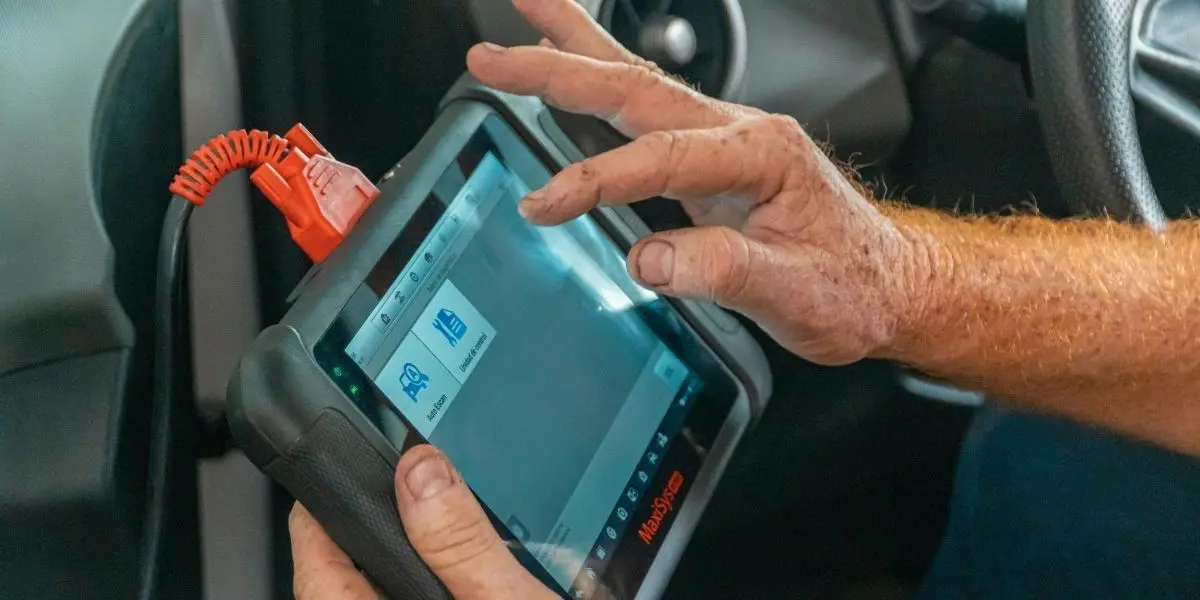
- Get the battery State of Health number — not a guess. Use a Bluetooth OBD2 adapter ($30–60) with a model-specific app: LeafSpy for Nissan, Car Scanner for most others, Scan My Tesla for Teslas. Target SOH above 85%. Below 80%, demand a serious discount or walk.
- Charge to 100% and record the displayed range. Compare it to the original EPA rating for that exact model year and trim. A 10% drop is normal. A 25%+ drop is a real problem that should hit the price hard.
- Test DC fast charging if you can. Plug into a fast charger and watch the ramp-up. Normal behavior is a quick climb to peak charge rate, then a gradual taper as the battery fills. Slow, inconsistent, or non-existent ramp-up can signal battery trouble.
- Ask specifically about charging history. Was it mostly home Level 2 charging or daily DC fast charging? Heavy fast-charge use accelerates degradation. Sellers who can’t answer this don’t know — which is useful information in itself.
- Check for remaining battery warranty with miles and years. Most manufacturers warrant to 70% capacity for 8 years or 100,000 miles. Confirm it’s transferable. An in-warranty battery is a significant financial safety net that changes the math on the deal.
- Florida and warm climate buyers: ask where the car lived. Recurrent’s research found EVs in hot climate zones consistently show more range loss as they age. A car from Phoenix or Miami with 60,000 miles can have worse battery health than a car from Seattle with 80,000. Climate history matters as much as mileage.
- Check for underbody damage near the battery pack. The pack sits under the floor. Any serious impact in that area is a disqualifier. Pull up the CARFAX, then actually get under the car or have a shop look — don’t rely on the seller’s description alone.
- Drive a realistic route for at least 20 to 30 minutes. Confirm regen braking works normally, range estimates are consistent, and no warning lights appear after startup. Warning lights aren’t always critical — but they need documented, verifiable explanations before you buy.
For EVs specifically, the battery report is what a compression test was for gas engines. It’s not optional.
EV maintenance costs are dramatically lower than gas cars in most categories — but a degraded battery is the exception, and it costs real money. If you’re specifically looking at a used Tesla, our Tesla maintenance cost guide gives you the exact numbers to budget — and for the brand’s most popular model, here are the real Tesla Model Y maintenance costs. Know what you’re buying before you own it.

Florida summers regularly hit 95°F+, and Recurrent’s research confirms that EVs in hot climate zones consistently show more range loss as they age — sustained heat accelerates battery degradation permanently.
Ask specifically about garage parking history for any used EV in the Southeast. Air-cooled batteries (early Leaf) should be avoided entirely in warm climates — liquid-cooled models like the Ioniq 5, Model 3, EV6, and Rivian handle heat dramatically better.
EV Depreciation Estimator
Use this tool to estimate what a used EV might be worth today based on original price and typical depreciation for its category.
These are ballpark figures — actual value depends on battery health, mileage, condition, and local market. Use it as a starting point for negotiation.
EV Value Estimator
Estimates based on iSeeCars 5-year depreciation data. Actual value varies by mileage, region, condition, and market timing. Use as a negotiation starting point — not a guarantee.
Frequently Asked Questions
Yes, on average — EVs lose 58.8% of their value over five years, versus 45.6% for all vehicles. But the range between models is enormous, with some losing over 70% and others holding closer to 50%.
The Jaguar I-Pace lost 72.2% of its value in five years — the worst of any vehicle in iSeeCars’ study of 800,000 cars. The Tesla Model S (65.2%), Nissan Leaf (64.1%), and Tesla Model X (63.4%) round out the worst list.
The Tesla Model 3 is among the better-performing mainstream EVs for resale value, losing around 50–56% over five years in most large-scale analyses. The Rivian R1T, Hyundai Ioniq 5, and Kia EV6 also perform well above the EV average.
The industry average is 58.8%, meaning a $45,000 EV is worth roughly $18,500 after five years on average. High-depreciation models like the I-Pace can reach 28 cents on the dollar — strong-holding models like the Rivian R1T retain closer to 47%.
For daily charging: keeping charge between 20–80% reduces long-term cell stress, though the risk really only compounds when you habitually park at extremes for extended periods. For buying used: a State of Health at or above 80% is the threshold for a healthy battery — below 75%, range loss is noticeable and the price must reflect it.
For used buyers, absolutely. By mid-2024, the average used EV was 8–11% cheaper than a comparable used gas vehicle. Add lower fuel and maintenance costs, and a three-to-five-year-old EV with documented battery health can be one of the best deals in the used car market right now.
Yes — and this is critical for Florida buyers. Sustained heat accelerates battery degradation permanently, meaning a car from Phoenix or Miami can have worse battery health at the same mileage as one from Seattle. Liquid-cooled batteries handle heat far better than air-cooled designs like the early Nissan Leaf.
Not automatically. High depreciation is a red flag only when it reflects a real problem — dead battery, discontinued service support, or fundamental design limitations. When a good car was caught in the broader EV depreciation wave, that’s a buying opportunity — get the battery tested, verify the warranty, and check service availability.
Still weighing whether an EV is right for you at all? This guide walks through the honest answer — including who EVs work great for and who should probably wait. And for the full 5-year financial math on fuel savings, maintenance, and who the numbers actually work for, Is an Electric Car Worth It? runs the honest mechanic’s breakdown.