Quick Answer: The most important questions to ask when buying a used car all force the seller to prove something:
- Can I see the title and your ID?
- Can I get the VIN for a history report?
- How long have you owned it, and why are you selling?
- Can we do a real test drive — city and highway?
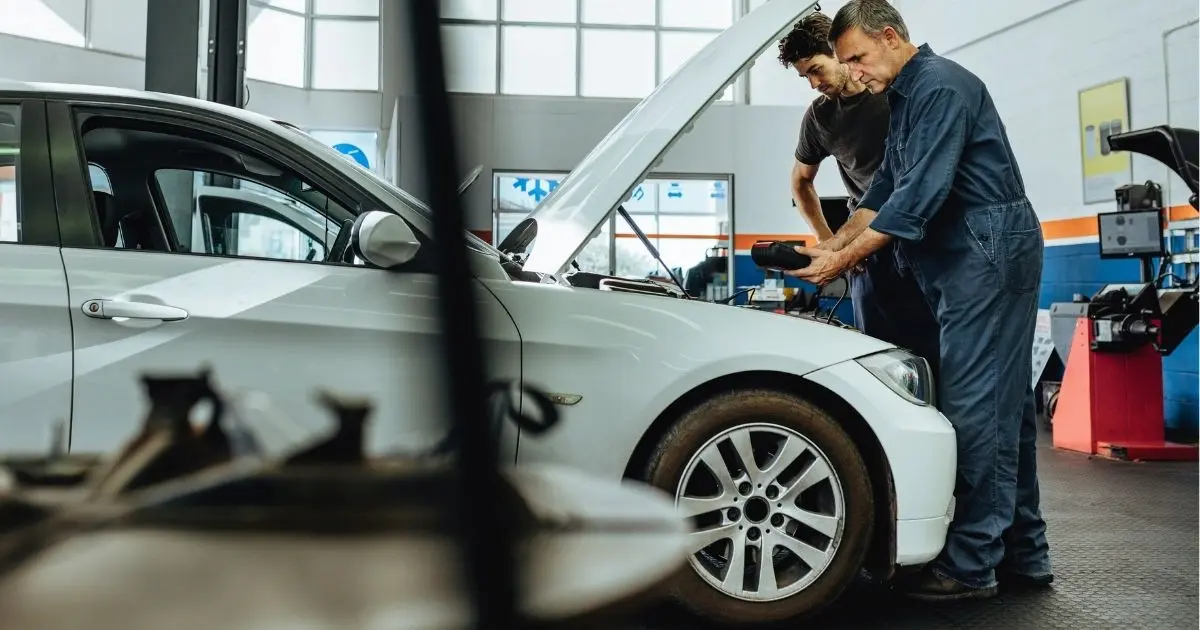
- Can my mechanic do a pre-purchase inspection?
- At a dealer: what’s the out-the-door price, in writing?
Then watch how they answer — a seller who rushes you or waves concerns off just answered louder than any words could.
Last updated: July 19, 2026
- The most important questions to ask
- How to read a seller’s answer
- Questions to ask before you go
- Title, lien, and ownership questions
- Service history and maintenance questions
- Accident and damage questions
- Questions to ask before the test drive
- Questions to ask before talking price
- Seller answers that are red flags
- Dealer versus private seller questions
- FAQ
I’ve spent 25 years fixing cars that people bought with their hopes instead of their questions. The repair bills always tell the same story — nobody asked, or nobody listened to the answer.
Every list on the internet gives you questions to ask when buying a used car. Almost none of them tell you what the answers actually mean.
That’s what this guide does. The questions are the easy part — reading the answers is the skill, and I’ll teach you both.
What are the most important questions to ask when buying a used car?
Start with five questions that do the most damage to a bad deal. Each one forces the seller to either prove something or dodge.
1. Can I see the title and your ID? The name on the title must match the person selling — no match, no deal.
2. Can I get the VIN so I can pull a history report? Any hesitation here is a finished conversation.
3. How long have you owned it, and why are you selling? Short ownership is the flipper detector — more on that below.
4. Can we take it on the highway with some real braking and acceleration? The answer to this one tells you more than the drive itself.
5. Can my mechanic do a pre-purchase inspection? A quick yes is a good sign — a no means you’re done here.
At a dealership, add the money question: what’s the out-the-door price, in writing? The FTC recommends getting out-the-door prices in writing before you even visit the lot.
This article is part of our used car buying advice series. The rest of this guide breaks each stage down — and decodes the answers.
How do you read a seller’s answer?
Here’s what 25 years of hearing seller stories taught me: the words change with every car, but the behavior never does. You can’t script every lie, so stop trying to catch lies.
Watch what the seller does when you ask. The universal tell is rushing and minimizing — hurrying you through the look, the drive, or the paperwork, or waving concerns off with “that’s no big deal.”
A good answer is short, specific, and comes with proof attached. A bad answer is a story that gets longer the more you push.
Rehearsed answers have a rhythm to them — smooth, fast, and slightly off-topic. Real answers stumble a little, because honest people actually think before they speak.
The questions ahead come with decoders — what a good answer sounds like, what a bad one sounds like, and what to do next. That’s the part no checklist gives you.
What should you ask before you go see the car?
The phone screen is free, takes ten minutes, and kills half of the bad deals before you burn gas. Ask these before you agree to meet anyone.
Good answer sounds like“Sure, sending it now.” Ten seconds, no questions asked.
Bad answer sounds like“You can get that when you come see it.” A VIN is printed on the windshield — hiding it is a choice.
What it meansSometimes it’s scam paranoia — usually it’s a history problem. Either way you can’t verify the car, so you don’t go.
Verify nextRun it through the free NICB VINCheck for theft and salvage records, and check NHTSA’s recall lookup for open recalls.
Good answer sounds like“Six years — bought it when my daughter started school.” Specific, dated, human.
Bad answer sounds like“A while,” or anything under six months with a vague reason for selling.
What it meansShort ownership is the flipper detector. Flippers buy cheap problem cars at auction, shine them up, and sell fast.
Verify nextCheck the title date against their story. Ask how many miles they personally put on it — then read our guide on how many miles is too many on a used car.
Two more for the phone: “Can you leave it cold for me — no driving it before I arrive?” and “Are you okay with my mechanic inspecting it?” A cold start shows you what a warmed-up engine hides, and the inspection question is the fastest honesty test in this entire article.
One honest caveat: dealers sometimes can’t let the car off the lot for insurance reasons, and a mobile inspector solves that. A seller who dodges every version of the inspection is the walk-away — a clean car has zero reason to hide from a mechanic.
What should you ask about the title, lien, and ownership?
Paperwork questions feel boring until you’ve paid for a car you can’t register. Ask these before money is even discussed.
“Is the title in your name, in hand, and clean?” There are only three acceptable answers: yes it’s here, it’s at the bank with a lien we’ll settle at sale, or it’s a documented replacement on the way from the DMV.
Everything else — “my cousin’s name is on it,” “it’s coming,” “we can do a bill of sale for now” — is a no. In a normal private sale, the title name must match the ID of the person taking your money; real exceptions like estate sales come with court paperwork, not a driveway story.
“Is there a loan on it?” A lien isn’t a deal-killer, but it changes how payment works — the loan gets settled before or at the sale, never on a promise.
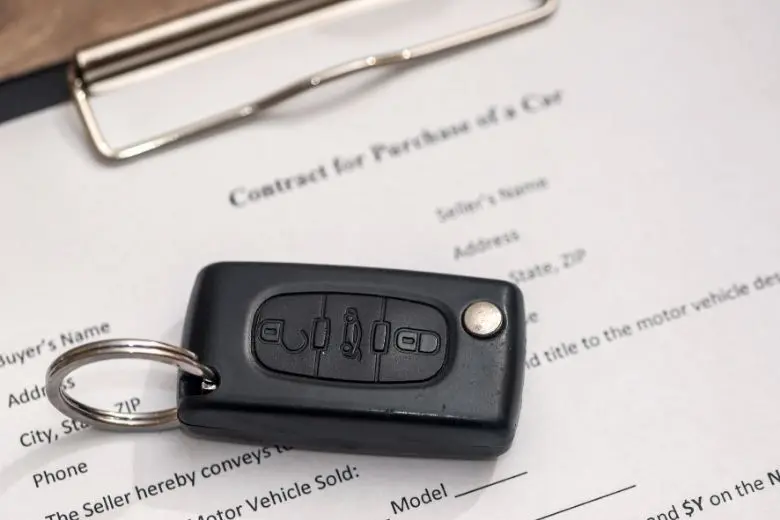
Pull the title history yourself through NMVTIS at vehiclehistory.gov, the federal title database. It catches brands like salvage and flood that a smooth-talking seller conveniently forgot.
Private sales put all of this on your shoulders, because there’s no dealership office doing the paperwork. Our guide to buying a car from a private seller walks through the full title and payment safety process.
What should you ask about service history and maintenance?
“Has it been maintained?” is a wasted question, because every seller on Earth says yes. Ask it anyway — then decode the answer.
Good answer sounds like“There’s a folder in the glovebox,” or a phone full of shop invoices and oil change receipts.
Bad answer sounds like“I did it all myself, never kept receipts. Trust me, it’s been babied.”
What it meansMy rule after 25 years is simple: receipts or it didn’t happen. “Always maintained” without paper is a feeling, not a fact.
Verify nextMatch the receipts to the car itself — dates, mileage, and the actual condition of fluids and wear parts. Here’s exactly how to check a car’s service history before you buy.
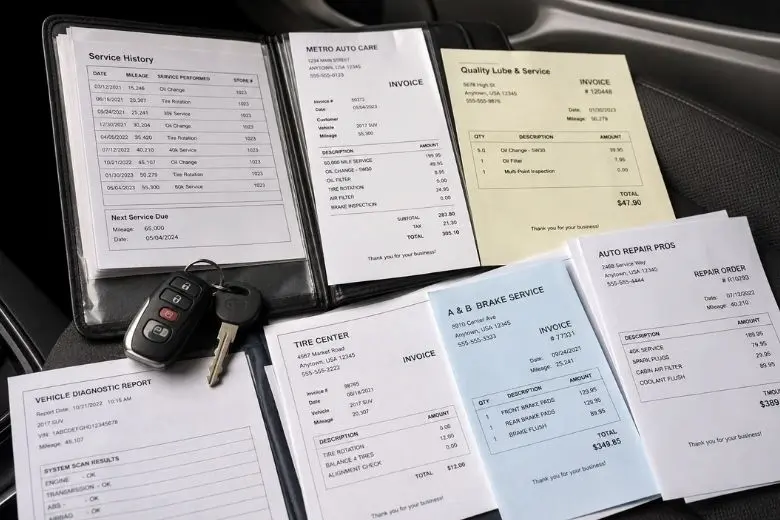
Then ask the expensive question almost everyone forgets: “Has the timing belt been done?” On cars that have one, a neglected belt can take the whole engine with it when it lets go.
Plenty of good owners pay a shop and honestly don’t know belt from chain. That’s fine — the records just have to answer what the owner can’t, and a shrug plus no paperwork answers it too.
What should you ask about accidents and damage?
“Has it ever been in an accident?” — ask it plainly, and expect “no” almost every time. The question isn’t the test; the verification is the test.
The FTC is blunt about this: a vehicle history report is not a substitute for an independent inspection. Reports only show what got reported — cash repairs and quiet fender fixes usually never make the file.
So follow up with: “Any paint work, ever? Any panels replaced?” Then check the answer against the car — our guide on what to check before buying a used car shows where crash repairs hide.
Florida buyer’s note: I’m in Saint Augustine, and flood cars are our local specialty after every hurricane season. A clean answer plus a musty smell means the carpet knows something the seller won’t say.
If the story and the sheet metal disagree, believe the sheet metal. Our full list of used car red flags covers what wrecked and flooded cars actually look like up close.
What should you ask before the test drive?
Here’s my favorite question in this whole article, because the answer is never neutral. “Can we take it on the highway and do some real braking and acceleration?”
You already know the scripted drive — ten minutes around the block at 30 mph, no hard braking, no real steering input. That loop is designed to show you nothing, and I never accept it.
A used car has to prove itself at city speeds and highway speeds. I want real acceleration, real braking, and enough steering to feel the engine, transmission, brakes, suspension, and steering actually work.
A seller who says “sure, take your time” just answered the question. A seller who insists on the parking-lot loop answered it louder.
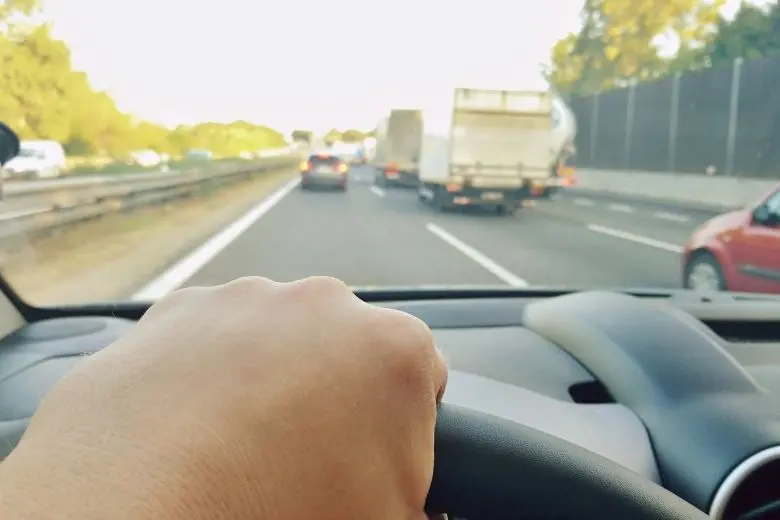
My buying order is always the same: quick initial look, full road test, then a detailed inspection for price leverage. The complete driving procedure lives in our used car test drive checklist — print it and bring it.
What should you ask before talking price?
Money questions come last, after the car has earned them. When you get there, one number matters more than every other.
“What’s the out-the-door price — everything included, in writing?” The advertised price is bait; the out-the-door number is what leaves your bank account.
One-number rule: Negotiate only the out-the-door price. Every other number a dealership shows you exists to distract from that one.
At a dealership, follow with: “Which of these add-ons can be removed?” The FTC warns that add-ons like VIN etching and rustproofing quietly stack thousands onto a deal — and that spoken promises are difficult to enforce.
Before accepting that number, use my car dealer fees guide to separate required charges from dealer-controlled fees and optional add-ons.
Ask “how long has this car been on the lot?” too — a car that’s been sitting for months is a car they’re tired of looking at. Aged inventory is negotiating power.
So every promise goes in writing, or it doesn’t exist. Our guide on how to negotiate a used car price turns these answers into an actual strategy.
What seller answers are red flags?
Some answers repeat so often I could recite them in my sleep. Here’s the dodge catalog — and what each one earns in response.
Not every bad answer means walk away. Some mean demand proof, some mean inspect harder, some mean negotiate the price down — and a few mean leave.
Seller Answer Triage
Tap the answer you actually heard. Get the move a mechanic would make.
Notice the pattern in every one of those answers: they all ask you to skip a verification step. Every dodge is a request to stop checking — which tells you exactly where to check harder.
The full walk-away list, including the flood and frame damage tells, is in our used car red flags guide.
Should you ask different questions at a dealer versus a private seller?
Mostly the same questions — but you should expect completely different answers. That’s the part every other list misses.
A private owner drove this car for years, so vague answers about its history are a red flag. A dealer often genuinely doesn’t know — “we bought it at auction” is usually the honest truth, not a dodge.
So the strategy splits: with a private seller, you read the person; with a dealer, you verify the documents. Same questions, different lie detectors.
| Question | Fair answer from a dealer | Fair answer from a private seller |
|---|---|---|
| How long owned? | “It came in on trade last month” — normal | Years, with a specific story |
| Service records? | History report + reconditioning invoice | Actual receipts and shop invoices |
| Why selling? | It’s inventory — the question barely applies | A concrete life reason, told simply |
| Any accidents? | “Here’s the report” — verify it yourself | A direct yes or no, tested against the car |
| Real test drive? | Yes, with a route they allow | Yes, city and highway, no coaching |
| Pre-purchase inspection? | Yes, on or off the lot | Yes, or the deal is over |
Now my honest opinion, and it’s not the popular one. I rarely buy from private sellers — it’s been a long time since I last did.
A dealership is somewhat safer, because a business carries more responsibility for its cars than a stranger in a parking lot does. Under the FTC’s Used Car Rule, dealers must display a Buyers Guide on every used car stating whether it’s sold as-is or with a warranty.
My safer-at-a-dealer opinion has one giant exception: buy-here-pay-here lots, which I’d skip entirely. The same rule covers them on paper — the business model just isn’t built around the car being good.
One last question for a private seller, and it’s a pressure test. “This car’s for my daughter — anything I should know before she drives it every day?”
You just asked them to personally vouch for the car, not the listing. Watch the face, not the words — it’s the whole article in one question.
FAQ: Questions to Ask When Buying a Used Car
What is the most important question to ask when buying a used car?
“Can my mechanic do a pre-purchase inspection?” It’s the fastest honesty test there is. A quick yes is a good sign — the inspection still has to back it up — while refusal of every reasonable option, including a mobile inspector, means walk away.
What are red flags when buying a used car?
Missing title, no service records, refusal of an inspection, a scripted test drive, and pressure to pay cash today. Any answer that asks you to skip a verification step is a flag — the pattern matters more than the words.
What should you not say to a used car salesman?
Don’t reveal your monthly payment target, your trade-in, or your financing until the out-the-door price is settled — mixing those numbers is how the four-square game hides profit. Our used car negotiation guide covers the whole playbook.
What questions should you ask a private seller versus a dealer?
Ask both the same core questions — title, history, records, real test drive, inspection. Expect personal answers from an owner and document-backed answers from a dealer: with a private seller you read the person, with a dealer you verify the paperwork.
What should you ask if the seller doesn’t have the title in hand?
Ask exactly where it is and who’s named on it. A lien being settled at sale or a documented DMV replacement can be fine. “It’s coming” with no paper trail means no deal — no exceptions.
Should you ask why the seller is selling the car?
Yes, but not for the answer — everyone says “we need something bigger” or “don’t drive it much.” Ask it to watch the delivery. A simple reason told simply is fine; a story that keeps growing is not.
Print the questions if you want, but remember the one rule that runs through all of them. Ask, then watch what they do — the car and the seller will both tell you the truth, whether they mean to or not.